Advertisement
Kabando Wa Kabando weighs in on heated national schools debate
Wednesday 07th January, 2026 06:11 PM|
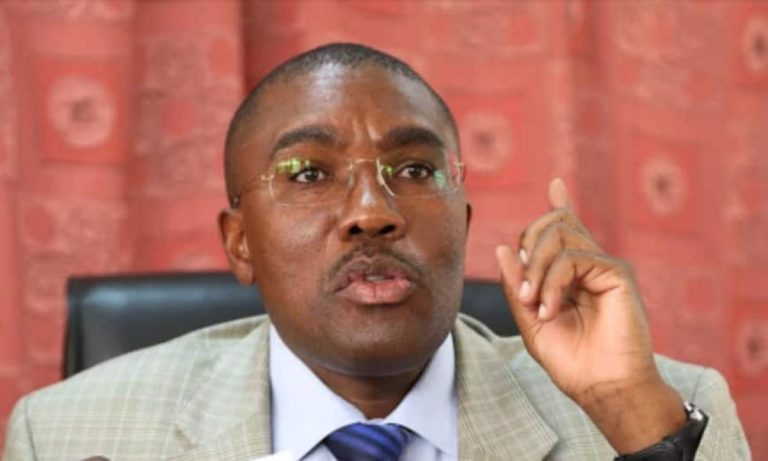
Former Mukurweini Member of Parliament Kabando wa Kabando has joined the ongoing national conversation on admissions to Kenya’s national schools, calling for fairness, transparency, and greater consideration for host communities that invest heavily in the growth of these institutions.
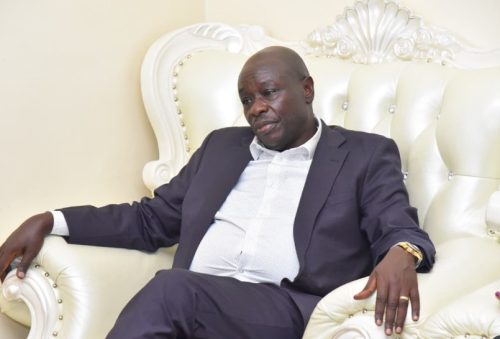
Taking to X on Wednesday, January 7, 2026, Wa Kabando reflected on his time in office, revisiting the transformation of South Tetu Girls High School, a school founded through community effort. His remarks come when former Deputy President Rigathi Gachagua has protested against national schools in the Mount Kenya region admitting students from other parts of the country while overlooking natives.
South Tetu Girls High School transformation
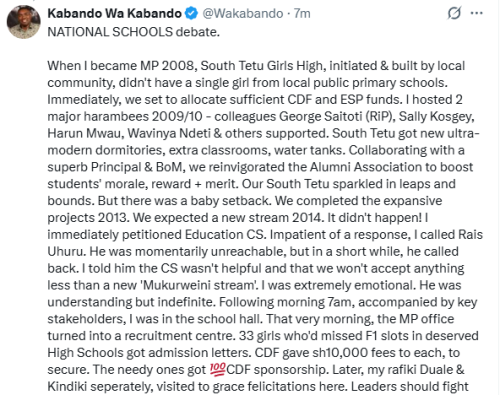
When he became MP in 2008, Wa Kabando observed that despite being locally initiated, South Tetu Girls High School, had not admitted a single student from public primary schools within the constituency. This, he said, prompted immediate intervention through Constituency Development Fund (CDF) and Economic Stimulus Programme (ESP) allocations.
Working alongside fellow leaders and well-wishers through major harambees in 2009 and 2010, Kabando noted that the school benefited from new dormitories, additional classrooms, water facilities, and a revived alumni association. With strong collaboration between the Board of Management and the school administration, South Tetu Girls improved rapidly in performance and student morale.
You Might Also Like
However, the former MP recalled a critical setback after the completion of major infrastructure projects in 2013, when the anticipated expansion to accommodate a new intake stream failed to materialise.
Frustrated by delays at the Ministry of Education, Kabando said he escalated the matter directly to then-President Uhuru Kenyatta. The following day, decisive local action led to the admission of 33 girls who had missed out on Form One placements, with CDF stepping in to cover fees and offer full sponsorship to the most vulnerable.
”Our South Tetu sparkled in leaps and bounds. But there was a baby setback. We completed the expansive projects in 2013. We expected a new stream in 2014. It didn’t happen! I immediately petitioned the Education CS. Impatient for a response, I called Rais Uhuru. He was momentarily unreachable, but in a short while, he called back. I told him the CS wasn’t helpful and that we won’t accept anything less than a new ‘Mukurweini stream’. I was extremely emotional. He was understanding but indefinite,” he said.
Serving locals
Kabando used this experience to underline what he described as the core duty of leadership: fighting for the interests of the people. He argued that schools established and expanded using community resources should reserve a meaningful proportion of their slots for local children, while still maintaining national integration in line with constitutional values.
”Schools established through local community resources should reserve a significant % to benefit local need. They’d, however, integrate to have a face of Kenya. It’s both necessary and constitutional. Noteworthy, politicians who rob their constituents, then take their kids to high-end private schools using stolen public funds, disinherit the poor,” he added.
While acknowledging the importance of diversity in national schools, Kabando warned against a system that sidelines host communities in the name of integration. He also criticised leaders who, he alleged, misuse public funds and then enrol their own children in expensive private schools, effectively abandoning the poor constituents they were elected to serve.
Author
Latest News


Advertisement
More on News