Justice Fatuma Sichale outlines plan to address court shortages
By Mabonga Makhanu, August 26, 2025Lady Justice Fatuma Sichale, who also serves as the Court of Appeal representative in the Judicial Service Commission (JSC), has outlined initiatives by the Judiciary aimed at addressing the shortage of courtrooms across the country.
Speaking during a television interview on Tuesday, August 26, 2025, Justice Sichale explained that the Judiciary has introduced the “Mahakama Popote” system, which allows judges and magistrates with lighter workloads to assist colleagues in other regions through online platforms. This system is intended to ensure cases move faster and backlogs are reduced.
“To ameliorate the problem, we have set up the mahakama popote, whereby a judge or a magistrate who doesn’t really have a lot of work can go online and help. Let’s say you are a judge in Garissa; you can help a judge in Nairobi,” Sichani said.
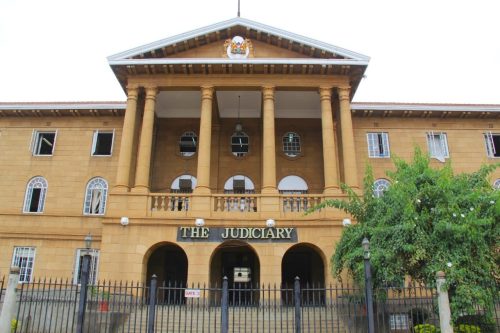
She added that mobile courts have also been introduced to bring justice closer to citizens, particularly in underserved areas. Through this initiative, judges or magistrates can hold sessions in makeshift venues such as tents or even under trees, allowing residents to access justice without having to travel long distances.
“We have also set up mobile courts whereby the court visits the area and the citizens visit the court, where a judge can even sit under a tree or makeshift structures like a tent and attend to cases,” he added.
In addition to these measures, Justice Sichale emphasised the importance of the Alternative Justice System (AJS), which the Constitution recognises as a legitimate avenue for resolving disputes. She noted that AJS plays a critical role in enhancing access to justice, especially for communities with limited access to formal courts.
“These are the initiatives that the Judiciary has undertaken; even the alternative justice system is also extremely important, where the constitution has as well placed a value on the alternative justice system. This is to make justice accessible to Kenyans as much as possible,” she added.
The court shortage
She also noted that, currently, Kenya has 143 magistrates’ courts, a number considered insufficient given the population and demand for justice services. The country also has 47 High Courts spread across 42 counties, leaving some counties without a High Court presence. Justice Sichale stressed that each county should ideally have at least one High Court to ensure equitable access to justice.
“we have 143 magistrate courts, which are not enough; we have 47 high courts in 42 counties, and at least each county should have a high court” she added