Judiciary proposes mobile courts and tough enforcement to curb road accidents
By Ndiritu Wanjiru, March 2, 2026Chief Justice Martha Koome has announced a set of actions that the Judiciary of Kenya has put forth in an effort to mitigate the increasing number of road accidents.
Much of the focus is placed on the prompt prosecution of offenders, the reinforced enforcement of the traffic laws, and coordinated action by the institutions. Among these efforts are the introduction of mobile courts and tough enforcement measures, which she says will reduce road accidents by a large margin.
In an address to the National Council on the Administration of Justice at State House on Monday, March 2, 2026, the Chief Justice noted that the judiciary has been determined to bring accountability on the roads through addressing delays and loopholes that allow traffic offenders to go scot-free.
“The Judiciary remains committed to ensuring accountability and protecting lives through efficient, accessible, and responsive justice. Through these mobile courts and strengthened enforcement measures, we aim to reduce road accidents and save lives,” Koome said.
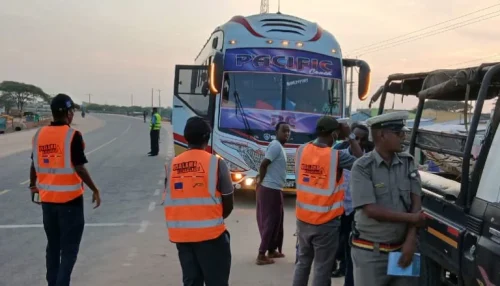
Koome claimed that the introduction of mobile traffic courts on major highways and in areas prone to accidents are some of the main proposals.
The mobile courts will make it possible to instantly process and prosecute any traffic offender, and this means that the offender of the traffic offence is brought before the law at the earliest time possible. She observed that time wastage in the processing of traffic-related cases has led to impunity issues among careless drivers, hence compromising road safety campaigns at the expense of lives.
Multi-agency collaboration
The Chief Justice also highlighted that there should be more active liaisons between the justice and enforcement agencies involved, namely, the National Police Service, the Office of the Director of Public Prosecutions, and the National Transport and Safety Authority. She added that through organised enforcement and sharing of information among such institutions, the issue of traffic violations will be addressed effectively, and those who violate it will be brought to book.
Besides that, the Judiciary has suggested more aggressive actions to curb corruption within the process of traffic enforcement; the Ethics and Anti-Corruption Commission should be involved in overseeing the enforcement operations.
Koome cautioned that corruption undermines the enforcement of road safety and enables rogue drivers to go on without being punished. She encouraged drivers to observe the rules of the road and not to bribe and said that responsibility was the key to lessening accidents.
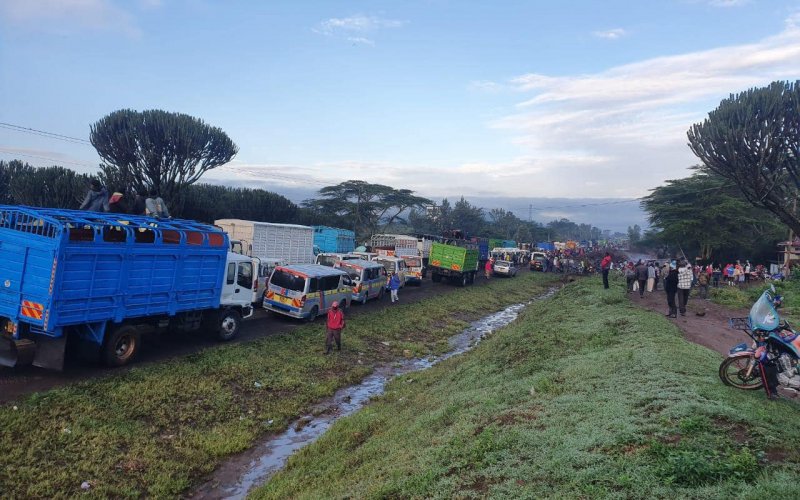
According to the Chief Justice, the Judiciary too was determined to utilise technology and digital platforms to enhance efficiency in the processing of traffic cases to enable quicker access to justice with minimal backlog of cases. As observed, she indicated that most road accidents are avoidable and caused by negligence, overspeeding and inability to comply with the rules of the road.
Koome reiterated that road safety is a collective responsibility between the government institutions, enforcement agencies and the people. She assured that the Judiciary will remain in its mandate of applying traffic laws and administering justice to the traffic offenders, and with the proposed measures, which include the use of mobile courts and an increase in enforcement, she is sure that she will reduce the carnage on the roads as well as save lives throughout the country.