Iran temporarily closes Strait of Hormuz amid indirect talks with US
By Associated Press, February 18, 2026Iran announced the temporary closure of the Strait of Hormuz for live fire drills in a rare show of force as its negotiators held another round of indirect talks with the United States over the Islamic Republic’s disputed nuclear program.
It was the first time Iran has announced the closure of the key international waterway, through which 20 per cent of the world’s oil passes, since the U.S. began threatening Iran and rushing military assets to the region. It was not immediately clear if the strait had been closed, but such a rare and perhaps unprecedented move could further escalate tensions that threaten to ignite another war in the Middle East.
As the talks began, Iran’s state media announced that Iranian forces had fired live missiles toward the strait and would close it for several hours for “safety and maritime concerns.”
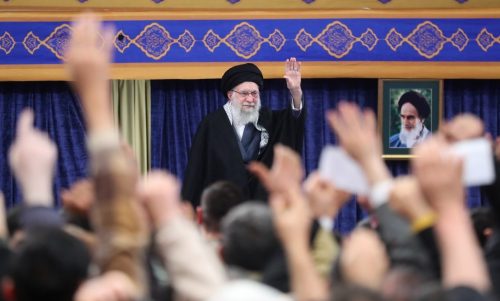
Supreme Leader Ayatollah Ali Khamenei, meanwhile, warned that “the strongest army in the world might sometimes receive such a slap that it cannot get back on its feet.”
New window talks
Iran’s foreign minister later adopted a different tone, expressing optimism about the talks and saying “a new window has opened” for reaching an agreement.
“We are hopeful that negotiations will lead to a sustainable and negotiated solution which can serve the interests of relevant parties and the broader region,” Abbas Araghchi told a U.N. disarmament conference after leading the Iranian delegation at the talks held in Geneva.
He added that Iran “remains fully prepared to defend itself against any threat or act of aggression,” and that the consequences of any attack on Iran would not be confined to its borders.
He made no specific mention of the military drills or the closure of the Strait of Hormuz.
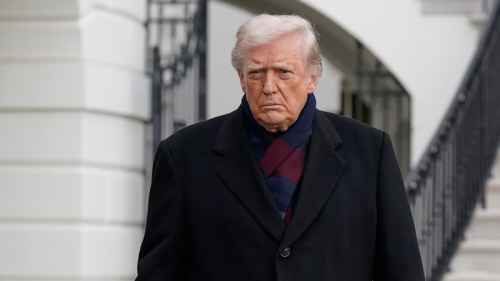
U.S. President Donald Trump, who scrapped an earlier nuclear agreement with Iran during his first term, has repeatedly threatened to use force to compel Iran to agree to constrain its nuclear program. Iran has said it would respond with an attack of its own. Trump has also threatened Iran over the killing of protesters.
Trump’s envoys, Steve Witkoff and Jared Kushner, led the U.S. delegation at the latest indirect talks, held inside the residence of the Omani envoy to Geneva. Oman, a longtime regional mediator, had hosted an earlier round on February 6, 2026.
There was progress in the talks, but many details remained to be discussed, according to a U.S. official who was not authorised to comment publicly and spoke on condition of anonymity. The Iranian delegation said they would present more detailed proposals in the next two weeks to narrow gaps, the official said.
“In some ways, it went well,” U.S. Vice President JD Vance said in an interview with Fox News Channel after he spoke with Witkoff and Kushner. “But in other ways, it was very clear that the president has set some red lines that the Iranians are not yet willing to actually acknowledge and work through.”