Advertisement
Inside Trump’s executive order preventing states from regulating AI
Friday 12th December, 2025 05:59 PM|

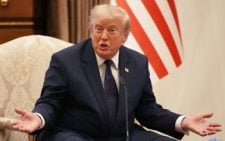
President Donald Trump signed an executive order on Thursday, December 11, 2025, that seeks to halt any laws limiting artificial intelligence and block states from regulating the rapidly emerging technology.
The order also creates a federal task force that will have the “sole responsibility” of challenging states’ AI laws.
At a signing ceremony, the president touted AI companies’ enthusiasm for wanting to “invest” in the United States and said that “if they had to get 50 different approvals from 50 different states, you could forget it”.
Republicans earlier this year failed to pass a similar 10-year moratorium on state laws that regulate AI as part of Trump’s One Big Beautiful Bill Act, with the Senate voting 99-1 to remove that ban from the legislation. Trump’s order resurrects that effort, which failed after bipartisan pushback and Republican infighting, but as an order that lacks the force of law.
You Might Also Like
The “Ensuring a national policy framework for artificial intelligence” order is a victory for Silicon Valley and AI companies that have lobbied against the regulation of their technology, arguing that a hodgepodge of state laws would burden the industry with unnecessary bureaucracy.
AI firms and the Trump administration have not presented any comprehensive proposals for regulating AI’s social, environmental and political harms; however, they have left in place only federal regulation, lax in comparison with legislation some states have passed or considered.
The order includes various mandates aimed at preventing the regulation of AI, including instructing the Department of Justice to create an “AI Litigation Task Force” whose sole responsibility is to challenge state laws. The order also demands a review of existing state laws that could “require AI models to alter their truthful outputs”.
Likely targets include California, which requires companies to disclose their safety testing for new AI models, and Colorado, which requires employers to conduct risk assessments for algorithmic discrimination in hiring and take precautions against it.

Trump’s order has received pushback from state leaders across the country and various civil liberties groups. They say this order will lead to more power in the hands of Silicon Valley companies and that, in turn, more vulnerable people and children will be exposed to the harms of chatbots, surveillance and algorithmic control.
“Trump’s campaign to threaten, harass and punish states that seek to pass commonsense AI regulations is just another chapter in his playbook to hand over control of one of the most transformative technologies of our time to big tech CEOs,” said Teri Olle, the vice-president of Economic Security California Action, which co-sponsored AI safety legislation in California this year. “This is not about allowing for American innovation.”
Trump has framed the need for comprehensive AI regulation as both a necessity for the technology’s development and as a means of preventing leftist ideology from infiltrating generative AI – a common conservative grievance among tech leaders such as Elon Musk.
“You can’t go through 50 states. You have to get one approval. Fifty is a disaster. You’ll have one woke state, and you’ll have to do all woke,” Trump said at the US-Saudi Investment Forum last month. “You’ll have a couple of wokesters, and you don’t wanna do that. You wanna get the AI done.”
Earlier this week, he reiterated that sentiment in a post on Truth Social, saying: “We are beating ALL COUNTRIES at this point in the race, but that won’t last long if we are going to have 50 States, many of them bad actors, involved in RULES and the APPROVAL PROCESS. THERE CAN BE NO DOUBT ABOUT THIS! AI WILL BE DESTROYED IN ITS INFANCY!”
Author
Latest News







Advertisement
More on News