Inside Ruto-Kanja’s police funding quagmire over 2027 polls’ safety
By Aloys Michael, May 13, 2026A growing funding crisis within the National Police Service (NPS) is exposing the fragile state of Kenya’s security preparedness ahead of the 2027 General Election, raising questions about whether President William Ruto’s administration can deliver a credible and secure electoral process amid rising political tensions.
Inspector General Douglas Kanja has now publicly acknowledged that the police service lacks the personnel, transport equipment and aviation capacity needed to effectively secure the country as political activity intensifies ahead of the polls.
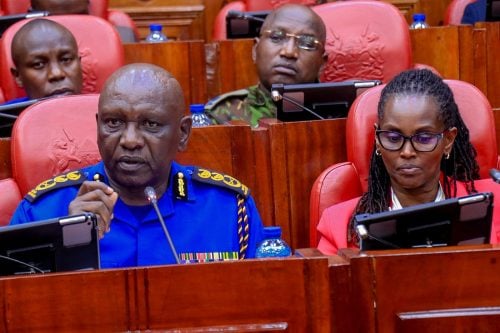
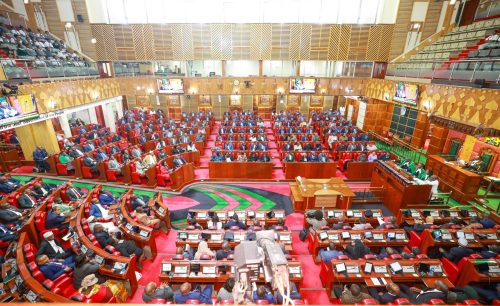
Appearing before the National Assembly Administration and Internal Security Committee during deliberations on the 2026/27 budget estimates on Tuesday, May 12, 2026, Kanja warned that a severe budget shortfall has stalled plans to recruit 15,000 additional police officers needed before the elections.
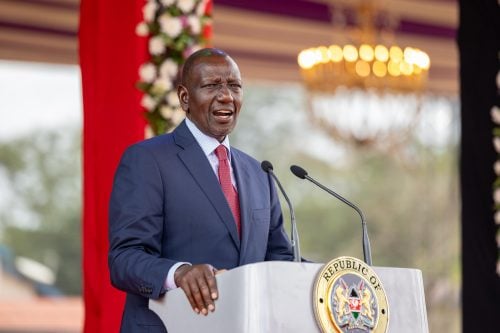
The revelations place President Ruto’s earlier promises on police reforms and security modernisation under renewed scrutiny.
During his first address to the nation after taking office in 2022, Ruto pledged to end political interference in the police service and restore operational independence by granting the Inspector General financial autonomy.
“The operational autonomy of the office of IG has been undermined by the continued financial dependence on the Office of the President,” Ruto said at the time.
The president argued then that financial independence would strengthen professionalism within the police service and end what he described as the political weaponisation of the criminal justice system.
However, nearly four years later, the police leadership is now warning Parliament that the service cannot even meet its most basic operational requirements without urgent financial intervention.
Reality check?
At the centre of the crisis is a failed recruitment target that now threatens election preparedness.
The government had planned to recruit 25,000 officers during Ruto’s first term, but only 10,000 officers have so far been enlisted, leaving a deficit of 15,000 personnel.
The National Treasury allocated only Ksh2.9 billion for recruitment against a requirement of Ksh6.3 billion in the next financial year, creating a major gap in staffing plans.
Kanja disclosed that most of the allocated funds will instead be used to clear pending bills for recruits currently undergoing training.
“The lion’s share of those funds will go towards settling pending bills for operations of the 10,000 recruits currently under training,” Kanja told lawmakers.
The IG warned that unless Parliament allocates more funds, fresh recruitment may not happen at all.
“For fresh recruitment to be undertaken, additional funding must therefore be provided. There is a huge gap, and this is an area that this committee needs to look into seriously,” he added.
The funding concerns come barely a year after Ruto announced a fresh recruitment drive targeting 10,000 police officers, including 4,000 drawn from the National Youth Service (NYS).
Speaking during an NYS pass-out parade in August 2025, Ruto framed the recruitment as part of efforts to strengthen national security and maintain peace ahead of growing political activity.
“I have already given instructions to the Ministry of Interior that next month, when we recruit 10,000 police officers, 4,000 of them must come from the National Youth Service,” Ruto said.
But despite the presidential directive, police leadership now says the current financial allocations are insufficient even to sustain officers already in training.
NPS Secretary and Accounting Officer Bernice Lemedeket told MPs that the current recruits are merely replacing officers leaving the service through retirement, resignation and death, meaning the actual police strength is not increasing.
“Our strategic plan for the next five years was to recruit 25,000 police officers, but we have only recruited 10,000 so far. We therefore have a shortage of 15,000 officers as we prepare for the elections,” Lemedeket said.
“The 10,000 recruits currently in training will only fill attrition gaps. They are not an addition to the existing numbers.”
The staffing crisis is emerging at a politically sensitive moment.
2027 goons insecurity threat
A fresh wave of political tension has gripped the country after opposition leaders accused the state of tolerating violent attacks by criminal gangs reported to be targeting political leaders and supporters.
Following an incident in Kiambu County where opposition figures claimed they were attacked, DAP-K leader Eugene Wamalwa warned that the country risks sliding into instability.
“Yesterday was a worse day. As a country, we are headed in the wrong direction and is in danger,” Wamalwa said.
He accused sections of the political leadership of enabling collaboration between criminal groups and security officers.
“Agreeing to let our police officers go into bed with goons is a threat to our national security and democracy,” he said.

The opposition’s concerns have amplified fears over whether the police service can remain neutral, professional and sufficiently equipped to handle heightened political contestation ahead of 2027.
Logistical weaknesses
Beyond personnel shortages, the NPS also revealed major logistical weaknesses that could undermine national security operations during the election period.
Kanja disclosed that only three police aircraft are currently operational out of a fleet of nine, limiting the service’s surveillance, emergency response and deployment capabilities.
“We have three operational aircraft, two fixed-wing aircraft and one Mi-17 helicopter, while nine aircraft remain at the hangar awaiting restoration through investment,” he said.
According to Kanja, the aviation unit deteriorated after aircraft were transferred away from the police service years earlier, forcing the NPS to rebuild its air support operations almost from scratch.
“We are almost starting from scratch, and we need a lot of support in that direction,” he told MPs.

The police service has already budgeted Ksh102 million for the refurbishment of the Mi-17 helicopter and repairs to another grounded aircraft with gearbox problems.
Kanja also appealed for the acquisition of two new fixed-wing aircraft with a carrying capacity of between 19 and 24 passengers to support surveillance operations, disaster response and deployment in difficult terrain, particularly in North Eastern Kenya.
The transport situation on the ground paints an equally troubling picture.
According to the Inspector General, the NPS requires about 8,400 vehicles nationwide but currently operates only 2,833 operational vehicles, while another 1,066 remain grounded.
The deficit leaves the service operating at barely half of its required transport capacity, severely affecting mobility and rapid deployment.
Kanja said the service is now considering transitioning to electric vehicles for urban policing while retaining diesel-powered units for rural operations.
Despite the Treasury allocating the NPS Ksh143.19 billion for the next financial year, police leadership maintains the amount falls significantly below operational requirements at a time when security demands are rapidly increasing.