Advertisement
How world’s biggest oil shock is testing Kenya’s green transition, World Bank
Saturday 23rd May, 2026 11:28 PM|

Kenya’s ambitious green transition is facing a brutal stress test after the World Bank warned that the world is experiencing the largest oil supply shock in modern history, exposing East Africa’s dangerous dependence on imported fossil fuels at a time of rising public anger over living costs.
In its new State and Trends of Carbon Pricing 2026 report, the World Bank says disruptions to global oil supplies and shipping routes have triggered unprecedented volatility in energy markets, forcing governments worldwide to reconsider climate policies as households struggle with inflation and high fuel prices.
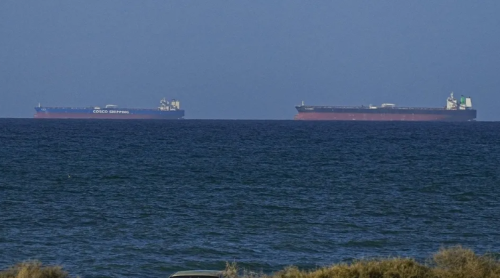
“The reduction of global oil supply in March 2026, estimated at around 10 million barrels per day, represents the largest oil shock on record,” the report states, adding that disruptions through the Strait of Hormuz are also affecting trade in natural gas, fertiliser, and aluminium.
For Kenya and the wider East African Community (EAC), the implications are severe.
You Might Also Like
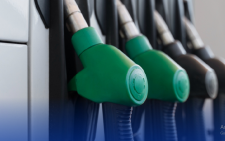
Kenya imports nearly all its petroleum products, making the economy acutely vulnerable to global fuel shocks. Rising diesel and petrol prices quickly spill into food inflation, transport costs and electricity prices, while fertiliser imports critical to regional agriculture remain exposed to disruptions in Gulf shipping routes.
The World Bank warns that governments are already retreating from some climate pricing policies because of political pressure linked to fuel costs. Ireland, for example, delayed a planned carbon tax increase after surging fuel prices triggered public concern.
That tension is increasingly visible in Kenya, where policymakers are trying to balance climate commitments with mounting economic frustration among consumers and businesses squeezed by inflation.
The crisis comes as African governments are simultaneously pursuing new fossil fuel infrastructure even while promoting green energy transitions.
Nigerian billionaire Aliko Dangote is currently in discussions with East African leaders over a proposed mega refinery estimated to cost between $15 billion and $17 billion, modelled after his 650,000-barrel-per-day Lagos refinery.
The planned facility would process crude oil from Uganda, Kenya, South Sudan and the Democratic Republic of Congo, potentially reshaping East Africa’s fuel supply chains and reducing dependence on imported refined petroleum.
But the project has already exposed geopolitical rivalries within the region.
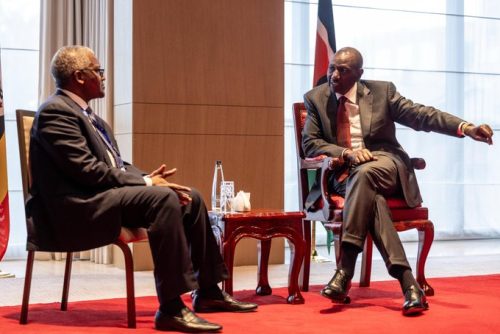
President William Ruto reportedly pushed for the refinery to be located in Tanzania’s port city of Tanga, while Dangote is said to favour Mombasa because of its deep-water port and stronger domestic fuel demand.
Ugandan President Yoweri Museveni has backed the proposal even as Uganda pursues its own 60,000-barrel-per-day refinery in Hoima. Tanzania has also entered direct talks with Dangote following diplomatic tensions over the proposed location.
The refinery proposal shows a deeper contradiction confronting African economies: governments want to accelerate clean energy transitions, but energy insecurity and public anger over fuel prices are pushing leaders toward more oil investments.

The World Bank notes that carbon pricing systems now cover 29 per cent of global greenhouse gas emissions through 87 implemented policies worldwide.
Yet many developing economies remain hesitant to impose aggressive carbon taxes that could worsen already fragile living conditions.
Sub-Saharan Africa’s average carbon price remains relatively low at about Ksh3200per tonne of carbon dioxide equivalent, far below Europe’s average of Ksh10,880.
Kenya itself remains only in the “under consideration” category for carbon pricing systems.
Still, the current oil shock could also accelerate the region’s shift toward renewable energy.
Kenya already generates most of its electricity from geothermal, hydro, wind and solar sources, giving it one of Africa’s cleanest power grids. Analysts say the crisis could strengthen the case for electric mobility, expanded geothermal investments and regional clean energy integration as governments seek insulation from volatile oil markets.
But the transition may not happen fast enough.
The World Bank cautions that commodity disruptions are forcing policymakers globally to rethink how climate policies interact with inflation, political stability and energy security.
For East Africa, the danger is that climate politics could become politically toxic just as the region faces mounting pressure to decarbonise global trade, reduce emissions and protect vulnerable households from economic shocks.
The result is a growing dilemma at the heart of Africa’s energy future: whether governments can pursue green transitions while citizens are struggling simply to afford fuel, food and transport.
Author
Latest News







Advertisement
More on News