Advertisement
How counties bleed billions as payroll fraud fuels the devolution crisis
Friday 10th April, 2026 11:51 PM|

A fresh collision between payroll fraud and entrenched corruption is exposing a deepening crisis in the counties, one that now threatens devolution itself.
A special audit by Auditor-General Nancy Gathungu has flagged hundreds of suspected ghost workers across 26 counties, raising alarm over runaway wage bills and shrinking funds for development.
At the same time, a new survey by the Ethics and Anti-Corruption Commission (EACC), dubbed the Kenya Gender & Corruption Survey 2025, exposed how systemic corruption is choking public services at the grassroots.
Together, the findings reveal a dangerous pattern: counties are spending heavily on workers who may not exist, while citizens are forced to pay bribes to access basic services. The result is a double drain on public resources and a growing crisis in human capital.
You Might Also Like


The Auditor-General’s report found that 596 out of 2,354 sampled county employees, about 25.3 per cent, could not be physically verified, despite earning a combined Ksh978 million over three years.

Payroll fraud draining counties
The report warns that this could be just the tip of the iceberg. If the pattern is replicated across the wider workforce, counties could have lost an estimated Ksh33.5 billion in the 2024/25 financial year alone.
Counties like Machakos, Mandera, Nairobi, Samburu and Nandi recorded some of the highest rates of untraceable staff, pointing to a systemic problem rather than isolated fraud.
This is money that should be building hospitals, hiring real doctors, or funding schools, but is instead locked in payrolls for non-existent employees.
The EACC survey reinforces the scale of the problem, showing corruption is not just financial, but deeply embedded in service delivery.

“Corruption remains one of the most significant impediments to sustainable development, undermining institutions and eroding public trust,” the report released on Thursday, April 9, 2026, notes.
“Disproportionately affects vulnerable populations, by limiting access to essential public services and undermining fairness in service delivery.”
At the county level, this is already visible. Health departments are perceived as the most corrupt, while bribery is widespread in services like birth certificates, healthcare, and policing.
Even more troubling, 84.3 per cent of bribes are paid before services are delivered, effectively turning public services into pay-to-access systems.
The human capital crisis
The link between ghost workers and corruption becomes clearer when viewed through the lens of human capital.

Counties are spending billions on salaries, yet hospitals lack staff, classrooms are overcrowded, and essential services remain understaffed.
This paradox is explained by payroll fraud. Money that should recruit nurses, teachers, and technicians is instead diverted to ghost workers.
Meanwhile, real workers are overwhelmed, underpaid, or forced into corrupt practices to survive.
“Corruption not only diverts resources but also deteriorates the quality of public services and deepens inequality,” EACC says.
In effect, counties are losing both money and talent, undermining the very foundation of devolution.

Devolution under strain
Devolution was designed to bring services closer to the people. But rising recurrent expenditure, especially on salaries, now threatens that promise.
With counties spending over Ksh132 billion on salaries, the surge in ghost workers means a significant share of this budget may be wasted.
This crowds out development spending. Roads are not built. Hospitals are not equipped. Youth remain unemployed.
Instead, funds circulate within corrupt networks, fueling patronage rather than progress.
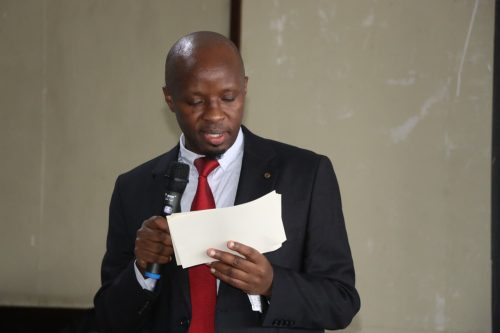
The EACC survey warns that corruption “undermines institutions and weakens the rule of law,” creating conditions where inefficiency and impunity thrive.
Perhaps the most alarming finding is the culture of silence.
According to the EACC, 98.6 per cent of Kenyans who paid bribes did not report.
Many believe that reporting is useless or that they will face retaliation. This allows both ghost workers and everyday corruption to persist unchecked.
Without accountability, counties risk becoming trapped in a cycle where funds are looted, services collapse, and public trust erodes further.
The audit warns that if unchecked, it could derail devolution, turning counties into wage-heavy, service-poor entities unable to deliver development.
Author
Latest News








Advertisement
More on News