Advertisement
Holiday tuition makes learners hate schooling altogether
Friday 15th July, 2022 04:30 AM|
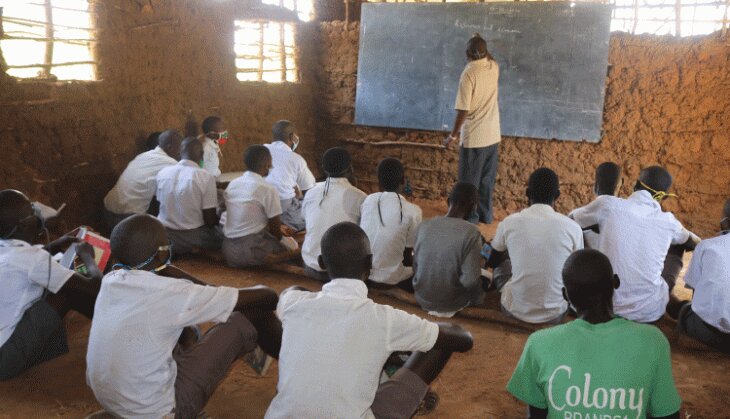
Learners in basic education institutions officially returned to school for their second term this week.
Some primary schools didn’t actually allow learners to go for the 10-day school holidays. They continued with ‘normal learning’, disregarding the school calendar as stipulated by the Ministry of Education.
Early Learning and Basic Education PS Julius Jwan criticised the schools, saying the government had given the break in the 2022 school calendar, to allow learners to relax.
“Give parents time to be with their children,” Dr Jwan asked teachers, reacting to reports that some schools used the break for holiday tuition.
The provision of school holidays is a common feature in all educational systems in the world. In the vast majority of education systems, authorities mandate a certain number of years—and a set quantity of hours per year—during which pupils are required to be in school and engaged in classroom learning.
In a paper entitled Instructional Time and Curricular Emphases: US State Policies in Comparative Perspective, a Senior Policy Analyst on the Education for All Global Monitoring Report team located at UNESCO, Aaron Benavot, notes that educational authorities are particular about the organisation of schools because instructional time is critical in achieving general education aims and purposes as well as specific curricular goals in an education system.
The school calendar—school days and holidays—are no accident in a national educational system. Both meet ‘general education aims and purposes as well as specific curricular goals.’
Regrettably, when schools disregard the calendar they compromise many things. They compromise the broader general education and curriculum goals.
The ministry looks at education from a wide-ranging perspective. It looks at equipping children with essential knowledge critical to navigating their way in a global, cultural, social, political, economic, personal and technological environment. It also looks to equip them with values—a moral compass to enable them to make informed choices in life.
It also aims at creating learning opportunities within and outside school, to enable children to develop a broad knowledge of biological and physical sciences, humanities and creative arts and social sciences. The overall aim of the curriculum or the syllabus is to ignite or entice the learner to take charge of his or her own education.
Schooling with holidays enables children not only to relax but refresh their minds. Holidays give them the opportunity to bond with relatives and the community. It also exposes them to experiences outside school that broaden their minds, sometimes finding the things they learn in school being played out in real life.
Holiday tuition, therefore, ignores the broader aims of education. It alienates children from their family, friends and the rest of society. The most damaging aspect of holiday and weekend tuition—for day and boarding schools alike—is that it affects the nurturing of community responsibility and family loyalty in the psyches of learners.
The prescribed curriculum does not encompass the whole of life. It is important that children get a chance to see the application of what they learn outside the classroom.
When he called a presser to ban holiday tuition in 2012, former education minister, the late Mutula Kilonzo, said learners should be accorded an opportunity to relax and learn important social skills through interactions outside school as this was important in coping with the world of work and the complexities of modern life when they grow up.
Some of the bloodiest student indiscipline in secondary schools happened in the late 90s when learners were made to study for unbelievably long hours during the weekdays, and weekends, including school holidays.
The Report on the Task Force on Student Discipline and Unrest in Secondary Schools, 2001, chaired by Naomy Wangai and the report of the Special Investigation Team on School Unrest in 2016, chaired by Claire Omollo formed in the wake of widespread unrest among students in secondary schools. Both reports make references to congested school routines or programmes that leave little or no room for relaxation as it was in the early 90s and back.
Schooling without giving children room to relax during school days and holidays has three effects on students: it alienates children from their families, and society; it makes them hate not just schooling but learning altogether; and the worst of all, it creates psychopathic behaviour in students.
— The writer is Communications Officer, Ministry of Education
Author
PD columnist
View all posts by PD columnistLatest News








Advertisement
More on News