Advertisement
Govt to replace paper degrees with digital verifiable credentials – CS Kabogo
Wednesday 01st October, 2025 04:42 PM|

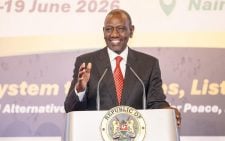
Cabinet Secretary for Information, Communications and the Digital Economy (MICDE) and the former Kiambu Governor William Kabogo have stated that Kenya is preparing to replace traditional paper degrees with digital, verifiable credentials, a move he believes will transform the country’s education and job market systems.
Kabogo, who spoke while opening a stakeholders’ workshop on verifiable credentials, explained that the government is putting in place mechanisms to ensure that academic certificates can be issued and authenticated through a secure digital system.
“The Government of Kenya is establishing effective mechanisms for replacing issuance of paper degrees with a Digital Verifiable Credential, which can be securely authenticated using a digital system,” Kabogo said.

The workshop brought together officials from the Ministry of Information, Communications and the Digital Economy, the Ministry of Education, and the Tony Blair Institute (TBI), among other partners. The discussions centred on establishing a shared understanding of how verifiable credentials and digital wallets can be implemented, tested, and ultimately adopted nationwide.
You Might Also Like



Kabogo explained that paper certificates have long exposed Kenya’s labour market to risks. Manual checks often delay issuance, and the costs incurred in handling paper-based documents have created inefficiencies. He added that fake academic certificates and fraudulent credentials have undermined the credibility of qualifications.
“Implementing Verifiable Credentials addresses risk factors directly impacting Kenya’s labour market, such as incurring costs due to paper certificate issuance and delay in issuance of certificates by various institutions due to manual checks,” he noted.
He said the new system would safeguard privacy and data security, restore integrity in the education sector, and make verification faster and more transparent. For students and job seekers, this shift promises less bureaucracy and faster access to opportunities.

Kabogo further stressed that digital credentials would not only serve Kenya but also set the stage for adoption across Africa, making the region a leader in modernising education and employment systems.
“The successful implementation of this process will pave the way for rolling out Verifiable Credentials across Africa,” Kabogo said.
The workshop was attended by ICT E-Government and Digital Economy Secretary Mary Kerema, alongside experts from the Tony Blair Institute, including Andrew Ferrier, Michael Viano, and Charles Kinyeki, as well as representatives from the Ministry of Education.
With Kenya’s commitment to move away from paper-based processes, the shift to digital academic credentials marks a major step in aligning education with the realities of a fast-changing digital economy.
Author
Latest News







Advertisement
More on News