Advertisement
Govt sets one-month payroll deadline as HRIS migration becomes mandatory nationwide
Wednesday 08th July, 2026 03:48 PM|

The government has issued a one-month ultimatum to all ministries, departments, state agencies and county governments to migrate to the Human Resource Information System (HRIS), warning that institutions that fail to comply risk having their salaries withheld.
The directive, announced by Cabinet Secretary for Public Service Geoffrey Ruku, places HRIS compliance at the centre of new government efforts to tighten payroll management, eliminate fraud and improve accountability across the public sector.
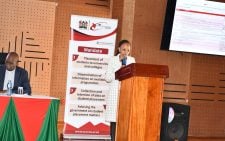
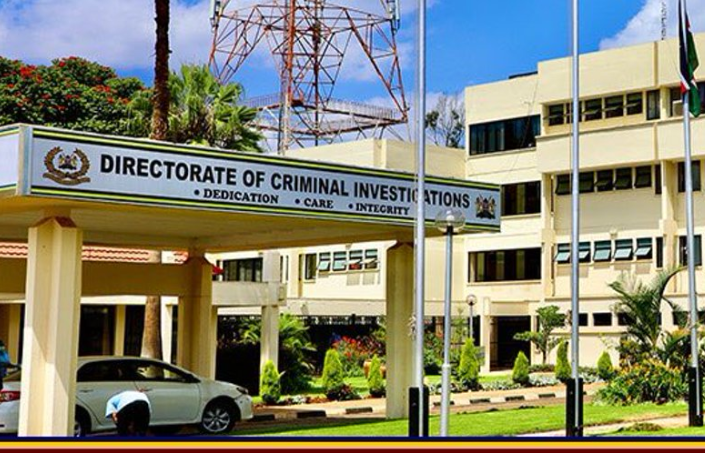
Speaking on Wednesday, July 8, 2026, during the handover of an independent payroll audit report to the Director of Criminal Investigations (DCI), Ruku said the government would no longer process salary payments for public institutions that remain outside the new digital payroll platform after the set deadline.
“We have issued a circular that all ministries, departments and county governments must be onboarded on the HRIS, and we have given them a period of one month to do so. If they fail to do that within the period, the salaries will not be remitted,” Ruku stated.
You Might Also Like



The mandatory migration follows a Cabinet decision to adopt HRIS after an audit of the existing public payroll system uncovered suspected irregularities amounting to Ksh6.2 billion.

X
The findings prompted the government to launch a wider investigation into possible payroll fraud, with the DCI tasked with examining cases requiring criminal action.
“As part of the implementation process, I am here today to formally hand over the payroll audit document to DCI Director General Mohamed Amin to mark the commencement of the investigative process on matters requiring criminal investigations as identified in the findings,” the CS added.
Ruku said the move reflects the government’s commitment to ensuring claims of fraud, abuse of office and financial misconduct within the public service are investigated independently and handled according to the law.
Under the new system, the government expects to achieve real-time monitoring of payroll activities across national and county governments, allowing authorities to detect unauthorised changes and suspicious transactions more quickly.
“We are monitoring all the activities in the system in real time. Any single manipulation can be seen from our side,” Ruku said.
Tackling payroll fraud
The CS explained that HRIS has been designed to accommodate all government institutions, including county governments, and will serve as a central platform for managing public sector employee information and payroll processes.
The government is also working on integrating HRIS with other public financial management systems, including the Integrated Financial Management Information System (IFMIS), in a bid to strengthen controls over government spending and enhance transparency.
As part of the reforms, the Ministry of Public Service will establish continuous payroll audits across government institutions. Ruku said audit teams have already been created in every ministry and department, with similar teams expected to be introduced in county governments.
The CS further called on the Salaries and Remuneration Commission (SRC) to provide approved salary structures for all government agencies and urged the Public Service Commission (PSC) to approve human resource instruments for public institutions within one month.
The HRIS migration deadline now places government agencies under pressure to complete the transition as the state moves to replace manual payroll controls with a unified digital system designed to improve oversight of public sector salaries.
Author
Latest News







Advertisement
More on News