Advertisement
Govt moves to calm Mwea rice farmers as PS Rono orders immediate purchase of local stocks
Friday 29th May, 2026 11:54 AM|

The government has moved to ease growing anxiety among rice farmers in Mwea after Agriculture Principal Secretary Paul Kipronoh Rono directed the Kenya National Trading Corporation (KNTC) and the National Cereals and Produce Board (NCPB) to immediately purchase all available rice stock from stores across the Mwea Irrigation Scheme.
The directive comes amid sharp criticism from farmers over the government’s decision to allow additional rice imports into the country, with many local producers fearing the move would further suppress prices and leave them counting losses.
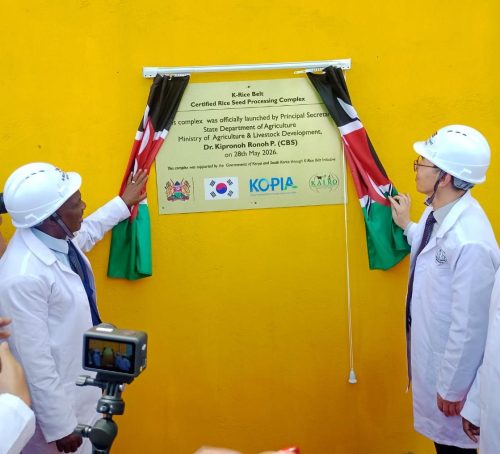
PHOTO/Bancy Lole
Speaking on Thursday, May 27, 2026, during the launch of a certified seed facility at Kirogo Farm in Mwea, Rono defended the government’s importation plan, insisting that Kenya still faces a rice production deficit and cannot fully meet local demand.
“We must first buy all locally produced rice before importing the deficit. The government has enough funds to purchase farmers’ rice, and no farmer should suffer losses because of delayed purchases,” said Rono.
The PS admitted that rice farmers in Mwea have endured years of exploitation characterised by low prices, delayed payments and lack of access to certified, quality seeds.
“For many years, our farmers have struggled due to poor prices and delayed payments, but the government is now focused on ensuring farmers get better returns for their hard work,” he said.
Rono maintained that rice imports remain necessary to cushion Kenyans from possible food shortages and rising prices.
“Kenya does not produce enough rice to meet local consumption demand. Imports are necessary to stabilise food prices and prevent shortages that could make food unaffordable for ordinary Kenyans,” he added.
Kenya Kwanza’s pledge
The PS further assured farmers that the Kenya Kwanza administration is committed to reviving the agricultural sector and addressing long-standing challenges facing rice, coffee, and tea farmers.
At the same time, Rono issued a stern warning to cooperatives and traders accused of exploiting farmers through the illegal sale of subsidised fertiliser at inflated prices.

PHOTO/Bancy Lole
“We will not tolerate individuals or cooperatives selling subsidised fertiliser above the recommended price of Sh2,500,” warned the PS. “Those frustrating government efforts to support food production will face decisive action.”
He urged farmers to report cases of overpricing and misuse of the fertiliser subsidy programme, saying the initiative was introduced to lower production costs and strengthen food security.
Food security
You Might Also Like

Rono announced that cooperatives will now be directly responsible for distributing fertiliser to farmers within their areas to improve accountability and ensure genuine farmers benefit from the subsidised farm inputs.
subsidised
The move is expected to restore confidence among farmers in Mwea, one of Kenya’s leading rice-producing regions, where concerns over imports and rising production costs have continued to trigger tension within the sector.
Author
Latest News








Advertisement
More on News