Advertisement
Gender disparity key barrier for women in employment
Tuesday 01st July, 2025 02:20 AM|
Experts have revealed that gender disparity is the main barrier women face in employment, warning that structural and cultural barriers continue to lock them out of meaningful economic participation despite gains in education.
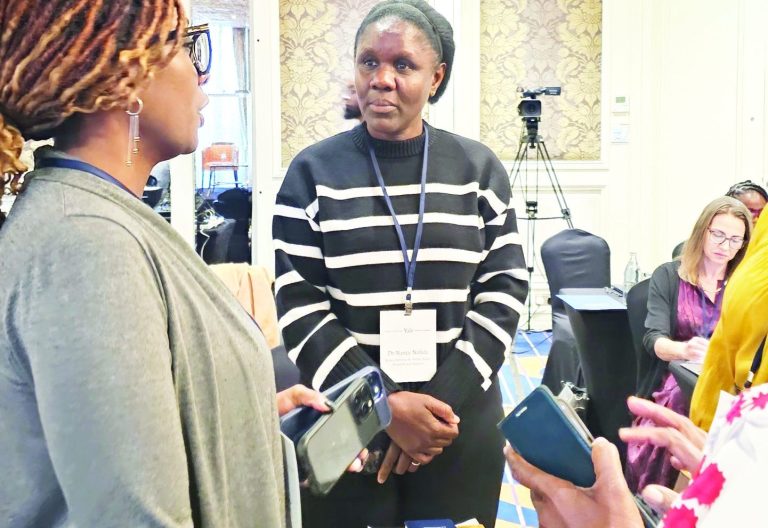
A high-level policy forum held in Nairobi on June 30, 2025, brought renewed attention to the persistent gender disparities in Kenya’s labour market, with experts highlighting the consequences of gender gaps found in industries.
Yale Economic Growth Centre (EGC) and Yale Inclusion Economics (YIE) hosted a dialogue between researchers, policymakers, and the private sector on how rigorous evidence can inform strategies to drive human capital investments, gender equality and economic transformation in Kenya.
During the event, Nancy Nafula from the Kenya Institute for Public Policy Research and Analysis (Kippra) explained the imbalance in formal employment. She also cited data from the Kenya National Bureau of Statistics (KNBS), noting that while 1.8 million men are formally employed in Kenya, only 1.2 million women hold similar jobs.
You Might Also Like


“The labour market is already skewed towards male employment. This is despite the fact that we have nearly closed the gender gap in basic education. However, gaps remain glaring at higher levels of education, where access becomes more limited for women, she said.
Nafula explained that even for those women who attain higher education, entry into well-paying sectors such as ICT and manufacturing remains limited.
Unrecognised work
“Many women are channelled into caregiving and lower-paying health sector jobs like nursing,” she said.
She also highlighted that one of the critical structural barriers is women’s limited access to productive assets like land.
“To date, most women do not own land, and even those who do often lack title deeds. Without land ownership, access to credit is nearly impossible because banks require collateral,” she said.
Another persistent challenge is the burden of unpaid care work, which, according to Nafula, continues to distort female participation in the labour market.
“KNBS data shows women spend five times more than men on unpaid care work. This limits their time for income-generating activities, yet such work is not even recognised as formal employment,” she noted.
Although efforts are underway to explore how unpaid work might contribute to GDP calculations, Nafula cautioned that it currently remains a hidden barrier to women’s economic empowerment.
Rohini Pande, a professor of economics at Yale University, echoed the need for structural reforms but also stressed the role of targeted industrial policy. She noted that many countries, especially in Africa, are revisiting industrial policy as a tool to steer inclusive growth amid changing global trade dynamics.
Pande underscored the need to consider human capital and access to resources, including land, as factors that limit women’s participation in growth sectors.
“If women lack access to education in key areas or have heavy unpaid care burdens, they can’t compete fairly. This is where government intervention is needed,” she added, while also calling on the private sector to play a role, noting the importance of “amenities” that make workplaces more suitable for women.
Nafula expounded on the cultural and institutional barriers that further limit women’s career progression. She pointed out that despite legal frameworks meant to promote gender equality in hiring and promotions, real-world implementation falls short.
“Employers sometimes prefer to hire men because they assume women will need maternity leave. When women are hired, they often get lower-tier roles, making upward mobility extremely difficult,” she said.
She noted that even within the same organisations, men are more likely to be promoted to decision-making roles.
“Women remain stuck in the lower echelons of the workforce. The ideal legal protections exist, but employers still discriminate during recruitment and promotions,” she said.
The session reflected the growing global consensus that economies cannot thrive while sidelining half the population. Experts stressed that excluding women from the labour force comes at a cost to national productivity and GDP growth.
“The evidence is clear, countries that fail to match women’s skills with appropriate opportunities are leaving money on the table. Inclusive economic transformation is not just a moral imperative, it’s an economic one,” said Pande.
The experts are calling for policymakers, civil society, and the private sector to collaborate in removing the layered barriers that women face from unpaid labour and access to assets to educational opportunity and discriminatory workplace cultures.
Author
Faith Macharia
View all posts by Faith MachariaLatest News







Advertisement
More on News