Advertisement
Fuel price shock: LSK President Kanjama warns of deepening cost-of-living crisis
Friday 15th May, 2026 09:06 AM|

Law Society of Kenya (LSK) President Charles Kanjama has raised concern over the timing and structure of the price hike, arguing that the impact will ripple far beyond fuel stations and into nearly every corner of the economy, from transport fares to food prices and small business operations.
Taking it to his social media handles on Friday, May 15, 2026, the Law Society of Kenya (LSK) President Charles Kanjama has said that the hike will have a domino effect, extending beyond fuel stations to virtually every facet of the economy, including transport fares and prices of food and small businesses.
“The sharp increase in fuel prices announced by EPRA, particularly the Ksh46.29 rise in diesel prices, will inevitably intensify pressure on households, public transport, small businesses and the overall cost of living. Diesel remains central to transport, food production and commercial activity, meaning the inflationary impact of this adjustment will be felt across the economy, especially by ordinary Kenyans already under strain,” Kanjama noted in a statement.
According to the lawyer, diesel is likely to be the worst affected, as it is used in Kenya’s transport sector, agriculture and commercial logistics. He has said that the rise will almost translate to higher matatu fares, a higher cost of goods and higher operational costs for small and medium enterprises, which are already facing thin margins.
Global oil market crisis
You Might Also Like


Kanjama has further noted that global oil market upheavals, such as the current persistent instability in the Persian Gulf, mean the Kenyan government cannot unlink fuel pricing from its overall duty to cushion Kenyans against unnecessary shocks in the economy under the constitution.
He referred to Article 201 of the Constitution that mandates that public finance foster fairness, equity and responsible utilisation of public resources. He said it is therefore very important that fuel pricing decisions should be made not only based on market dynamics but also on their social and economic impact on the ordinary Kenyan citizens.
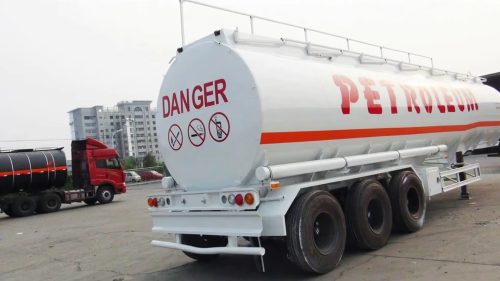
The government has admitted a subsidy of Ksh5 billion for the Petroleum Development Levy to “cushion” consumers against the price hike, but Kanjama says that is not enough in today’s situation. He is urging policy action that is more coherent and more aggressive to avoid some “unnecessary economic pain”.
He has also expressed worry that Kenya has become more and more dependent on taxes and levies on petroleum products as a major source of revenue and that if they are not transparent and accountable, they can further erode public trust and fail to foster good and fair economic management.
According to the LSK president, although the constitution mandates that fiscal policy is open to public participation, meaningful involvement of the public in fuel pricing decisions has yet to be realised, he said. This, he says, puts citizens at risk of sudden price increases without proper consultation or mitigation.
Kanjama has urged the government to expand its cushioning measures for vulnerable sectors urgently, increase the government’s monitoring at all points of the supply chain to prevent price exploitation, and bring the fuel policy harmoniously closer to the principles of social protection and economic justice.
Author
Latest News





Advertisement
More on News