Forgotten? Meet millions of Kenyans living without security or belonging and largely exposed to armed groups
By Aloys Michael, May 10, 2026For millions of Kenyans living in the country’s northern frontier and marginalised communities, the Kenyan state often exists more as an idea than a lived reality.
From the arid plains of Turkana County and Samburu County to the insecure borderlands of Mandera County, Wajir County and Garissa County, many communities continue to navigate daily life with limited access to security, public services and even full recognition as citizens.
A series of new governance and security assessments now paints a stark portrait of a country divided between a modern, digitally connected Kenya and another Kenya trapped in exclusion, insecurity and weak state presence.
“Along the vast frontier separating Kenya and Somalia, the international boundary often exists more on maps than on the ground. Security officials describe large stretches of remote territory where state authority is thin, movement is largely uncontrolled and armed groups exploit the vacuum,” the report states.
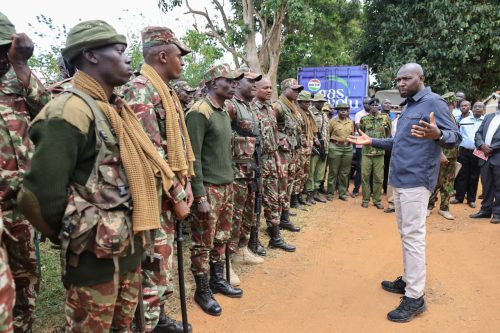
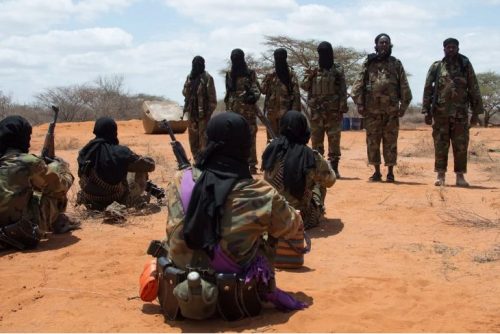
These borderlands have become a key frontline in the fight against Al-Shabaab, which continues to stage cross-border attacks inside Kenya before retreating into Somalia.
The concerns raised in the latest governance assessments are reflected in findings from the Bertelsmann Stiftung’s Transformation Index (BTI) 2026, which evaluates democracy, governance and state capacity across 137 countries.
The report argues that weak governance, uneven state presence and fragile institutions continue to undermine stability in many developing states, particularly in marginalised frontier regions.
In Kenya’s northern regions, the report’s broader warnings about fragile governance resonate strongly. Armed banditry, militia activity and chronic underdevelopment continue to shape everyday life across parts of West Pokot County, Turkana, Samburu and the northeast.
Despite major security operations launched in recent years, communities in several affected counties still report persistent insecurity and limited confidence in state protection.
The BTI assessment also highlights how weak institutional reach often translates into unequal access to citizenship rights and public services.
Although Kenya’s Constitution guarantees equal citizenship, minority communities, including ethnic Somalis and Nubians, continue to face difficulties obtaining national identification documents, barriers that can restrict access to education, healthcare, employment and freedom of movement.
Contradictions are striking
Kenya has built a global reputation as East Africa’s technology and economic hub, driven by mobile banking, digital government services and ambitious infrastructure projects. Yet many marginalised counties still struggle with access to water, sanitation, healthcare and security.
Only later does the security dimension become even clearer through findings from the Institute for Economics & Peace’s Global Terrorism Index 2026, which identifies border regions as some of the world’s most vulnerable spaces for extremist violence.
The report found that 41 per cent of terrorist attacks worldwide occur within 50 kilometres of an international border, while 64 per cent occur within 100 kilometres.
“Border proximity is a defining feature of modern terrorism,” the report states.
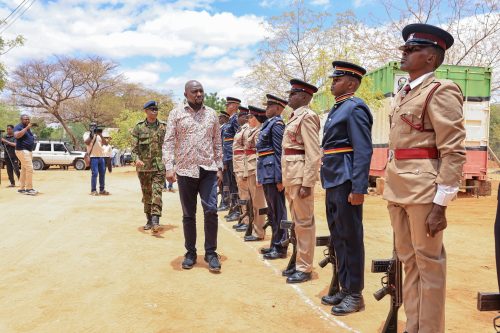
The Kenya-Somalia boundary stretches more than 680 kilometres across harsh terrain marked by scrubland, dry riverbeds and minimal infrastructure. While official crossing points are limited, informal routes used by pastoralist communities run into the hundreds.
According to the terrorism assessment, such conditions allow armed groups to move quickly and blend into civilian populations connected by language, clan ties and shared livelihoods across both countries. In many cases, families live on both sides of the border, complicating surveillance and enforcement.
“Borderlands often represent authority gaps: remote areas where state control is weakest,” the report warns, noting that distance from major urban centres enables armed groups to recruit, regroup and operate with relative freedom.
For many residents, however, the absence of the state is felt not only through insecurity but through long-standing exclusion from development itself.