Farmers want KALRO board dissolved
By Kepher Otieno, January 17, 2026Farmers are escalating pressure on the Kenya Agricultural and Livestock Research Organisation (KALRO), demanding the immediate dissolution of its board, chaired by Thuo Mathenge.
They have accused it of reportedly presiding over institutional paralysis at a time when the country is grappling with food insecurity, climate stress, and shrinking farm incomes.
The farmers argue that KALRO has failed in its core mandate of driving agricultural innovation, particularly in the development of high-yielding, climate-resilient seed varieties that could cushion farmers from erratic weather patterns and boost agripreneurship returns.
They say the absence of new technologies has left farmers exposed, uncompetitive, and increasingly vulnerable.

“We are talking about food security, yet KALRO has nothing new to offer farmers,” Wambui said.
“There are no breakthrough seeds, no innovations that can survive droughts and floods. How are farmers expected to grow their incomes under these conditions?”
KALRO is legally mandated to promote, coordinate, and regulate agricultural and livestock research; develop new technologies and approaches for sustainable growth, and ensure research findings are applied across value chains. Its work is expected to directly support farmers’ productivity, income per capita, and national food security. However, farmers now claim the institution has drifted far from this mission.
Veronica Njoroge says the failure to innovate has direct economic consequences.
“Farming today is business,” she said. “Without high-yielding seeds and modern technologies, agripreneurship cannot thrive. Farmers are stuck with old varieties while costs keep rising.”
The discontent goes beyond farmers. Several scientists within KALRO, who spoke on condition of anonymity for fear of victimisation, paint a picture of an institution consumed by internal power struggles.
They say persistent management squabbles, particularly around succession following the expiry of former Director General Eliud Kireger’s term last year, have destabilised research programmes and demoralised staff.
“What should have been a smooth transition turned into a battleground,” said one senior researcher. “Instead of focusing on science, the organisation is obsessed with politics and succession manoeuvres.”
According to the scientists, the race to appoint a new Director General has deepened divisions within management and the board, leading to arbitrary decisions, stalled projects, and a breakdown in trust.
They claim some research priorities have been sidelined as factions jostle for influence, with little regard for farmers’ needs.
“There is too much interference and too little respect for professional processes,” said another scientist. “Research thrives in stability. What we have now is uncertainty and fear.”
Mathenge’s KALRO leadership
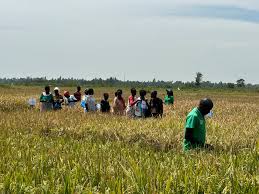
Farmers argue that the board, under Mathenge’s leadership, has failed in its oversight role by allowing these wrangles to fester. They accuse the board of reportedly being preoccupied with internal disputes instead of holding management accountable for delivering tangible results to farmers.
Mwangi Muhia says the situation has eroded confidence in KALRO. “We keep hearing about boardroom fights and succession battles,” he said. “We should be hearing about new seeds, new technologies, and higher yields.”
Victor Owino questioned the silence from leadership amid growing frustration. “No one is explaining why scientists are demoralised or why innovation has stalled,” he said. “The board has gone quiet while farmers suffer.”
The farmers insist their call for the board’s dissolution is not driven by personal interests but by urgency. They argue that agriculture remains the backbone of the economy and that failure at KALRO threatens not just livelihoods but national stability.
“KALRO is supposed to be the heart of agricultural research,” said Mukhisa Khahonya. “If that heart is weak, the entire sector suffers.”
Kemboi Justus warned that continued inaction could worsen food insecurity. “Climate change is not waiting for board wrangles to end,” he said. “Farmers need solutions now.”
Board disbandment
As pressure mounts, the farmers are demanding a complete reset, starting with the disbandment of the current board and the appointment of new leadership capable of restoring focus, credibility, and scientific integrity.
They want a board that prioritises innovation over politics and farmers over factional interests.
Whether the government will intervene remains unclear. What is evident, however, is a growing chorus of discontent from both farmers and scientists, united by a belief that KALRO has lost its way at a critical moment for Kenya’s agricultural future.