Advertisement
Explainer: What awaits Kenya’s first Grade 10 learners in 2026
Friday 26th December, 2025 09:01 AM|

Kenya is set to witness a historic shift in its education system in January 2026, when the first cohort of learners under the Competency-Based Curriculum (CBC) transitions into senior school.
This move marks the country’s first attempt to introduce structured academic pathways at the senior secondary level, aiming to equip students with skills for higher education or the workforce.
Senior school, comprising Grades 10 to 12, follows pre-primary, primary (Grades 1–6) and junior school (Grades 7–9). Learners entering Grade 10 will typically be between 15 and 17 years old.
Unlike the previous education system, senior school will provide learners with the opportunity to specialise in areas that align with their abilities, ambitions, and emerging talents.
You Might Also Like



The senior school structure is organised around three broad pathways: Science, Technology, Engineering, and Mathematics (STEM); Social Sciences; and Arts and Sports Science.
Subjects selection
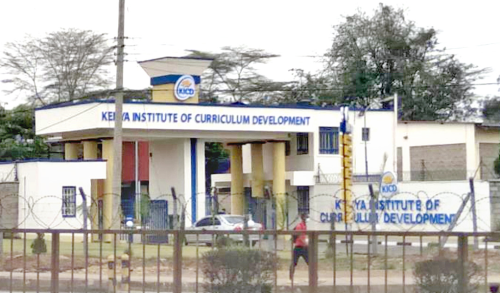
According to the Kenya Institute of Curriculum Development (KICD) , each learner will select one pathway and study a combination of compulsory subjects alongside specialised electives. Core subjects include English, Kiswahili or Kenyan Sign Language, Mathematics, and Community Service Learning.
Mathematics will be taught as Core Mathematics for STEM students and Essential Mathematics for other pathways to reflect varying academic needs.
Learners will also choose three elective subjects based on their selected pathway. STEM students may opt for subjects such as Biology, Chemistry, Physics, Computer Science, Agriculture, Media Technology, or applied technical and engineering courses.
Those in the Arts and Sports Science pathway will focus on creative arts, music, dance, theatre, visual arts, or sports science. Social Sciences students can select from literature, languages, business studies, history, geography, religious education, and social studies.
However, pathway choices will depend not only on student preference but also on the availability of teaching resources and school capacity. Each school will offer specific subject clusters, meaning some learners may need to adjust their preferred combinations based on what is available.
Placement into senior school will be determined through a national process combining School-Based Assessments (SBA) and the Kenya Junior Secondary School Education Assessment (KJSEA). SBAs will contribute 40 per cent of a learner’s placement score, while the KJSEA will account for the remaining 60 per cent. Results will be processed through a national digital placement platform, which will match learners to schools according to exam performance, school capacity, infrastructure, and pathway choices.
Stakeholder’s concerns
Under the new system, senior school students will have a total of 40 lessons per week, each lasting 40 minutes.
This structure is designed to allow learners to focus on their specialised areas while building competence in core subjects.
Education experts say the pathways provide the first major point of academic specialisation in the CBC, giving students a head start in aligning their studies with future career paths.
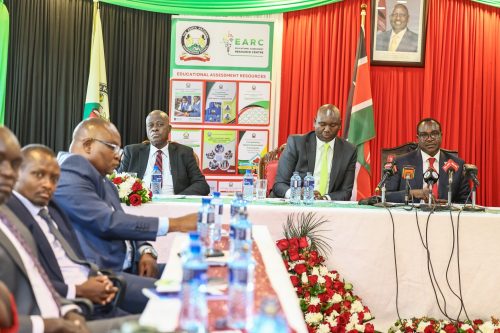
Despite the government’s assurances that preparations are on track, concerns have emerged over readiness. Teachers across several counties report that training for Grade 10 instructors has been grossly insufficient, leaving many unprepared to handle the new curriculum structure.
The educators warn that inadequate preparation may affect the smooth rollout of senior school, especially in schools with limited resources.
The transition also presents logistical challenges. With learners expected to choose pathways and subject clusters, schools must ensure they have enough qualified teachers and facilities to accommodate specialised courses.
Author
Latest News




Advertisement
More on News