Advertisement
EU foreign policy Chief warns of serious rift in relations with US
Friday 23rd January, 2026 12:06 PM|

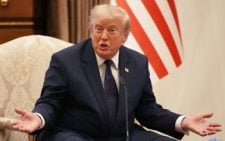
Kaja Kallas’s comments came at an emergency EU meeting called after weeks of escalating threats from Donald Trump over Greenland
Transatlantic relations have “taken a big blow over the last week”, the EU’s foreign policy chief said, as leaders from the bloc gathered for an emergency summit after weeks of escalating threats from Donald Trump over Greenland that were suddenly rescinded with a vague deal on Arctic security.
Summing up the mood, the EU’s foreign policy chief, Kaja Kallas, said the EU was living through a lot of unpredictability: “One day, one way; the other day, again, everything could change.”
Relations between Europe and the US “have definitely taken a big blow over the last week”, but Europeans were “not willing to junk 80 years of good relations”, she told reporters.
You Might Also Like
Speaking after the meeting, the European Commission president, Ursula von der Leyen, said that EU unity and engagement with the US in “a firm but non-escalatory manner” had paid off.
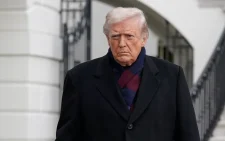
An emergency EU summit was hastily convened earlier this week after the US president announced he would impose 10% tariffs on eight European nations that resisted a US takeover of Greenland, an autonomous territory that is part of Denmark.
Although Trump abandoned his tariff threat on Wednesday, EU officials deemed the summit necessary to discuss the wider transatlantic relationship with a volatile and unpredictable US president.
Arriving at the summit, Denmark’s prime minister, Mette Frederiksen, hailed EU unity and “our willingness to stand up for ourselves”. Nato states, she said, backed having a permanent presence in the Arctic region, including around Greenland.
Stressing repeatedly that Danish sovereignty was not up for discussion, she said the US and Denmark “have to work together respectfully without threatening each other”.
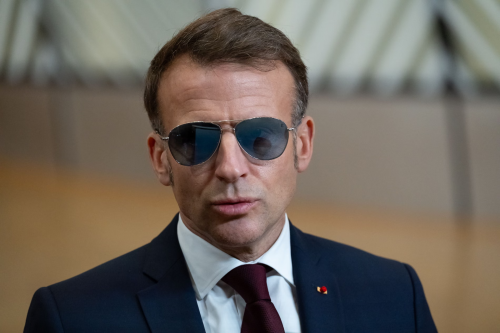
The French president, Emmanuel Macron, still wearing the aviator shades that drew global attention in Davos, said Europe needed to “remain extremely vigilant and ready to use the instruments at our disposal should we find ourselves the target of threats again”.
The German chancellor, Friedrich Merz, welcomed Trump’s change of heart: “I am very grateful that President Trump has distanced himself from his original plans to take over Greenland, and I am also grateful that he has refrained from imposing additional tariffs on 1 February.”
Several EU leaders stressed their determination to maintain the US as an ally. “I still treat the United States as our closest friend,” the Lithuanian president, Gitanas Nausėda, said, referencing the two US battalions deployed in his country.
Poland’s prime minister, Donald Tusk, another staunch transatlanticist, said: “Europe should be here absolutely united to protect our relations with our partners on the other side of the Atlantic, even if it is much more difficult than ever before.”
But he went on to say that politics needed “trust and respect … not domination and for sure not coercion”.
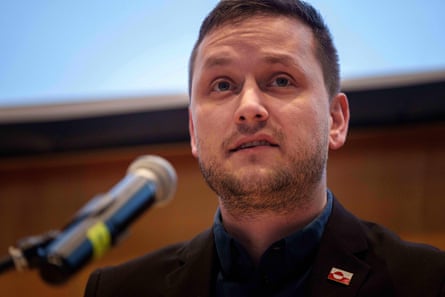
Greenland, which left the EU in 1985, also insisted that its sovereignty be respected. Speaking in Nuuk, Jens-Frederik Nielsen, Greenland’s prime minister, said he did not know what was in the deal but emphasised that the largely self-governing territory wanted a “peaceful dialogue” with the US, and its sovereignty was non-negotiable.
If Greenlanders had to choose, he said: “We choose the Kingdom of Denmark, we choose the EU, we choose Nato.”
The summit came after a withering takedown of Europe from Ukraine’s president, Volodymyr Zelenskyy, who accused the continent of being slow to act on key decisions in contrast with the US’s bold actions on Iran and Venezuela. Europe, he said, needed a united armed force to defend the continent. “Right now, Nato exists thanks to the belief that the United States will act … but what if it doesn’t?”
Europe had allocated €188.6bn to Ukraine by 31 October 2025 since January 2022, according to the Kiel Institute for the World Economy, but decision-making has often been slow, with hesitancy from some countries in releasing some military equipment.
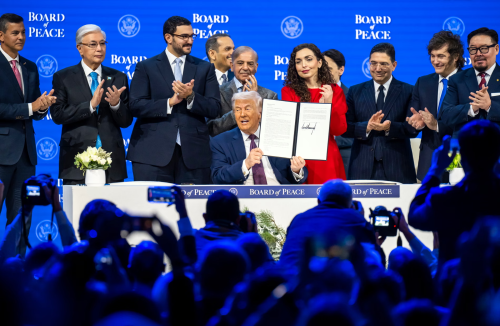
Referring to the EU’s financial aid for Ukraine, including a €90bn loan pledged last month, von der Leyen said “actions speak louder than words”.
Meanwhile, the European parliament signalled on Thursday it was ready to reconsider its decision to freeze ratification of the EU-US trade deal, one of the bloc’s strongest responses to Trump’s tariff threats so far.
MEPs had been expected to vote in February to approve 0% tariffs on many US goods, a key part of the trade agreement signed at Trump’s Turnberry golf resort last summer, but pressed pause on the process on Wednesday in response to tariff threats.
The European Parliament can now go ahead with discussions on the EU-US trade deal, following Trump’s tariff threat reversal, its president, Roberta Metsola, said.
Earlier in the day, the head of the European parliament’s trade committee, the German Social Democrat lawmaker Bernd Lange, said his committee would revisit the issue next week, while stressing that the EU needed to remain vigilant.
“There is no room for false security,” he wrote on X. “The next threat is sure to come. That’s why it is even more important that we set clear boundaries, use all available legal instruments [and] apply them as appropriate to the situation.”
Author
Latest News


Advertisement
More on News