Ebola outbreak response: Kenya among countries to benefit from Ksh74B EU fund
By Aloys Michael, June 18, 2026Kenya is among several African countries expected to benefit from about Ksh74 billion European Union package aimed at strengthening preparedness and response efforts against the ongoing Ebola outbreak in the Great Lakes region.
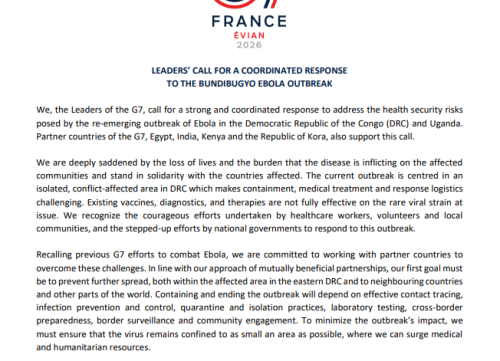
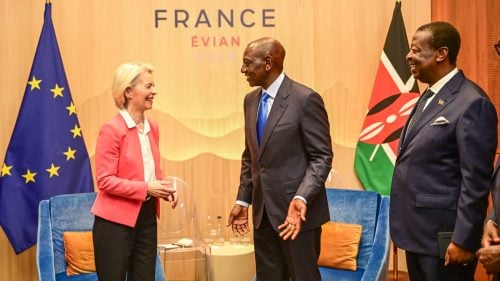
The funding was announced on Wednesday, June 17, 2026, in a joint declaration by G7 leaders and partner countries, including Kenya, as part of a coordinated international response to the re-emerging Ebola outbreak affecting the Democratic Republic of Congo (DRC) and Uganda.
According to the statement, the European Union has committed Ksh74 billion towards emergency aid, vaccine development, treatment programs and health security interventions across the Great Lakes and Uganda region.
Of this amount, about Ksh12.6 billion has been allocated for immediate humanitarian assistance, development initiatives and research funding to support outbreak response efforts.
“We also commend the ongoing European Union support of 493 million euros in emergency aid, vaccines, treatment and health security in the Great Lakes and Uganda region,” the leaders said in the statement.
Kenya’s inclusion among partner countries backing the initiative reflects the country’s strategic position in East Africa and its vulnerability to cross-border disease transmission due to regional trade, migration and travel links.
This even as the government sets up the 23 Ebola quarantine facilities, including Laikipia, tightens screening and surveillance at borders and high-risk counties to avoid the spread of the deadly virus.
The outbreak, centred in an isolated and conflict-affected area of eastern DRC, has raised concerns among global health experts because existing vaccines, diagnostics and therapies are reportedly not fully effective against the rare viral strain at issue.
The G7 leaders stressed that preventing the spread of the disease beyond affected areas remains the top priority.
“Our first goal must be to prevent further spread, both within the affected area in the eastern DRC and to neighbouring countries and other parts of the world,” the statement noted.
For Kenya, the funding could bolster surveillance systems, laboratory testing capacity, border screening measures and emergency response preparedness, particularly along key entry points serving travellers from the Great Lakes region.
Tackling Ebola
The declaration comes as African countries intensify efforts to prevent a repeat of previous Ebola outbreaks that strained healthcare systems and disrupted economies across the continent.
In addition to the EU funding, African-led efforts are also gathering momentum. The Continental Preparedness and Response Plan has mobilised Ksh67 billion to support countries in preparing for, rapidly detecting and responding to Ebola outbreaks.

Health experts say investments in contact tracing, infection prevention, laboratory testing and community engagement will be critical in containing the disease. The G7 leaders emphasized that “effective contact tracing, infection prevention and control, quarantine and isolation practices, laboratory testing, cross-border preparedness, border surveillance and community engagement” will be essential to ending the outbreak.
The international coalition also highlighted the importance of coordinated action among governments, humanitarian agencies and the private sector to accelerate the development of new vaccines and treatments tailored to the emerging Ebola strain.
As millions of people continue travelling globally for business, tourism and major international events, world leaders warned that vigilance remains necessary to prevent cross-border transmission.
“We continue to closely monitor the situation as it evolves… to ensure that this dangerous virus does not spread, including across borders,” the statement said.
For Kenya, the funding package represents both a public health safeguard and an opportunity to strengthen long-term epidemic preparedness amid growing concerns over emerging infectious disease threats across Africa.