Advertisement
Early screening pushed as crucialto curbing cervical cancer deaths
Saturday 01st February, 2025 03:00 AM|
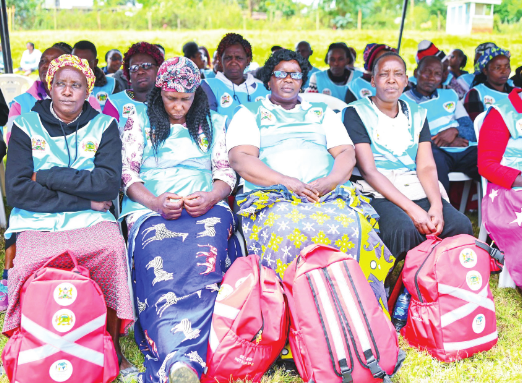
Nine women die daily from cervical cancer in Kenya, recent statistics show, with patients and survivors saying this is unacceptable. The situation is compounded by technical challenges in the Social Health Authority insurance scheme, leaving patients more vulnerable.
The disease claims over 3,000 lives annually in Kenya, with more than 5,000 new cases reported each year.
Cervical cancer, though preventable through screening, is the leading cause of cancer-related deaths among Kenyan women. Stakeholders attribute this to insufficient funding and infrastructure for prevention programmes.
“I’m calling on the government to invest more resources in the Social Health Insurance (SHA) to cater for cancer patients,” said Susan Macharia, a breast cancer survivor and screening advocate in Nyandarua County.
Treatment costs
Regarding treatment costs, Macharia explained that cancer drugs are prohibitively expensive. “For me, though NHIF covered almost everything, right now, there’s a small challenge which I believe the ministry can sort out,” she said.
“However, as we continue with the transition, I’m appealing to the government to ensure that our patients access treatment as it continues to address the challenges the transition is posing.”
She noted that many patients are homebound because they had been denied treatment under SHA.
The impact of cancer treatment extends beyond individual families to affect entire communities, according to Macharia.
“You were sacked. When people see you, they say you are a beggar, and even refuse to pick up your phone calls, thinking you are after their money,” she lamented.
“Now we are only left with the government to take care of us. We need a well-structured social health insurance system to support those affected.”
Globally, cancer claims about 10 million lives every year.
These alarming statistics have prompted the government and health stakeholders to step up their anti-cancer efforts.
The Ministry of Health has emphasised the importance of early screening and timely treatment, saying late diagnosis significantly reduces the chances of survival for affected women.
At a World Cervical Cancer Day event in Nyandarua County on Wednesday, stakeholders noted that cervical cancer is unique in being potentially eliminable, as demonstrated in several European countries.
Public Health and Professional Standards Principal Secretary Mary Muthoni highlighted the government’s commitment to improving screening services and vaccination programmes.
“We must embrace screening as a critical measure in the fight against cervical cancer. Early detection saves lives,” she said.
Muthoni announced the development of the National Cervical Cancer Elimination Action Plan in collaboration with ThinkWell, outlining steps to eliminate cervical cancer by 2030.
She also discussed Kenya’s participation in the WHO AFRO Women Integrated Cancer Services project, which takes a comprehensive approach to cancer care through primary healthcare.
“As we mark the climax of Cervical Cancer Awareness Month, our efforts must continue beyond today. Early screening, HPV [human papillomavirus] vaccination, and timely treatment save lives. Let’s ensure every woman has access to these essential services,” she said.
Vaccination campaign
The ministry has embarked on a nationwide campaign to vaccinate 14-year-old schoolgirls against HPV, a sexually transmitted infection. “We are rolling out an aggressive vaccination programme to ensure our young girls are protected against cervical cancer,” Muthoni added.
She emphasised the shift from curative to preventive care and health promotion as critical to addressing cancer, highlighting the role of community health promoters in expanding access to essential cancer services in the grassroots.
Dr Anne Njoroge, regional director at ThinkWell, emphasised the preventable nature of cervical cancer, saying that with nine women dying daily, “screening and vaccination efforts must be increased to address the rising numbers”.
Dr Joyce Nato, head of noncommunicable diseases at the Kenya office of the World Health Organisation, pointed out cervical cancer’s eliminability.
“This is the one type of cancer that can be eliminated. We have seen it happen in some European nations, and Kenya can achieve the same with a committed strategy,” she explained.
Community health promoters sensitise households about free screening services at government facilities, particularly in rural areas. Local leaders urged residents to enrol with SHA’s new health insurance scheme so that they can get affordable cancer care.
The Ministry of Health continues to emphasise screening and early treatment as crucial measures to combat this significant threat to women’s health in Kenya.
Author
George Kebaso
View all posts by George KebasoLatest News






Advertisement
More on News