Duale confirms 12 counties at high risk of Ebola amid border safety concerns
By Aloys Michael, May 30, 2026Health Cabinet Secretary Aden Duale has confirmed that 12 counties in Kenya have been classified as high-risk for Ebola as the government intensifies preparedness measures against the deadly disease spreading in the Democratic Republic of Congo (DRC).
Speaking during an interview on a local TV station on Saturday, May 30, 2026, Duale said the Ministry of Health is working closely with county governments in vulnerable areas to strengthen surveillance, response systems, and emergency preparedness.
“By today, there were twelve counties of high risk where we are working with the county governments and another risk counties; in total, we have 25 where we are working with them on how to put measures,” Duale said.
The CS emphasised that while Kenya has not recorded any Ebola cases, authorities are taking proactive steps to prevent a potential outbreak.
“As of today, there is no any incident of Ebola in our country, but we are preparing. Diseases like Ebola do not respect borders,” he stated.

Duale’s remarks come amid growing concerns over border safety and increased regional movement following the latest Ebola outbreak in eastern DRC.
Health experts have warned that Kenya’s position as a regional trade and transport hub makes it particularly vulnerable to imported cases.
Earlier, in a statement issued on May 30, 2026, the CS said preparedness efforts go beyond border screening and include strengthening disease surveillance, emergency response systems, and treatment capacity nationwide.
“Protecting Kenyans requires more than hoping diseases do not cross our borders or relying solely on screening at points of entry,” the ministry said.
“It requires a comprehensive approach that combines effective surveillance and border screening with strong preparedness and response systems before a crisis emerges.”
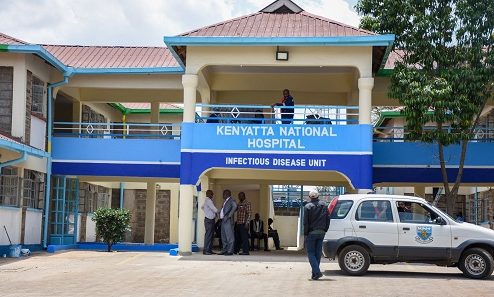
As part of the preparedness strategy, the government has established dedicated Ebola isolation and treatment units at Kenyatta National Hospital (KNH), the Kenya National Police Hospital (NPS)and Moi Teaching and Referral Hospital in Eldoret.
Additional isolation facilities have also been set up in more than 10 high-risk border counties.
Health officials say the facilities are designed to facilitate rapid isolation, diagnosis, and management of suspected Ebola cases should the virus enter the country.
However, the government’s preparedness plan has sparked debate, particularly over proposals to establish an Ebola treatment and quarantine facility in Kenya.

KMPDU raises alarm
The Kenya Medical Practitioners, Pharmacists and Dentists Union (KMPDU) has opposed the move, arguing that resources should instead be directed toward containing the outbreak at its source in the DRC.
Addressing journalists on Saturday, KMPDU Secretary General Davji Atellah said regional governments should prioritise supporting response efforts within Congo rather than creating treatment centres in countries that have not reported infections.
“The best way of containment of any outbreak is through the epicentre; the point of the outbreak, like in Congo,” Atellah said.
He noted that ongoing insecurity and conflict in eastern DRC have undermined public health interventions and accelerated the spread of the disease.
“We have seen the disease spreading at a very high rate in Congo, particularly because of the war that has been ongoing in that particular country. As such, we ask our government and the regional governments that there should be more resources and experts being sent to Congo to help with the containment,” he added.
Atellah’s comments come as political leaders and civil society groups continue to question the necessity of establishing Ebola quarantine facilities in Kenya, with some legal challenges already emerging against the proposal.
Despite the criticism, the CS insist that strengthening isolation and treatment capacity remains a critical component of national preparedness.
Duale maintain that early detection and rapid response infrastructure are essential safeguards against the potential cross-border transmission of Ebola.