Advertisement
Drought worsens as short rains delay
Wednesday 16th November, 2022 04:35 AM|
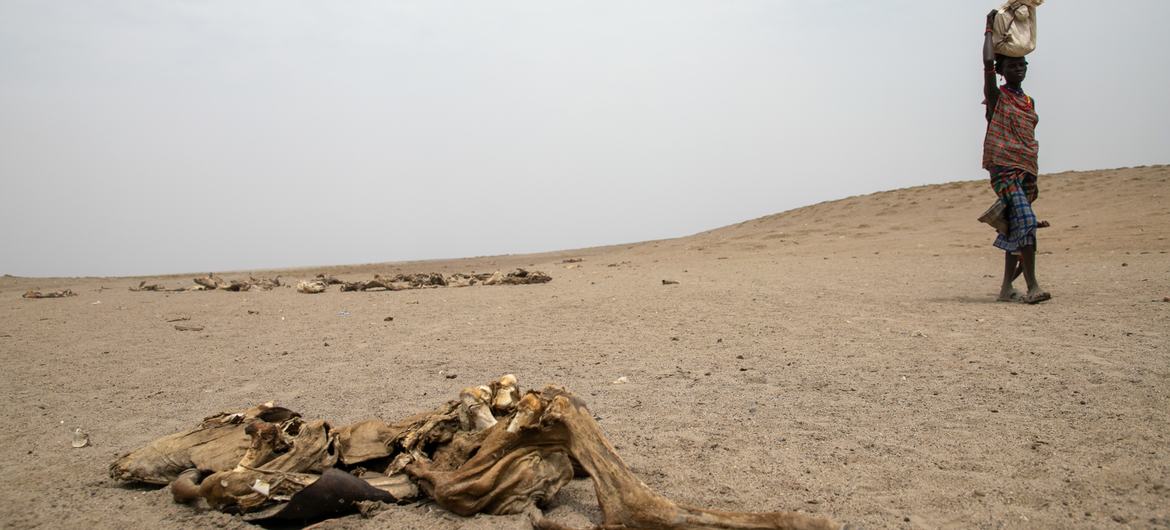
The government, with support from United Nations agencies and 89 state and non-state actors, has scaled up targeted response interventions to address current drought and reach the most vulnerable in the country.
According to the National Drought Management Authority (NDMA), the sectors being addressed are water, livestock, agriculture, health and nutrition, education, security and social protection.
In a press statement on the current drought situation, the authority said that the national and county governments have spent Sh 22 billion on interventions.
“Last week, the government, through the National Drought Management Authority, disbursed Sh984,636,000 to 91,170 households under the Hunger Safety Net Programme (HSNP) regular cash transfer portfolio in the counties of Marsabit, Wajir, Turkana and Mandera,” the statement said.
The Authority chief executive, Lt-Col (Rtd) Hared Hassan, noted that each household received Sh10,800, while a further Sh10 billion has been disbursed under the Inua Jamii cash transfers and Sh4 billion for relief food distribution and emergency relief cash transfers.
Four failed seasons
The drought situation has continued to worsen in the arid regions and some pockets of counties outside of the ASALs as a result of four failed seasons and the late onset and poorly distributed 2022 short rains.
With the deterioration of drought, the number of people in need of humanitarian assistance currently stands at 4.35 million in the ASALs, based on the 2022 long rains food and nutritional security report.
Another 846,000 people in pockets of nine non-ASAL counties are adversely affected and these pockets are in Kiambu, Kirinyaga, Elgeyo Marakwet, Machakos, Murang’a, Siaya, Homa Bay, Nakuru and Migori counties.
“These numbers are bound to change based on the performance of the 2022 short rains and its impacts on local livelihoods. Although some areas have received rainfall, recovery will take months, hence the need for scaled up and sustained response efforts,” the CEO said in the statement.
The reported scattered rains in pocket areas is likely to induce abnormal migrations to the grazing zones, further accelerating livestock mortalities in Samburu, Mandera, Isiolo, Lamu, Marsabit and Garissa counties.
Conflict over diminishing resources continue to be reported in parts of Laikipia, Samburu, Isiolo, Kitui, Tana River and Garissa.
Author
Latest News







Advertisement
More on News