Advertisement
Drought hits 19 counties after March-May rains fail
Monday 13th June, 2022 03:25 AM|
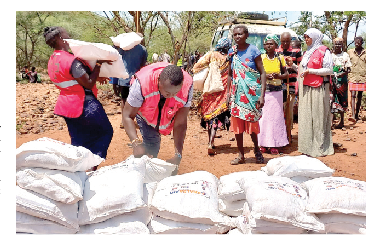
Early termination of the March to May 2022 long rains season has worsened drought in Kenya, with 19 out of 23 arid and semi-arid (ASAL) counties affected.
Six counties — Laikipia, Mandera, Marsabit, Wajir, Isiolo and Samburu — have been classified in ‘alarm’ drought phase while 13, including Kilifi, Turkana, West Pokot, Kwale, Meru North, Embu (Mbeere), Garissa, Kajiado, Kitui, Nyeri (Kieni), Taita Taveta, Tharaka Nithi and Tana River, are in ‘alert’ phase.
Four counties — Baringo, Lamu, Narok and Makueni — are in ‘normal’ phase.
Below average rains have negatively impacted crop and livestock production across arid areas. This is the fourth consecutive poor rainfall season since 2020.
The number of people in need of relief assistance has increased to 4.1 million in June, from 3.5 million in May.
Poor feeding
Child malnutrition rates remain high, with Garissa, Isiolo, Mandera, Marsabit, Samburu, Tana River, Turkana and Wajir being the worst affected. Malnutrition in these counties is mostly due to a decline in milk production. This has been aggravated by lack of dietary diversity, poor child feeding practices and reduced food.
“After four under-performing rainfall seasons, conditions across Kenya continue to deteriorate rapidly, with significant impacts on pasture and milk production. The Government is scaling up relief assistance to affected communities, assisted by development partners and UN agencies,” said Lt Col. (Rtd) Hared Hassan, the National Drought Management Authority chief executive officer.
Kenya is among Horn of Africa countries affected by the current severe drought that has left millions facing acute food insecurity and malnutrition. Other affected countries include Somalia and Ethiopia.
Decline in livestock prices, increase in cereal prices and general rise in the prices of most consumer goods undermine the purchasing power of many households.
The government has enhanced drought interventions in the affected regions, including provision of food and safety nets, livestock off-take, water trucking and provision of livestock feeds and supplements.
“Last week, the Government released Sh 667 million for the Hunger Safety Net Programme targeting about 100,000 households,” said Hassan.
Minimal regeneration
Pasture in most ASAL counties is also inadequate. A slight improvement was recorded due to showers received in May, leading to minimal regeneration. However, this is not expected to last long due to high concentration of livestock in grazing areas.
Livestock mortality as at May stands at more than 2.4 million across all species, with the most affected counties being Samburu, Mandera, Isiolo, Lamu, Marsabit and Garissa. This calls for immediate support to both commercial and on-site livestock off-take (slaughter) across areas with deteriorating drought and elevated risk of a crisis following the forecast of a poor October-to-December season.
UN agencies, international and local NGOs, as well as the private sector, continue to support and complement the government’s efforts.
Author
Irene.Githinji
View all posts by Irene.GithinjiLatest News






Advertisement
More on News