Advertisement
DCI seizes Ksh1.19M heroin in Nakuru sting operation
Wednesday 14th January, 2026 07:33 AM|

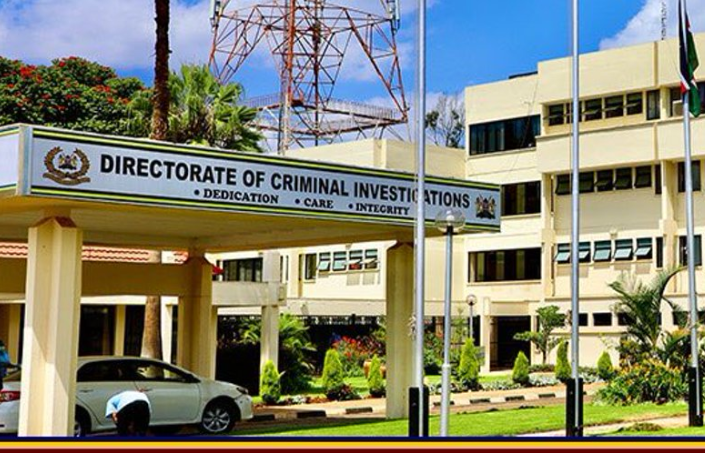
Anti-Narcotics Unit detectives arrested a person of interest linked to seized heroin worth Ksh1.19 million during a swift, intelligence-led operation in Nakuru, the Directorate of Criminal Investigations said.
In a statement on Wednesday, January 14, 2026, the DCI said the 42-year-old person of interest was intercepted while riding a motorcycle, registration number KMEC 785W, after officers flagged his luggage as suspicious.
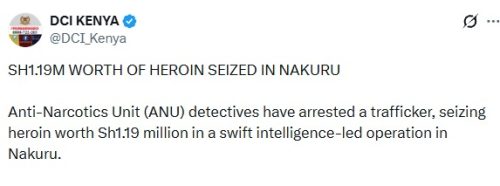
/X
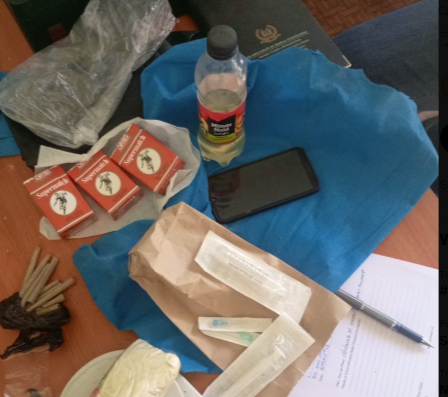
“A search of the luggage uncovered 397 grams of heroin, neatly concealed for transport. Detectives also recovered two syringes and needles, ten rolls of bhang, and three packets of Supermatch cigarettes,” the DCI’s X statement read in part.
According to investigators, the arrest effectively cut short what detectives believe was an active drug supply run, dealing a blow to local distribution channels. The operation was conducted by hawk-eyed officers from the Anti-Narcotics Unit acting on actionable intelligence.

You Might Also Like
The person of interest is currently in police custody as detectives finalise investigations ahead of his arraignment in court.
Police said further inquiries are ongoing to establish possible links to wider trafficking networks.
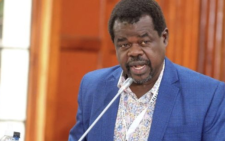
Separately, the Interior Cabinet Secretary Kipchumba Murkomen has pledged a relentless campaign against major players in Kenya’s illicit alcohol and narcotics trade.
Speaking on January 12, 2026, Murkomen said the government will now target the financial lifelines of traffickers to ensure the big fish feel the impact of substantial losses.
“The big fish can only feel the pain of loss of revenue… You go for them, you arrest them, but you go for their assets,” he stated, describing a shift from traditional fines to seizing goods and property and declaring illicit funds as proceeds of crime.
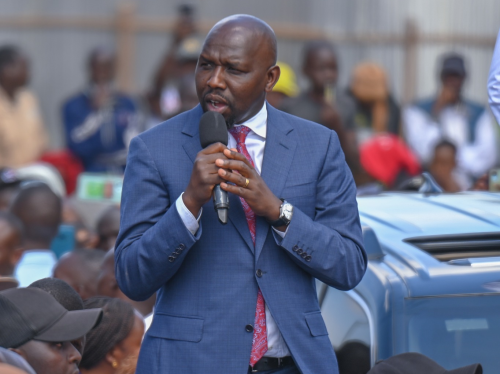
Murkomen on drug cartels
Murkomen also argued that prior approaches, such as minor fines, have been ineffective. He explained that enforcement must target the assets of offenders, not just arrests.
“Go for their assets. If you go for them alone, do you know what the courts have been doing? You arrest a particular one; there’s a notorious one in Eldoret. I don’t want to mention his name. Eldoret and his environment operate all the way to Trans-Nzoia and Elgeyo Marakwet, and he’s distributing. I think he comes from my county, actually, based on the intelligence report,” he said.
“Every time he’s been arrested, he’s been charged in court, and the court fined him one million. But the profit he gets, maybe in a week, is ten million. So what is one million to him?” he questioned, referring to traffickers who repeatedly evade meaningful penalties.
Murkomen explained that the crackdown responds to the widespread impact of what he described as primitive accumulation of wealth, where traffickers profit from blood money at the expense of ordinary Kenyans.
He cited intelligence reports of a notorious operator distributing ethanol across the North Rift and Nandi County, highlighting that such networks thrive due to loopholes in enforcement and porous borders.
“We need to deal with our porous border. Illicit alcohol is extremely prevalent in the western part of the country. There are a number of border points that are unmanned and are porous. Part of the strategy to deal with this is establishing more multiagency vehicle checkpoints,” he said.
Author
Latest News


Advertisement
More on News