CS Duale: 16 suspected Ebola cases have been tested
By Aloys Michael, May 30, 2026The Ministry of Health has tested 16 people for Ebola in recent weeks, with all results returning negative, Health Cabinet Secretary Aden Duale has confirmed, as Kenya intensifies surveillance and preparedness efforts amid an outbreak in the Democratic Republic of Congo (DRC).
Speaking on Saturday, May 30, 2026, during an interview on a local TV station, Duale said the individuals tested had recently travelled from Ebola-affected areas, including the DRC and Uganda, prompting health authorities to place them under close monitoring.
“We have tested 16 people for Ebola, and all of them are negative. Nine were in Nairobi, two in Wajir, and others were from counties including West Pokot and Turkana. These are people who were either in DRC or in Kampala in the last three weeks,” he said.

The CS emphasised that Kenya’s laboratory network remains on high alert and is fully equipped to detect and respond to any suspected Ebola cases.
“Our laboratories, three of them, are on high alert: the National Public Health Laboratory in Nairobi, KEMRI laboratories in Nairobi and Kisumu, and we also have a mobile laboratory based in Busia,” he said.
Duale added that the country has sufficient testing capacity to manage suspected cases quickly and efficiently.
“We have the capacity,” he stated.
The government has also expanded isolation and treatment infrastructure nationwide as part of efforts to prevent the virus from spreading into Kenya.
According to the Ministry of Health, dedicated Ebola isolation and treatment units are currently operational at Kenyatta National Hospital in Nairobi (KNH), the Kenya National Police Hospital (KNPH), and Moi Teaching and Referral Hospital in Eldoret.

Additional preparedness sites have been established in more than 10 high-risk border counties.
Duale has said the facilities are designed to facilitate rapid isolation, diagnosis, and coordinated response should any suspected Ebola case be identified.
The latest measures come as Kenya remains vulnerable to cross-border disease transmission due to its strategic position as a regional transport, trade, and travel hub linking East and Central Africa.
In a statement released on May 30, 2026, Duale said the government’s response strategy extends beyond routine screening at entry points and focuses on building a resilient public health system capable of containing outbreaks before they escalate.
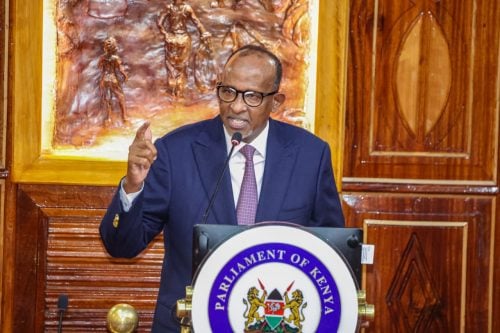
“Protecting Kenyans requires more than hoping diseases do not cross our borders or relying solely on screening at points of entry,” the ministry said in the statement.
“It requires a comprehensive approach that combines effective surveillance and border screening with strong preparedness and response systems before a crisis emerges.”
The Ministry of Health has continued to work with international partners and county governments to strengthen disease surveillance, laboratory diagnostics, emergency response teams, and public awareness campaigns in high-risk regions.
Duale urged members of the public to remain vigilant, report any suspected symptoms, and cooperate with health authorities as the country maintains heightened surveillance against Ebola.