Advertisement
High Court bars police from concealing faces, plates during protests
Wednesday 14th August, 2024 04:59 PM|
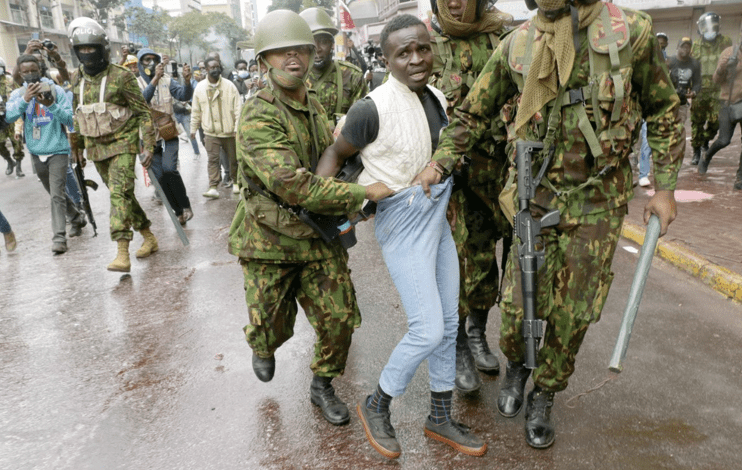
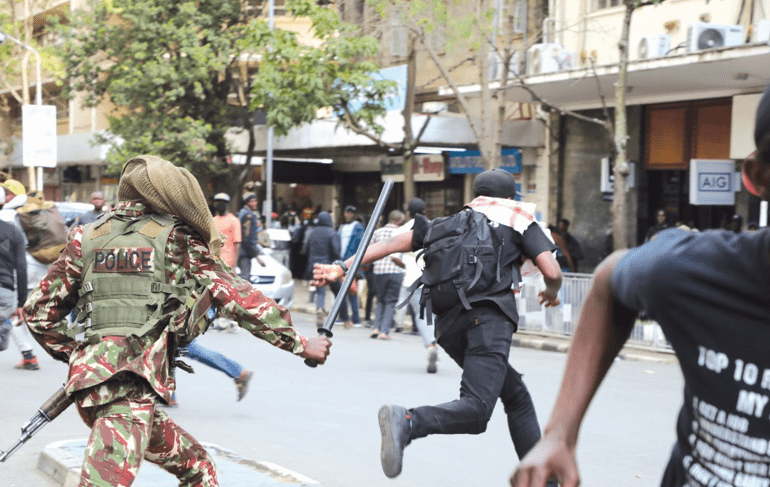
The High Court has directed that police officers concealing their identities, registration numbers of their vehicles and their service numbers must not be allowed during public protests.
In a ruling on Wednesday, August 14, 2024, High Court judge Bahati Mwamuye directed that pursuant to a petition by the Law Society of Kenya‘s CEO Florence Wairimu Muturi, the conservatory orders were issued on the Inspector General of Police against deploying unidentified officers to quel demos.
“A conservatory order be and is hereby issued requiring the 5th Respondent (National Police) to ensure full compliance with Paragraph 10 of the Sixth Schedule to the National Police Service Act in terms of ensuring that all uniformed Police Officers or persons acting under the direction, control, or in support of the National Police Service shall at all times affix a nametag or an identifiable service number in a clearly visible part of their uniform when engaging with, providing security for, or in any way dealing with any person(s) who is or is planning on assembling, demonstrating picketing, or petitioning; and they shall not remove or obscure the same,” Justice Mwamuye stated.
Similarly, Justice Mwamuye also ordered that in the case the plain-clothes police officers are deployed to maintain order, they must never wear any garments which obscure their face to make them unidentifiable.
You Might Also Like

Mwamuye also indicated that the Inspector General of Police was instructed to ensure that no police officer or any other persons acting under the direction, control, or in support of the National Police Services takes any action to obscure the identification, registration or markings of any motor vehicle being used when in any way dealing with persons who are planning on assembling, demonstrating, picketing or petitioning.
Mwamuye directed that the first four respondents who are Martin Mbae Kithinji – OCS Central Police Station, Isaiah Ndumba Murangiri – police officer, Moses Mutayi Shikuku-officer in charge of Central Police Station and Nairobi Area police boss Adamson Bungei serve their responses to the orders by August 30, 2024.
LSK petitioned that Murangiri had arrested activist Hanifa Farsafi unlawfully along Moi Avenue while unarmed and peaceful.
Murangiri was sued in his personal capacity and as an agent of the state for violating the Constitution and the police standing orders by arbitrarily causing harm to persons exercising their right to picket.
Bungei and Shikuku were enjoined in the case in the doctrine of command for deploying uninformed police officers to fight peaceful protesters.
The Inspector General of Police was also enjoined in the case due to his role as the chief commander of the National Police Service.
Similarly, the Attorney General was listed as a respondent given their duty as the chief legal advisor of the government
Chapter 31 of the National Police Service standing orders stipulate that the officers in charge of any police formation may direct plain clothes to be worn in the performance of any specific duty as circumstances may require.
LSK argued that plain-clothes police officers disguised themselves during the protests with masks, balaclavas and other clothing, making them look like goons.
They also argued that some officers used unmarked and unidentified civilian vehicles to abduct unarmed protesters.
Author
Arnold Ngure
View all posts by Arnold NgureLatest News







Advertisement
More on News