Advertisement
Counties accuse Treasury of funds delay
Friday 11th July, 2025 07:00 AM|

Counties have accused the National Treasury of late disbursement of funds which has caused a sharp rise of pending bills which stood at Sh173 billion as of March 2025.
Nairobi County is the worst hit by delayed funding from national government with a total of Sh116 billion accounting for 70 per cent of the total amount of pending bills owed by the 47 devolved units.
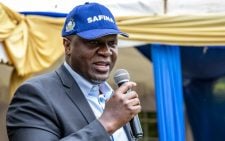
“The persistence of high pending bills was mainly attributed to delays in the disbursement of funds by the National Treasury,” Council of Governors (COG) chairman Ahmed Abdullahi said during the State of Devolution address for the 2024/2025 financial year.
CoG chairman said they had convened a total five meetings to review challenges facing counties, particularly the continued claw back of devolved funds by the National Government, unconstitutional financial interference, fund diversion, and delayed disbursements.
Release of funds
You Might Also Like

“The CoG formed an eight-member team to engage the National Treasury to demand immediate release of funds owed under the County Governments Additional Allocations Act, 2025, and advocate for the disbursement of budgetary allocations to support devolved functions,” Abdullahi said.
The team will also engage the National Assembly on equitable allocation of the Road Maintenance Levy Fund for the current financial year after the High Court ordered the allocation of Sh10.5 billion of the fund to counties.
Last year in October, during the same event, the then CoG chairperson Anne Waiguru who also blamed National Treasury of late disbursement of funds to counties indicated that the national government owed them Sh30.8 billion of equitable share for the 2023/24 financial year.
The Kirinyaga Governor also stated that counties had not received an estimated Sh7 billion in extra funding for selected projects, including conditional grants for construction of County Aggregation and Industrial Parks amounting to Sh3.3 billion, Sh2.93 billion for mineral royalties and Sh454 million for construction of county headquarters.
For the 2024/25 financial year, counties had projected to spend Sh600.69 billion in the implementation of their budgets, with an allocation of Sh222.2 billion (37 per cent) to development while Sh379 billion was to fund recurrent expenditure.
Equitable share from the national government was the main source of funds for counties with Sh418.3 billion, while additional allocations from development partners and national government would earn counties another Sh66.4 billion.
Counties were also to get Sh29 billion from balances in their special purpose accounts and they also expected to generate Sh87. 11 billion form their own source revenues.
Governor Abdullahi confirmed that the national government had disbursed Sh400 billion as equitable share and an additional Sh16.27 billion from development partners as of yesterday.
The Wajir governor added that counties had cumulatively raised Sh46 billion as the own source revenue in nine months of the financial year under review, achieving 53 per cent of their annual target and improving by 11 per cent over the previous year.
“Counties such as Tana River, Garissa, and Narok performed particularly well, with Tana River exceeding its annual target by 72 per cent,” the CoG chairman said.
Healthcare workers
Abdullahi said that there are 226,434 healthcare workers across both public and private hospitals across the counties, with 149,447 (66 per cent) serving in public facilities.
From the total figure, 34,220 nurses, 4,651 medical doctors, 7,877 clinical officers, 4,686 lab technicians and 1,942 nutritionists.
Currently, President William Ruto’s community health promoters project has 107,831 officials who the county governments are pushing the national government to add them funds to put them in their payroll.
“To support Universal Health Coverage (UHC) sustainability, the CoG is advocating for Sh 7.8 billion in annual funding from the Ministry of Health to transition 8,287 UHC staff to County payrolls under Salaries and Remuneration Commission-approved terms,” Abdullahi said.
The governor said that public hospitals have received Sh12.7 billion out of the Sh35.66 billion disbursed under Kenya Kwanza government’s Social Health Authority, private hospitals got almost have of the money with 48.8 per cent while faith-based facilities received 15.6 per cent.
Abdullahi said that antenatal care coverage declined to 53.82 per cent, while skilled birth attendance remained high at 89 per cent during the financial year under review.
“Neonatal mortality improved, dropping from 10 to 9 deaths per 1,000 live births, and modern contraceptive prevalence held steady at 58.7 per cent,” he added.
In the agricultural sector, counties recorded a slow growth with a drop of Gross Value Added (GDA) from 7.1 per cent in the 2023/24 financial year to 4.4 per cent in the 2024/25 financial year.
Consequently, the country lost an estimated Sh20 billion due to a decline in maize production and a drop in horticulture exports.
Notable gains
However livestock and earnings drew by 17.2 per cent and 2.7 per cent respectively with notable gains recorded in sugarcane, milk, coffee and avocado production.
“Investments in mechanization and livestock health increased, with the tractor fleet growing and livestock vaccinations nearly doubling. Artificial insemination services and milk cooling infrastructure saw major improvements,” said governor Abdullahi.
CoG stated that 11 more municipalities received charters in the 2024/25 financial year, bringing the total to 118, with each establishing governance structures to manage urban services and infrastructure.
Governors said that they had already transferred specific functions to the existing cities and municipalities to improve efficiency and accountability in service delivery.
In urban planning, CoG chairman said 64 out of 77 assessed municipalities approving their spatial, physical, and land use plans, while 73 have completed Integrated Development Plans to guide local development efforts.
CoG hailed the judiciary for rulings made in two critical cases whose judgment was in favour of the devolved units.
The chairman cited the High Court ruling that the National Government Constituencies Development Fund (NGCDF) Act was unconstitutional as it violated the principles of devolution, separation of powers, and Parliament’s oversight role.
He also highlighted the court’s ruling that exclusion of Counties from the Road Maintenance Levy Fund (RMLF) is unconstitutional, clarifying that both rulings reinforces the need for proper consultation and equitable sharing of resources, protecting the autonomy and functionality of County Governments.
Author
Samuel Kariuki
View all posts by Samuel KariukiLatest News


Advertisement
More on News