Childhood Cancer Day: WHO highlights common types of cancer in children
By Faith Lagat, February 15, 2026The World Health Organization (WHO) has marked International Childhood Cancer Day by highlighting the most common cancers affecting children and underscoring the importance of early detection.
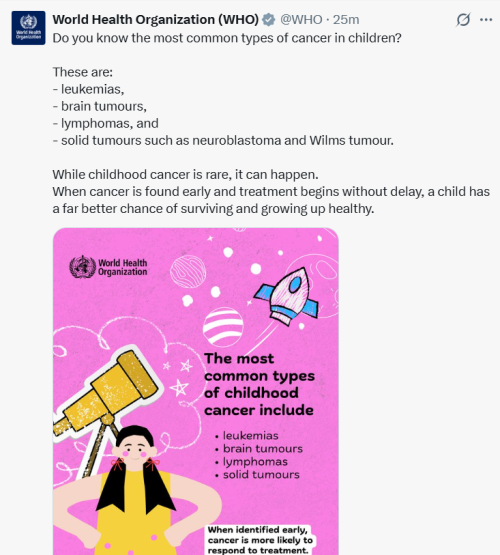
In a social media post on Sunday, February 15, 2026, WHO asked: “Do you know the most common types of cancer in children?” The answer, it said, includes leukaemias, brain tumours, lymphomas, and solid tumours such as neuroblastoma and Wilms tumour.
“While childhood cancer is rare, it can happen,” the WHO stated. “When cancer is found early, and treatment begins without delay, a child has a far better chance of surviving and growing up healthy. Early diagnosis is key.”
WHO listed warning signs that parents and healthcare providers should watch for: unexplained fever, easy bruising or bleeding, severe and persistent headaches, bone pain, unexplained weight loss, lumps and swelling, and symptoms lasting more than two weeks or progressively worsening.

“Spot the signs, get help early,” the organisation urged.
Global and local burden of childhood cancers
Around 400,000 children and adolescents aged 0-19 develop cancer annually worldwide. In high-income countries, over 80 per cent survive thanks to accessible comprehensive care.
In low- and middle-income countries, survival rates remain below 30 per cent, often due to delayed or missed diagnosis, limited access to treatment, abandonment of therapy, and lack of essential medicines.
In Kenya, experts estimate 3,000 to 4,000 new childhood cancer cases each year, though underdiagnosis suggests the true figure may be higher. Survival rates remain low at 20-30 per cent, with major hospitals like Kenyatta National Hospital recording over 400 new cases annually.
Healthcare workers continue to provide vital diagnosis and treatment despite resource constraints, helping children receive life-saving care.
Global initiatives and call to action
The WHO Global Initiative for Childhood Cancer, launched in 2018 in partnership with St. Jude Children’s Research Hospital, aims to achieve at least 60 per cent survival worldwide by 2030.
Progress depends on heightened awareness, faster diagnosis, and equitable access to affordable medicines, surgery, and radiotherapy.
Most childhood cancers have no known cause and cannot be prevented through lifestyle changes, making early recognition of symptoms crucial.
Palliative care and psychosocial support remain essential for affected children and their families.
Early intervention, they stress, can transform outcomes and give thousands of children the chance to grow, thrive, and lead healthy lives.