Advertisement
Britain’s House of Lords under scrutiny after Epstein and Mandelson fallout
Wednesday 18th February, 2026 01:03 PM|

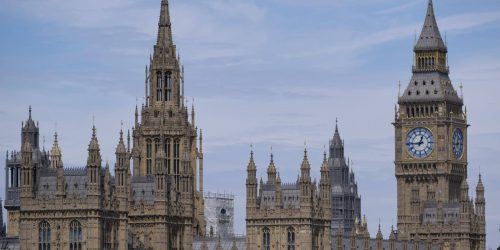
Fallout from the Jeffrey Epstein files has landed on the gilded wood and plush red benches of Britain’s House of Lords.
Parliament’s upper chamber is in the spotlight after former U.K. ambassador to Washington Peter Mandelson was forced to resign as a member of the Lords because of his friendship with the late sex offender.
The episode has emboldened critics who say the unelected House is antiquated, undemocratic and far too slow at punishing bad behaviour by its members. Supporters say the chamber of more than 850 members-for-life who sport the titles of “Lord” or “Lady” is an unwieldy but essential part of parliamentary democracy.
Almost everyone agrees it needs reform, but that task has eluded successive governments.
You Might Also Like



“It’s a mess,” said Jenny Jones, one of two Green Party members of the Lords. “Despite our being supposedly a modern democracy, we have a semi-feudal system.”
Relic of the past
For most of its 700-year history, the House of Lords was composed of noblemen, not women, who inherited their seats, alongside a smattering of bishops. In the 1950s, these were joined by “life peers”, retired politicians, civic leaders and other notables appointed by the government, among them the first female members of the Lords.
In 1999, the Labour government of then-Prime Minister Tony Blair evicted most of the more than 750 hereditary peers, though to avoid an aristocrats’ rebellion, 92 were allowed to remain temporarily.
A quarter century on, Prime Minister Keir Starmer’s current Labour government finally introduced legislation to oust the remaining “hereditaries,” calling them an indefensible relic of the past.
The lords have put up a fight, forcing a compromise that will see some hereditary members allowed to stay by being “recycled” into life peers.

“Hereditary peers actually work harder than average peers,” said Charles Hay, the 16th Earl of Kinnoull, who leads the group of cross-bench, or non-party-affiliated, peers in the Lords. “It means that you chuck out a lot of people who are actually being effective.”
Most agree that the House of Lords plays an important role in reviewing legislation passed by the elected House of Commons. The lords can amend bills and send them back to lawmakers for another look. But when push comes to shove, the upper house is supposed to give way to the will of the elected chamber.
Critics say the upper chamber has sometimes overstepped the mark by blocking legislation, as with a current bill to legalise assisted dying. It was approved by the Commons but has become bogged down with hundreds of amendments in the Lords.
Lords-a-misbehaving
Long gone are the days when out-of-favour lords could be imprisoned in the Tower of London or beheaded for treason.
Until recently, there was little parliamentary authority that parliamentary authorities could do about peers who commit ethical breaches or crimes.
Lord Archer of Weston-Super-Mare, otherwise known as the thriller-writer Jeffrey Archer, was imprisoned for perjury in 2001, while Lord Black of Crossharbour, the media baron Conrad Black, served a U.S. prison sentence after a 2007 fraud conviction. Under the rules of the time, neither could be kicked out of the Lords.
Author
Latest News








Advertisement
More on News