Advertisement
BMW investment secures Mini’s future factories
Tuesday 12th September, 2023 09:20 AM|
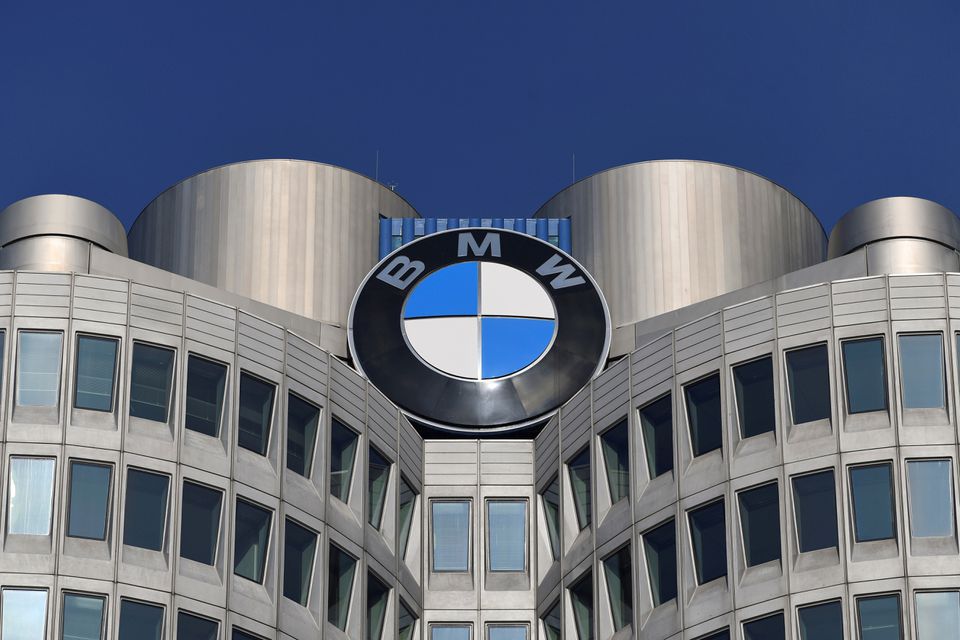
German car giant BMW has announced plans to invest hundreds of millions of pounds to prepare its Mini factory near Oxford to build a new generation of electric cars.
Production of two new electric Mini models is due to begin at the plant in Cowley in 2026.
The move is expected to safeguard the future of the facility, as well as that of another factory in Swindon.
More than 4,000 people currently work across the two sites.
BMW will spend £600m on updating the Cowley plant, developing the production lines, extending its body shop and building a new area for installing batteries.
It also plans to build additional logistics facilities at Cowley and at the Swindon factory – which makes body panels for new vehicles.
This will allow two next-generation electric designs, the Mini Cooper and the larger Mini Aceman, to be built at Cowley alongside conventional cars.
A third electric model, the Countryman, will be made in Germany.
Vote of confidence
The UK investment will be backed by funding from the government – understood to be worth £75m.
Mike Hawes, chief executive of UK industry body the Society of Motor Manufacturers and Traders, called the announcement a “vote of confidence” in the country’s automotive manufacturing industry.
“Not only does it secure the long-term future of the home of one of the world’s most iconic brands, it also demonstrates once again our capabilities in electric vehicle production,” he said.
“Investments such as this improve productivity and help deliver jobs, growth and economic benefits for the country.”
With the Mini brand expected to go fully electric by 2030, BMW’s decision is vital to the future of the two UK factories.
Listing on NSE
At its peak the retailer had over 50 branches and had set sights on listing at the Nairobi Securities Exchange.
Internal fraud, sibling rivalry, aggressive debt-fuelled expansion and fierce competition have been cited as some of the reasons for Tuskys’ collapse.
Tuskys traces its roots to Nakuru’s Rongai area where it was started as a small outfit by Joram Kamau, before growing to a retail chain with stores all across Kenya.
In the recent past, several retailers have either collapsed or quit the Kenyan market leaving analysts seeking answers as to what bedevils the retail industry in the country. Ukwala, for instance, was acquired by Botswana’s Choppies which later exited the Kenyan market. French retail giant Carrefour and Quickmart have since taken up several prime retail spaces previously occupied by the collapsed supermarkets .
Domino’s Pizza
Last month, President Vladimir Putin seized Russian assets owned by Carlsberg and French yoghurt-maker Danone.
Earlier last week, the franchise owner of Domino’s Pizza signalled it would shut its Russian shops and put the business into bankruptcy. DP Eurasia said it would no longer try to sell the operation because of an “increasingly challenging environment”.
Russia has been targeted by a number of economic sanctions since its tanks rolled into Ukraine on 24 February 2022. Many household names decided to close their operations in the immediate aftermath of the invasion. Others, such as McDonald’s and Coca-Cola, faced pressure to exit Russia.
There has also been ongoing criticism for the ones that have continued business.
Yale University’s School of Management has been tracking which firms have exited and which have stayed. Those that remain include the likes of UK telecoms firm BT Group, and Lacoste, the upmarket French sportswear brand..
Author
Story Agencies
View all posts by Story AgenciesLatest News




Advertisement
More on News