Advertisement
Amnesty urges police restraint ahead of fuel price protests
Monday 20th April, 2026 06:03 PM|
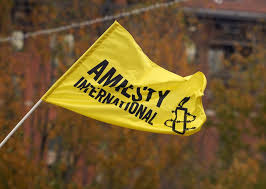
Amnesty International Kenya has issued a public safety advisory to the National Police Service ahead of anticipated demonstrations on the fuel price increase set for Tuesday, April 21, 2026.
In a press release on Monday, April 20, 2026, Amnesty Kenya cautioned the Police against the use of excessive force, live ammunition, or targeting journalists and medics at the height of the demonstrations.
“Amnesty International Kenya notes the anticipated demonstrations scheduled across the country for tomorrow, Tuesday, 21 April 2026, in response to recent fuel price increases and their negative economic impact on citizens,” read the statement in part.
In the report, Amnesty International Kenya has shared details of Kenya’s Constitution, which guarantees every person the right to assemble, demonstrate, picket, and present petitions peacefully and unarmed under Article 37.
You Might Also Like

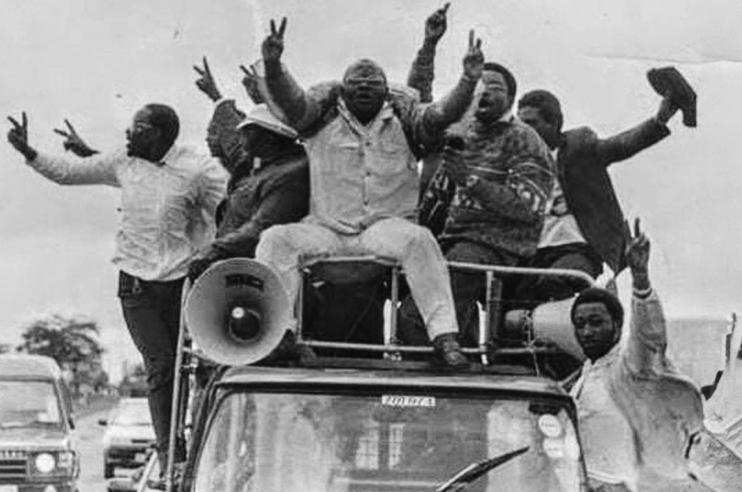
“The Police bear a primary responsibility for collectively facilitating and protecting this right, not for suppressing it. The purpose of protest notifications is to coordinate public safety, not to request permission,” read the report in part.
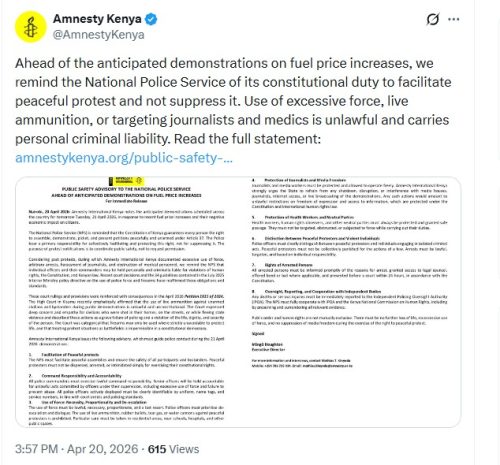
Advisory
Amnesty International Kenya has demanded that the NPS facilitate peaceful assemblies and ensure the safety of all participants and bystanders. Peaceful protesters must not be dispersed, arrested, or intimidated simply for exercising their constitutional rights.
At the same time, Amnesty International has demanded that all police commanders must exercise lawful command responsibility.
Further cautioning that Senior officers will be held accountable for unlawful acts committed by officers under their supervision, including excessive use of force and failure to prevent abuse. All police officers actively deployed must be clearly identifiable by uniform, name tags, and service numbers, in line with court orders and policing standards.
In addition, Amnesty International has cautioned against the use of force, which must be lawful, necessary, proportionate, and a last resort. Police officers must prioritise de-escalation and dialogue.
Also noting that the use of live ammunition, rubber bullets, tear gas, or water cannons against peaceful protesters is prohibited. Particular care must be taken in residential areas, near schools, hospitals, and other public spaces.
Author
Latest News








Advertisement
More on News