Advertisement
Against tide: Fish farming takes root in arid Marsabit
Tuesday 22nd July, 2025 01:20 AM|
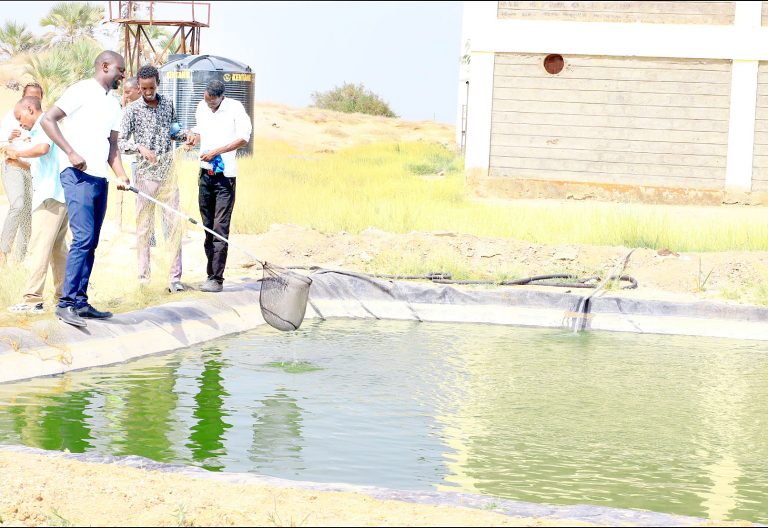
In the remote, sun-scorched landscapes of northern Kenya, Marsabit County is emerging as a proud example of a region battling the harsh realities of climate change.
Once flush with green pastures and abundant livestock, the area is now grappling with prolonged drought, unpredictable rainfall, and worsening food insecurity.
For decades, pastoralism was the heartbeat of communities in North Horr. Herding cattle, camels, and goats across vast distances in search of water and pasture was more than a livelihood—it was a way of life.
But as climate shocks deepen, even this age-old tradition faces an uncertain future.
You Might Also Like



Amid this uncertainty, a quiet yet transformative revolution is unfolding. In a region where consuming fish was once frowned upon due to long-held cultural beliefs, fish is now a symbol of adaptation and resilience.
From camels to catfish, local pastoralists are increasingly turning to fish farming—a practice once considered taboo.
“We used to believe that fish was not our food,” says Mzee Sora Guyo, an elder from North Horr., “But now, it’s helping us feed our children and survive the dry seasons.”
Supported by the Marsabit County Fisheries Department and the World Food Programme (WFP), fish ponds are springing up across the region as viable alternatives to traditional livestock farming.
During a recent visit to North Horr, we witnessed first-hand the growing interest in aquaculture.
Chalbi Environmental Development Initiative, a local community group, is among the pioneers. The group’s Secretary-General, Hadija Guyo, reveals that they have successfully established two thriving fish ponds nestled among doum palms.
Economic boost
The project began in December 2024 after the group attended an aquaculture training in Sagana, facilitated by WFP and the County Fisheries Department.
They returned home with nearly 1,000 fingerlings—a mix of monosex and unisex tilapia species—from Sagana hatcheries.
Despite feed shortages in the area, the fish have grown well and are now ready for harvest. Hadija says the initiative is not just about food—it’s about economic empowerment.
“Fish farming is giving our women and youth a sense of independence. We plan to channel the profits into table banking for savings and soft loans,” she explains.
The aquaculture movement has not only found footing among community groups but has also been integrated into education.
At the North Horr Technical Training Institute (NTTI), fish farming has become part of the curriculum for agriculture and nutrition classes. Agriculture student Abudho Galgallo maintains a fish pond as part of his studies.
“It’s more than just a school project. It’s a symbol of change and a real opportunity for employment in our community,” he says.
For Adho Game, a Diploma in Agriculture student at the same institution, the project has opened her eyes to a new world.
“I never ate fish growing up. Now I enjoy it and advocate for it in my community. Fish farming is not just about nutrition—it’s about survival, dignity, and adapting to climate change,” she opines.
NTTI Deputy Principal Sammy Malingu praised the project for offering practical, real-world skills.
Head of Agriculture Department Kepahs Juma noted that students have embraced aquaculture with enthusiasm and are becoming its champions.
Meanwhile, Head of Nutrition Anastacia Mutiti hailed the initiative as a “game changer” that can help combat malnutrition, improve food security, and enhance local climate resilience.
She noted that fish, being rich in amino acids, could address widespread cases of undernutrition across North Horr.
In Moyale sub-county, another trouble spot for child stunting and hunger, fish farming is also gaining momentum. Musa Hassan Dida, a passionate aquaculture farmer, is a success story there.
Inspired by a friend’s experience in the Sagana training, Dida sought help from the Fisheries Department and WFP. In 2024, he began with 300 fingerlings and made Ksh75,000 from the first harvest.
Encouraged by the outcome, he invested in 500 more, now nearly ready for market.
“From my fish business, I’ve been able to support my seven brothers and take my hypertensive father to Kenyatta National Hospital for treatment,” Dida shares.
Demand is already high, with hotels and individuals calling to place orders. He hopes to earn Ksh125,000 or more from the next sale.
According to Marsabit County Fisheries Officer Sostine Wanjala, aquaculture is fast becoming a cornerstone in the county’s climate adaptation strategy.
In 2023, 15 locals were selected for specialised training in Sagana. Today, the number of aspiring fish farmers has risen to over 100.
“Residents are starting to see aquaculture not as relief, but as a long-term resilience solution,” says Wanjala.
WFP Supply Chain Officer Albert Mwambanu echoes this sentiment.
“Our goal is to use aquaculture as a transformative and innovative approach to tackle climate crises, enhance food security, boost local economies, and improve nutrition. What’s happening in Marsabit is just the beginning,” he says.
Author
Jacob Walter
View all posts by Jacob WalterLatest News







Advertisement
More on News