Advertisement
4 astronauts set to become first humans to return to Moon’s orbit in 50 years
Wednesday 01st April, 2026 10:04 PM|

NASA is set to send four astronauts into space – marking the first mission to the Moon’s orbit in more than 50 years.
Victor Glover, Jeremy Hansen, Reid Wiseman and Christina Koch’s mission is partly intended to pave the way for a future lunar landing in the coming years.
Due to launch from 18:24 local time (23:24 BST) from the Kennedy Space Center in Cape Canaveral, Florida, Artemis II will spend around 10 days travelling around the Moon.
The Artemis I mission took place in 2022, and saw NASA’s mega rocket – the Space Launch System (SLS) – and the Orion capsule fly for the first time on a 25-day mission around the Moon.
You Might Also Like
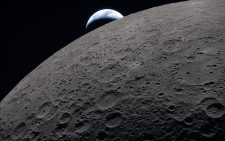

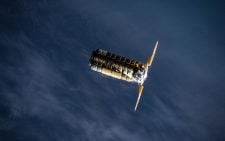
But there were no humans onboard.
For Artemis II, astronauts are very much at the front and centre of the mission. The crew will be the first people to fly in the SLS and Orion as they travel around the Moon – their mission will last about 10 days.
The plans for Artemis III have recently been overhauled by NASA. It was originally supposed to see astronauts land on the lunar surface, and was scheduled for 2028.
Instead the crew will stay closer to home – and in 2027 they’ll fly on Orion to low-Earth orbit, and test docking with a lunar lander.
Artemis IV and V will now become lunar landing missions – and NASA says it’s aiming for both to happen in 2028. But this is an ambitious timeline.
Two companies – Elon Musk’s SpaceX and Jeff Bezos’s Blue Origin – are building lunar landers. But it’s not clear which one will be used for the docking test with Artemis III, or which will be selected for the first lunar landing.
Eventually, NASA plans to build a lunar base. But plans to construct a space station called Gateway to orbit around the Moon have been paused.
The Artemis II crew will be the first humans to return to the Moon in more than 50 years, and the 10-day journey will take them further from Earth than anyone has been before.
Although the four astronauts won’t land on the Moon’s surface, they are hoping to bring a new understanding of the lunar environment and the mission will pave the way for a future landing.
They take off from Kennedy Space Center in Florida and, once their rocket is about 70,000km (45,000 miles) above the planet, the Orion spacecraft – which houses the crew – will separate from the launcher and orbit the Earth.
The astronauts must then decide whether to continue the mission – while they are close to Earth, getting back is relatively straightforward if there are any issues that cannot be fixed.
If all is well, Orion will fire its main engine to blast free of the Earth’s gravity and set a path to the Moon.
After its history-making lunar landings, the Apollo programme was cancelled in 1972.
Costs had spiralled, priorities had changed.
So attention shifted to a more budget-friendly destination: low-Earth orbit. And that’s been the focus for NASA the last 50 years – starting with Skylab, then the Space Shuttle programme, and more recently the International Space Station.
NASA set the Moon in its sights again in 2005 with a programme called Constellation. But it was cancelled in 2010 because of delays and cost over-runs.
But the technology developed for Constellation – namely the Orion spacecraft and the parts of the Constellation rockets – became incorporated into the Artemis programme, which formally began in 2017.
A Moon landing was originally planned for 2024, but with delays to the Artemis programme, NASA says it’s aiming for a lunar landing in 2028.
Author
Latest News








Advertisement
More on News