Advertisement
2021 Budget caters for President Kenyatta’s battle to cushion country against Covid-19 odds
Thursday 10th June, 2021 12:00 AM|
By SELINA CHITERI
The entry of Covid-19 into all spheres of our lives marked a season of disruption and evoked an unwarranted change and approaches to managing economies for the different governments across the globe. It involved making tough and “uncomfortable” decisions that seemed harsh but was for the good of all. It was a time for governments to toughen up on the people, all in the name of protecting lives and livelihoods and Kenya was not an exception.
But looking back a year from the emergence of the pandemic, President Kenyatta has undoubtedly given Kenya a soft landing from the wrath of the pandemic ensuring the economy grows by Sh790 billion.
At the onset of the pandemic, drastic measures had to be undertaken to ensure the safety of livelihoods as the government changed the economic course of the country. This subsequently saw the imposition of Covid -19 rules, some of which gravely touched the economy of the country.
It was a tough moment for everyone!
For many it translated to massive job losses with records by the Kenya National Bureau of Statistics indicating that 1.7 million jobs had already been lost by the second quarter of 2020 vis-à-vis the loss of income for many Kenyan families. The country’s economic capabilities were on a downward trend and the Government had to do something to forestall a major economic crisis that was drying up households at a record-breaking speed.
However, despite the stringent preventive Covid-19 measures put in place, the government also instituted interventions that would cushion Kenyans against the economic effects of the Covid-19 pandemic.
Top on the list was the issuance of tax relief for individuals earning a gross monthly income of up to Sh24000. President Uhuru Kenyatta also announced a reduction of the Pay-As-You-Earn from 30 to 25 percent thus increasing Kenyans’ disposable income and companies were relieved of five percent of Resident Income Tax (Corporation Tax). Touching further on taxes, the President reduced the turnover tax rate from three to one percent targeting all Micro, Small and Medium Entreprises (MSMEs) to ensure survival of businesses which were enduring the sudden disruption of flow of income.
These measures, though compromising the country’s economic growth at the time, had effect on all Kenyans. Kenyans were hard pressed and the President understood this well when he instituted these measures. Banks were prompted to lower interest rates to their borrowers after the Central Bank Rate was scaled down to increase availability of credit to MSMEs. To cushion the banks, the Cash Reserve Ratio (CRR) was reduced.
Over and above these, there was a suspension of listing of persons, MSMEs corporate entities in the Credit Reference Bureaus. The government also embarked on key initiatives to empower the youth through the creation programmes such as the Kazi Mtaani. For the elderly, orphans and vulnerable members of the society, Sh10 billion was injected through cash transfers.
President Uhuru Kenyatta and his administration took a wholistic approach in protecting the lives and livelihoods of Kenyans and was able to forestall a major crisis in management of Covid-19, as has been witnessed in countries such as Italy, Brazil, US and currently India.
However, all these measures required the Government to compromise on its budget and sacrifice a huge portion of its expenditure to cater for the reduction of revenue collection and taxes on their end. It meant a reduction of Central Bank Reserves even as the country experienced slower growth as indicated by the recent National Treasury estimates that gave a Sh790 million expansion of the economy against a recorded Sh870 billion growth by March 2020.
With this in mind, the Government must at least recover part of what it lost in 2020 through some interventions.
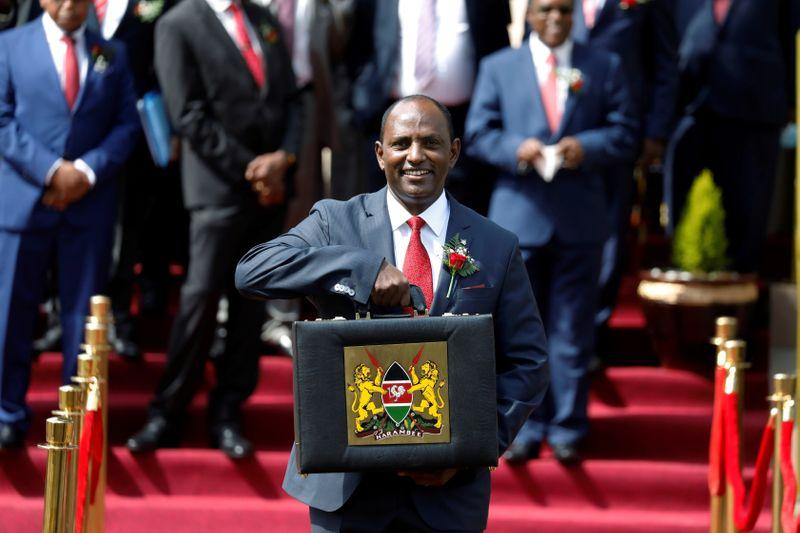
The country has to manage with a Sh3.6 trillion budget that will be pumped in major sectors of the economy for sustained growth and to stimulate the economy. The Big Four Agenda will be a key area of focus in the boosting the economy. This is part of a Post Covid-19 Economic Strategy that, despite major cutbacks on revenue, will ensure aid in boosting small businesses to get back on their course, create employment and reduce poverty.
More money is expected in programmes and projects touching on water and the technology sector to better contain the spread of the pandemic.
Ms Chiteri is a communications consultant and graduate student in corporate communication. [email protected]
Author
People Daily
View all posts by People DailyLatest News



Advertisement
More on News