Wheels of change: How Kenyan women are cycling past gender barriers
By Harriet James, July 22, 2025In Kenya, a quiet revolution is unfolding. Women across the country are embracing cycling, not just as a form of fitness or transport, but as a powerful tool for freedom, healing, and advocacy.
Yet, behind the medals, milestones, and group rides, lie untold stories of grit, discrimination, and a persistent fight for space both on the roads and in society.
A 2023 report by the Flone Initiative in partnership with the FIA Foundation revealed that despite bicycles making up to one per cent of daily travels across the city, only three to 3.6 per cent of all cyclists are women.
That means there are fewer than four female cyclists out of every 100 cyclists on the road.
A broader study in Kisumu, as part of the Institute for Transportation and Development Policy (ITDP) research, shows a striking gender gap: about 96 per cent of cyclists are male, leaving women with around four per cent participation, reflecting persistent inequality in cycling access.
But how do these women survive all these challenges while hitting the road?
Found love in cycling
For Faith Wambulwa, an ICT officer turned long-distance cyclist, the journey began with a sports injury.
“I was a runner. However, in August 2021, I injured my leg and could no longer run. That’s when I found cycling and fell in love with it,” she says.
Teaching herself to ride in adulthood was intimidating.
As Faith recalls, just thinking about cycling on busy roads made her heart race. But determination pushed her past the fear, and soon she was weaving through traffic with confidence.
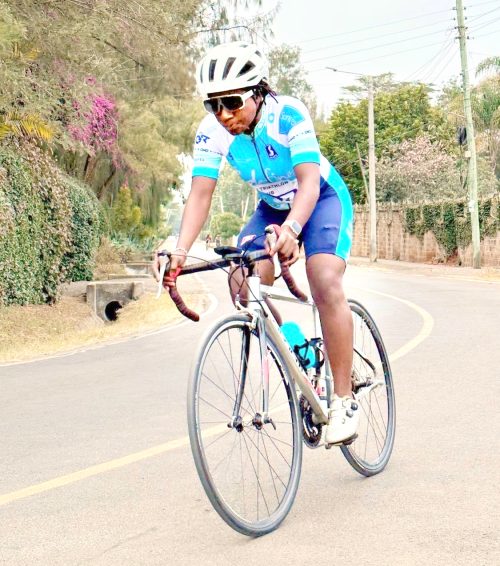
She now covers between 700 and 800 kilometres weekly, with solo weekend rides sometimes stretching up to 300 kilometres in a day.
Her discipline has led her to national events like the Great Rift Valley Challenge and the Grand Nairobi Bike Race, and even charity rides—like cycling from Mombasa to Kisumu to raise funds for arthritis patients.
Catcalling, sexist comments
But her path hasn’t been smooth.
“Some men harass you just for being a woman on a bike. Catcalling, sexist comments—they assume women shouldn’t cycle,” she says.
She has adapted to these challenges by hiding her hair under a helmet and minimising stop-overs.
“I always focus on how good cycling makes me feel,” she says.
Damaris Wanjeri Kariuki, a member of Nyahururu Cycling Club, found her inspiration in a friend and her cyclist husband.
“I admired their lifestyle and decided to try it,” she says.
After just three months of training, she was placed 15th out of over 4,000 participants during the Grand Nairobi Race.
But like many others, she faces challenges that go beyond the bike.
“Riding alone as a woman is unsafe, and family responsibilities can make it hard to attend races, especially those far from home. Plus, good bikes are expensive—many women simply can’t afford them,” Wanjeri says.
Indeed, cost, safety, and cultural expectations form a trifecta of barriers for many women cyclists.
Unlike their male counterparts, female riders are often subject to unwelcome attention, social judgment, and, at times, even physical harassment.
Some have been groped or slapped by strangers while riding. Road safety is another major issue.
“Drivers sometimes swerve towards you on purpose,” Faith says. “Many cyclists have been injured or worse.”
Infrastructure is a glaring gap. Despite rising numbers of cyclists, Nairobi and other Kenyan cities lack dedicated bike lanes, proper signage, and safe crossings.
For many women, the risk of cycling through poorly lit, high-traffic areas is simply too high. Even in places where efforts exist, gender is rarely considered in transportation planning.
Cyprine Odada, the founder and CEO of Shaping Cities, experienced all this firsthand. After moving to Nairobi in 2014, jobless and stressed, she found her escape through cycling.
“My hands were shaking the first time I tried,” she says. “But I felt something I hadn’t felt in a long time: joy and freedom.”
That joy turned into activism.
Through Critical Mass Nairobi, Cyprine helped grow one of Africa’s largest cycling movements.
She’s now the director and coordinator for Kenya Women’s Cycling Programme, creating a safe space where women share stories, ride together, and reclaim public roads.
“I’m incredibly grateful to the male allies who were very supportive, not just to me, but also to other females starting out in cycling or even the experienced ones. Being a female leader in a male-dominated space hasn’t been easy,” she says. “But we have been able to build a movement rooted in trust, purpose, and community.”
Policy change required
Cyprine believes the biggest gap lies in policy.
“Transport planning doesn’t account for women’s mobility needs,” she explains.
“There’s no gender lens, no protected budget for cycling infrastructure, and no recognition of how caregiving affects how women move.”
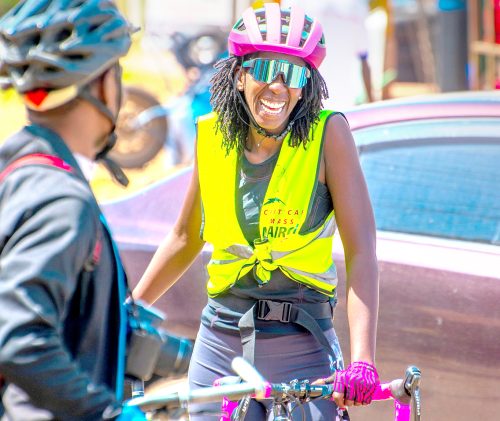
Despite the challenges, there’s progress. Women-only rides, mentorship from seasoned cyclists, and growing awareness of the same have encouraged more women to join.
For instance, Kenya Cycling Women, the all-women segment of Critical Mass Nairobi, grew to 163 members in 2024, offering peer support, women-only rides, skills training, and advocacy.
Events like Nairobi’s Pink Ride (hosted by Critical Mass) actively promote female cycling and help shift societal perceptions about women in the sport.
In addition, grassroots clubs and peer support offer a sense of security.
“More women are riding today than ever before,” Cyprine says, “but this is due to community efforts, not government support.” Despite low overall participation, female-led initiatives are making headway.
Despite the challenges, women like Faith, Damaris, and Cyprine are undeterred. To support women cyclists in Kenya, several key changes are needed to create a safer, more inclusive cycling culture.
“First, safe infrastructure is essential, like protected bike lanes that are well-maintained and respected by motorists, as they can make all the difference. Transport planning must also become more gender-responsive, recognising that women often navigate cities differently, sometimes with children or goods, and at varying hours,” Cyprine recommends.
She adds that there is a need for public education campaigns to foster respect for all cyclists, especially women, whose safety is too often compromised by harassment or disregard on the roads.
“Making cycling more affordable through subsidies, grants, or second-hand programs would help many women access quality bikes and gear. Lastly, greater visibility and leadership by women in cycling, whether in advocacy, races, or community rides, will not only shift perceptions but also inspire the next generation,” she notes.