Advertisement
Why Ruto is keen on ODM turf ahead of 2027 polls
Wednesday 24th December, 2025 07:14 AM|

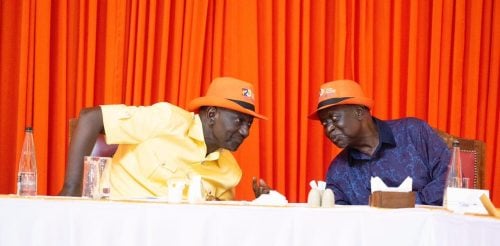
The renewed cooperation between the Orange Democratic Movement (ODM) and President William Ruto’s United Democratic Alliance (UDA) is shaping up to be a decisive factor in the country’s political chessboard.
Beyond the headlines of alliance and risk, the political chessboard and cards give Ruto an advantage as he prepares for his reelection bid.
At the core of the arrangement is a delicate balancing act. ODM has made it clear that its participation in a broad-based government must respect the party’s established strongholds and political interests.
This clarity provides Ruto with a predictable political environment, reducing the likelihood of intra-coalition friction that often undermines alliances, even as a section of leaders continue to pose a challenge that the President must earn and that he is not going to joyride on the ODM’s turf for second term plan to occupy the country’s top seat.
You Might Also Like



While the President has expressed readiness to negotiate with the broad-based faction ahead of the 2027 polls, and if they can agree to respect each party’s traditional bases, then Ruto will secure a platform from which he can consolidate his support while gaining influence in regions historically dominated by ODM.
The partnership, however, should the 2027 deal materialise, will offer Ruto a strategic access to ODM’s well-established networks, particularly in Nyanza, Western Kenya, and parts of Nairobi, among others. These regions have long resisted UDA’s expansion, and direct competition would be costly.
Through the alliance, Ruto can extend his political reach indirectly, benefiting from ODM’s organisational strength and voter base without confrontation. This arrangement enhances his chances of broader electoral success in the upcoming polls.
Beyond electoral calculations, the alliance signals a form of political maturity to the electorate. Kenya’s political landscape has often been marked by acrimony and shifting allegiances, but collaboration between the ruling party and a longstanding opposition party presents an image of stability and inclusive governance.

Ruto’s second term plan
For instance, TIFA surveys suggest that public approval for a broad-based government is on the rise, indicating a receptive electorate that values cross-party cooperation.
Ruto’s push for ODM to strengthen its internal structures further underlines the strategic dimension of the alliance. A cohesive and credible opposition partner reduces the risk of political fragmentation and ensures smoother coordination on policy matters.
For Ruto, this not only safeguards the coalition’s stability but also bolsters his public image as a leader capable of fostering collaboration.
The success of the UDA-ODM partnership, however, will hinge on discipline and adherence to agreed boundaries. Any deviation could revive old rivalries or spark new divisions, undermining the progress made.
For now, the groundwork appears solid, offering Ruto a strategic edge as he positions himself for the 2027 elections, with ODM’s turf playing a key role in expanding his political footprint.
Author
Latest News





Advertisement
More on Insights