What Africa stands to gain or lose from the Trump–Xi talks
By Aloys Michael, May 13, 2026As United States (US) President Donald Trump and Chinese President Xi Jinping meet for high-level talks, the world will focus on the usual flashpoints between Washington and Beijing: trade disputes, technology restrictions, military competition and the Taiwan question.
But for Africa, the outcome of the meeting could carry consequences that are just as important as those facing the two global powers themselves.
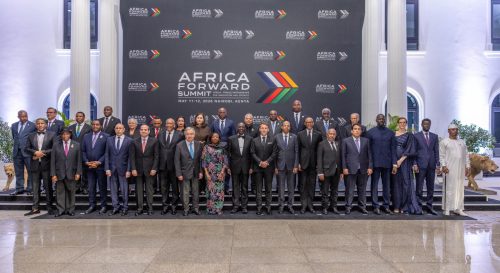
The talks come shortly after the Africa Forward Summit, a gathering that highlighted how strongly global powers are competing for influence on the continent.
That timing makes the Trump–Xi engagement more significant for Africa because it places the continent at the centre of a growing geopolitical contest.
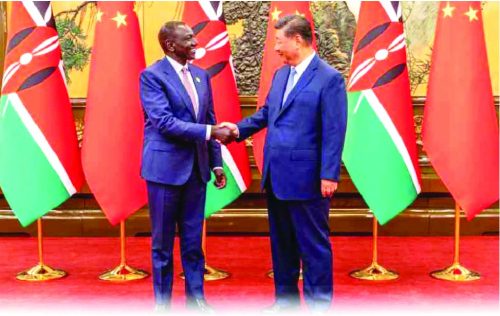
Over the past decade, China has deepened its presence in Africa through trade, infrastructure financing and industrial partnerships. From railways and highways to ports and power projects, Beijing has positioned itself as Africa’s largest bilateral trading partner and a major source of development financing.
The US, meanwhile, remains a key security ally, an important source of humanitarian and development assistance, and a powerful voice in international financial institutions. Europe, too, is stepping up its engagement, with countries such as France increasing diplomatic and economic outreach across Africa.
This competition has created opportunities for African countries, but it has also exposed the continent to the risks that come with rivalry between powerful nations.
Africa should watch closely
When relations between Washington and Beijing worsen, Africa often feels the effects indirectly. Trade wars between the two economies disrupt global supply chains, weaken investor confidence and create uncertainty in commodity markets.
African economies, many of which depend heavily on exports of raw materials, are especially vulnerable to such shocks.
Previous tariff disputes between the US and China affected demand for African exports such as oil, copper and cobalt. A slowdown in China’s economy usually reduces demand for African minerals and agricultural products.
At the same time, economic uncertainty in the United States can reduce investment flows and development support to emerging economies.
For this reason, Africa stands to gain if the Trump–Xi talks lower tensions and encourage more stable relations between the two powers.
A more predictable global environment would help African countries attract investment, manage debt pressures and pursue industrialisation strategies without being caught in the middle of global confrontation.
However, Africa also stands to lose if the meeting deepens divisions instead of easing them. A world split into competing political and economic blocs could force African governments into uncomfortable choices between Washington and Beijing.
Such pressure would undermine Africa’s long-standing preference for strategic non-alignment and balanced partnerships.
The continent’s best option is not to take sides but to use competition between global powers to secure better outcomes for its own people.
African countries should push for fairer trade agreements, increased infrastructure investment, technology transfers and greater market access from all partners.
The talks also highlight Africa’s growing strategic importance in the global economy. The continent holds vast reserves of critical minerals such as cobalt, lithium and rare earth elements, all essential for electric vehicles, renewable energy systems and advanced technologies.
Both China and the United States understand that access to these resources will shape the future global economy.
This gives Africa leverage that it has not always fully used. Rather than remaining a passive observer, African leaders should position the continent as an indispensable partner whose interests must be considered in any emerging world order.
Ultimately, the Trump–Xi meeting is not only about relations between the two superpowers. It is also about the kind of international system that will emerge in the years ahead. For Africa, the stakes are high.
Stability between Washington and Beijing could open doors for growth and cooperation. Deeper confrontation, however, risks turning the continent into another battleground in a global power struggle.