Advertisement
Trump heads to China for Xi summit overshadowed by Iran war
Wednesday 13th May, 2026 11:08 AM|
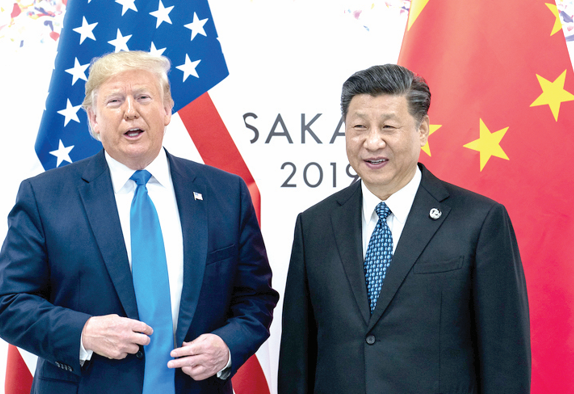
Donald Trump is due to arrive in Beijing on Wednesday, May 13, 2026, evening, the first visit to China by a US president in nearly a decade, as he seeks to mend power and prestige weakened by the war in Iran.
Trump will bring tech leaders, including Elon Musk of Tesla and Tim Cook of Apple, and plans for headline-grabbing deals. He has said he expects China’s leader, Xi Jinping, to “give me a big, fat hug when I get there”.
But the Middle East conflict that Trump started, and seems unable to finish, will cast a long shadow over two days of talks amid fears that he might be tempted to weaken US support for Taiwan, the self-governing democracy claimed by China, in return for Xi’s assistance.
“I don’t think we need any help with Iran,” Trump said to reporters before departing the White House on Tuesday, May 12, 2026. “We’ll win it one way or the other – peacefully or otherwise.”
You Might Also Like
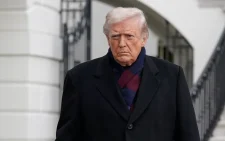
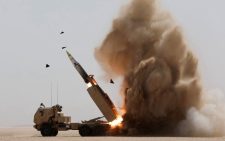
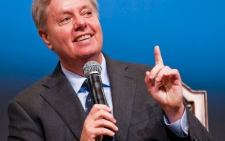
He also sought to play down divisions with Beijing, saying Xi had been “relatively good” during the crisis and insisting that Washington had “Iran very much under control”.
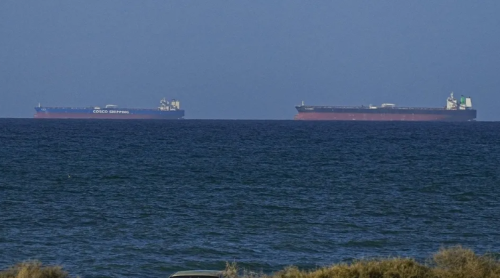
The war has entered its third month, with Tehran tightening its grip over the Strait of Hormuz and Washington struggling to turn a fragile ceasefire into a lasting settlement.
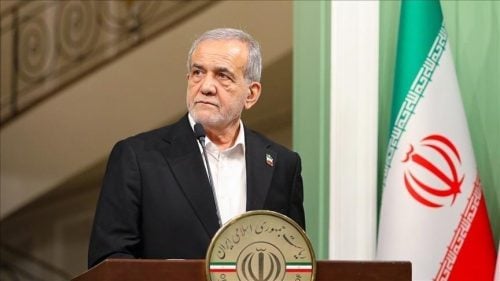
Behind the scenes, US officials have spent weeks urging China – Iran’s biggest oil customer and one of the few powers with leverage in Tehran – to pressure the Islamic Republic into reopening the Strait of Hormuz, through which roughly a fifth of the world’s oil supply ordinarily passes, while accepting US terms for peace.
The US recently sanctioned several Chinese firms accused of assisting Iranian oil shipments and supplying satellite imagery said to have been used in Iranian military operations. China condemned the measures as “illegal unilateral sanctions” and invoked a rarely used blocking statute prohibiting Chinese entities from complying with them.
Chinese officials have publicly called for stability while carefully avoiding overt alignment with Washington. Chinese foreign minister Wang Yi last week hosted his Iranian counterpart, Abbas Araghchi, in Beijing, and defended Iran’s right to develop civilian nuclear energy.
Xi has also offered implicit criticism of the US over the war. He has said safeguarding international rule of law is paramount, adding it “must not be selectively applied or disregarded,” nor should the world be allowed to revert “to the law of the jungle”.
Chinese Foreign Minister Wang Yi (R) with Iranian Foreign Minister Abbas Araqchi in Beijing on 6 May 2026.
Still, neither side appears eager to allow the Iran crisis to derail broader diplomatic and economic engagement in the first of four potential meetings between Trump and Xi over the next year.
The two countries remain locked in a fragile tariff truce reached last autumn after tensions threatened to erupt into a full-scale trade war. Trump has long complained about China’s trade surplus with the US, while Beijing has bristled at American export controls and sanctions.
Author
Latest News







Advertisement
More on News