Advertisement
Utumishi Academy CCTV horror: Did school sacrifice girls’ privacy for fake security?
Monday 01st June, 2026 07:15 AM|

The emergence of CCTV footage from the deadly fire at Utumishi Girls Academy has opened an entirely new and uncomfortable national conversation, one that goes far beyond the horrific loss of 16 young lives.
As investigators piece together the final moments before the inferno, disturbing questions are now being asked about why surveillance cameras had been installed inside a girls’ dormitory in the first place.
The footage aired by one of the local TV stations on Sunday, May 31, 2026, showed students walking through the dormitory moments before the fire broke out.
The footage revealed how the persons of interest moved from cube to cube before the blaze erupted near the exit points, trapping dozens of sleeping students inside.
You Might Also Like


But beyond the criminal investigation, Kenyans are now confronting another issue: did the school violate the privacy and dignity of hundreds of girls under the guise of security?
Dormitory not a public space
A school dormitory is not a corridor, a gate, or a parking lot. It is effectively a child’s temporary bedroom.
Students sleep there. They change clothes there. They live there.
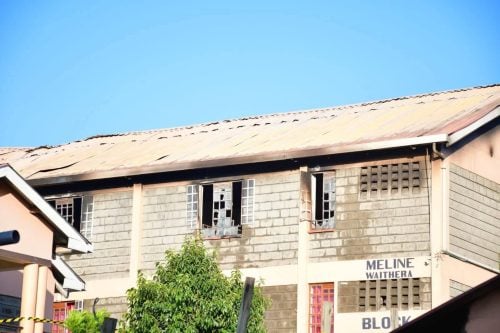
The idea that cameras were potentially recording underage girls daily inside such a private environment now raises questions about whether the surveillance crossed ethical and constitutional boundaries.
Schools cannot normalise invasive monitoring of children while claiming it is for protection. Indeed, the tragedy itself appears to expose the limits of surveillance-only security systems.
Cameras watched but did not protect
One of the most painful realities in the Utumishi tragedy is that the cameras captured the disaster unfolding, yet they did nothing to stop it.
The footage reportedly shows suspicious movements inside the dormitory minutes before the fire began. But there was no immediate alarm, no automatic emergency response, and no intervention before flames spread through the overcrowded structure.
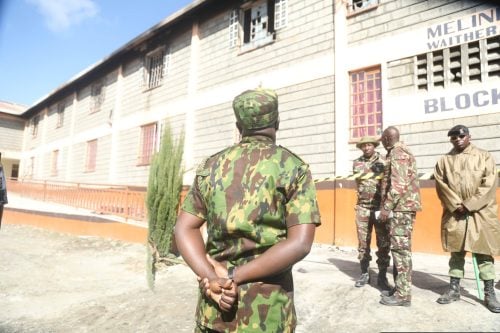
This raises an important question about misplaced priorities in school safety planning.
Would smoke detectors, automated fire alarms, fire suppression systems, or accessible emergency exits have saved more lives than cameras mounted inside sleeping quarters?
Surveillance can document tragedy. It cannot replace prevention.
The privacy debate Kenya can no longer avoid
Kenya’s Data Protection Act and constitutional protections on privacy exist for a reason.
Children are entitled to dignity, privacy, and protection from exploitation.
Even if schools install CCTV systems for safety reasons, there must be strict limitations on where cameras can be placed, who accesses footage, how long recordings are stored, and whether parents consented to such surveillance.
The fear many Kenyans now express is simple but chilling: who has been watching these recordings all along?
How many people had access to footage from inside a girls’ dormitory?
Were there safeguards to prevent misuse?
Could clips potentially be copied, leaked, sold, or abused?
Safety cannot come at the cost of dignity
The Utumishi tragedy has already exposed failures in school safety standards, overcrowding, emergency preparedness, and enforcement of boarding school regulations. In fact, the CCTV footage shows some beds in corridors, a clear indication that the dormitory was overcrowded.
Education Cabinet Secretary Julius Migos Ogamba has also revealed that the school was overcrowded at the time of the tragedy, with 715 students having been admitted in 2026 at a school approved for 650 learners.

The CCTV revelations may now force the country to confront another uncomfortable truth: technology without ethics can become dangerous.
Parents do not send children to school expecting them to live under constant surveillance inside spaces where they sleep and dress.
Schools have a duty to protect learners. But protection cannot mean stripping children of basic dignity and privacy.
Kenya must now urgently develop clear national guidelines on the use of CCTV in schools, especially in boarding institutions.
There is a huge difference between securing school compounds and placing cameras inside children’s living spaces.
The bigger question is whether Kenya’s education system has quietly normalised practices that would outrage society if they happened anywhere else.
Because in the end, the cameras did not stop the fire. They only recorded it.
Author
Mustafa Juma
View all posts by Mustafa JumaLatest News








Advertisement
More on Insights