US Vice President JD Vance’s visit to Nairobi: What is at stake for Kenya
By Kenneth Mwenda, October 25, 2025United States Vice President JD Vance is expected in Nairobi late next month in what will be the the first US Vice Presidential visit in 15 years and the highest-level since Secretary Blinken in 2021, according to reports.
The trip comes at a sensitive time for both governments, following President Donald Trump’s recent criticism of America’s security involvement in Kenya and Somalia, remarks that raised uncertainty about Washington’s support to East Africa.
The last visit to Kenya by either a US Vice President or Secretary of State was by Secretary of State Antony Blinken on November 17–18, 2021.
Blinken met with then-President Uhuru Kenyatta and Foreign Affairs Cabinet Secretary Raychelle Omamo to discuss cooperation on COVID-19 response, clean energy, environmental protection,and regional security (including Ethiopia and Somalia).
That visit was part of Blinken’s first sub-Saharan Africa tour. No US Vice President has visited Kenya since Joe Biden in June 2010, and no Secretary of State has visited since Blinken.
A planned April 2025 visit by Secretary Marco Rubio was cancelled, though he later hinted at the possibility of visiting the East African country.
A future visit by Vice President J.D. Vance is scheduled for late November 2025.
Resetting a strained partnership
When Vance lands in Nairobi, he is expected to meet President William Ruto and senior Kenyan officials.
His visit will follow weeks after President Trump told military leaders in Virginia that the United States should not be “policing the far reaches of Kenya and Somalia while America is under invasion from within.”
The statement unsettled allies who rely on US defence cooperation. In Kenya, it stirred fears that Washington might cut military funding or scale back intelligence support that has helped in the fight against al-Shabaab.
American forces have operated from Kenya’s Manda Bay base for years, providing drone surveillance and training for the Kenya Defence Forces.
The US has for years committed billions to support counter-terrorism and regional peace operations.
While Trump’s comments suggested that such funding might shrink, Vance’s visit appears aimed at calming those concerns and reaffirming Kenya’s role as a key regional ally.
Trade and the AGOA gap
Trade will feature prominently in the talks. The African Growth and Opportunity Act (AGOA), which allowed Kenya to export goods to the United States duty-free, expired on September 30, 2025.
The lapse threatens over 700,000 jobs in Kenya’s export processing zones that produce garments, tea and flowers for the US market.
Last year, Kenya exported goods worth about Ksh90 billion to the United States.
President Ruto has said a one-year AGOA extension is being discussed. Renewal depends on Congress, and with the Trump administration focused on domestic manufacturing, uncertainty remains.
Vance is expected to advocate a modified deal linking AGOA benefits to broader US–Kenya investment under the Strategic Trade and Investment Partnership (STIP).
Security cooperation
Security is another key area. Kenya leads the Multinational Security Support mission in Haiti, now known as the Gang Suppression Force.
The deployment, backed by about Ksh40 billion in US funding, has helped restore order in Port-au-Prince.
However, critics at home say the mission is costly at a time when local insecurity is rising.
Vance’s visit will likely bring fresh American commitments to support the operation without overstretching Kenya’s forces.
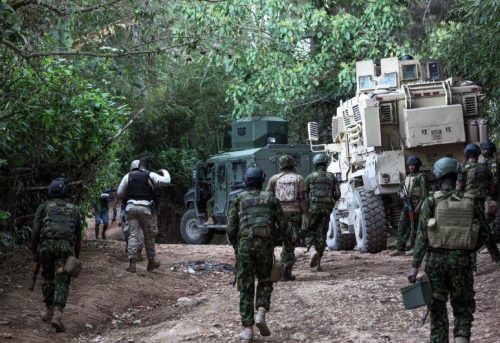
In the Horn of Africa, Kenya remains central to Washington’s counter-terror operations. Al-Shabaab continues to threaten Kenya’s border regions, while instability in Ethiopia and Sudan complicates regional security.
US drones operating from Kenyan soil play a critical role in containing militants. For Vance, the challenge is balancing Trump’s promise to cut foreign spending with the practical need for stability in East Africa.
Countering China’s growing influence
Vance’s trip also has a geopolitical motive, countering China’s influence.
Beijing has invested heavily in Kenyan infrastructure, including the Standard Gauge Railway and several industrial parks.
Kenya is among Africa’s top recipients of Chinese loans, a fact that worries Washington.
The Trump – Vance administration sees Kenya as a key test case for reducing Chinese leverage by encouraging Western-backed investment in digital and green infrastructure.
US firms like Microsoft aim to connect millions of Kenyans via satellite and fibre. American officials hope such projects will tie Kenya closer to Western economies while offering alternatives to Chinese debt-driven financing.
President Ruto’s government continues to maintain cordial ties with Asian and Gulf states, showing that Nairobi intends to keep its diplomatic options open.
Domestic pressures for Ruto
For President Ruto, Vance’s visit comes at a politically tense time.
Rising taxes, corruption scandals and high youth unemployment have damaged his approval ratings.
Securing a deal to renew AGOA could give him an economic boost. Stronger defence cooperation with the United States would also enhance his standing as a regional leader.
Opposition leaders, however, argue that Ruto’s foreign missions, including the Haiti deployment, distract from urgent domestic issues such as insecurity and the high cost of living.
Vance’s Nairobi trip is an opportunity to repair trust.
The timing is significant, the G20 leaders’ summit in Johannesburg will take place on 22–23 November, just days before his visit.
By choosing Nairobi as his next stop, Washington signals Kenya’s strategic importance.