Saba Saba irony: How two-finger salute evolved from symbol of resistance to Tutam and incumbency
By Mabonga Makhanu, July 7, 2026Thirty-six years after the historic Saba Saba movement challenged one-party rule in Kenya, one of its most enduring symbols has undergone a remarkable transformation.
The two-finger salute, once a bold act of defiance against the government of the day, has evolved into a political symbol now widely associated with support for the current administration and President William Ruto’s calls for a second term under the “Tutam” slogan.
The contrast captures one of the greatest ironies in Kenya’s political history.
Fight for multi-party
On July 7, 1990, thousands of Kenyans took to the streets demanding the restoration of multiparty democracy. At the time, Kenya was under a one-party political system, and publicly displaying two fingers had become synonymous with calls for political pluralism. The gesture represented the demand for a second political party and a more democratic Kenya.
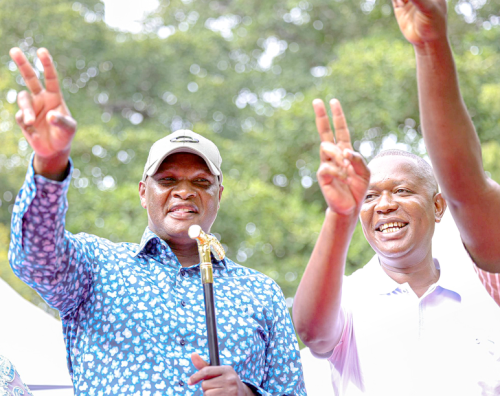
Displaying the sign was not merely symbolic—it carried significant risk. Many activists, opposition supporters and ordinary citizens were arrested, assaulted or intimidated for participating in demonstrations or openly associating themselves with the movement.
According to Siaya Governor James Orengo, who was then the Ugenya MP and was captured on a historic pickup truck alongside his fellow Second Liberation fighters, all showcasing the two-finger salute while entering the historic Kamukunji Grounds, the irony is striking.
Orengo laughed off the irony, saying that at the time, raising two fingers was effectively banned because it symbolised revolt against the state. He added that the then KANU chairman from Nakuru, Wilson Letich, threatened to cut off the two fingers of anyone who displayed the salute, forcing many to refrain from doing so out of fear.
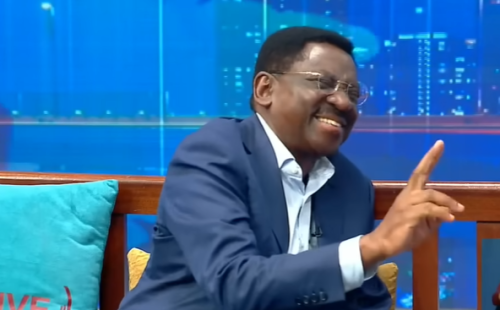
“I find it difficult to raise two fingers. Back then, it was also difficult. There was a KANU chairman in Nakuru, the late Letich, who used to say that if anyone raised two fingers, he would cut them off.”
Wantam symbol
He further recalled that, during that period, the one-finger salute, which has now become a trademark of the opposition, symbolised support for the government and KANU. Today, however, the same one-finger salute has evolved into an anti-incumbency symbol associated with the “Wantam” movement, which opposition figures use to signal their determination to unseat the current administration.
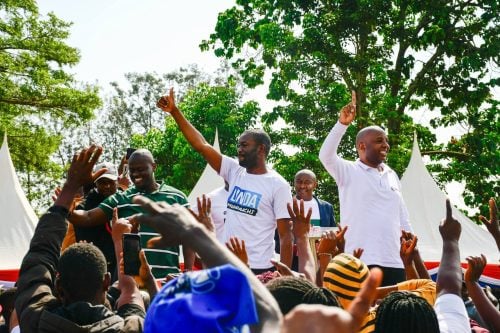
While it was comfortable for him to raise the two-finger salute then because he was fighting for political pluralism, Orengo said he now finds it difficult to raise the same gesture because he remains in the opposition and is part of the Wantam movement, which opposes the current regime’s bid to remain in power beyond 2027.
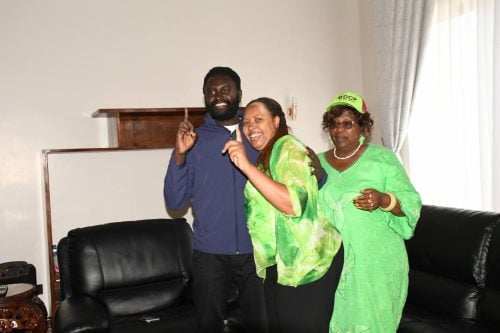
He added that he recently accidentally raised two fingers but, upon realising it, quickly lowered them because the gesture now goes against his current political stance.
The irony
Fast forward to 2026, and the same two-finger salute has taken on an entirely different meaning.
Today, it is prominently used by supporters of President Ruto and the ruling coalition during political rallies. The gesture has become closely linked to the “Tutaam” campaign message, signalling support for the president’s bid for a second term in office.
What was once a symbol directed against the establishment has, over time, become a symbol embraced by the establishment itself.