Riding the rhythm of Nairobi: Inside Nairobi’s matatu culture that rules the road
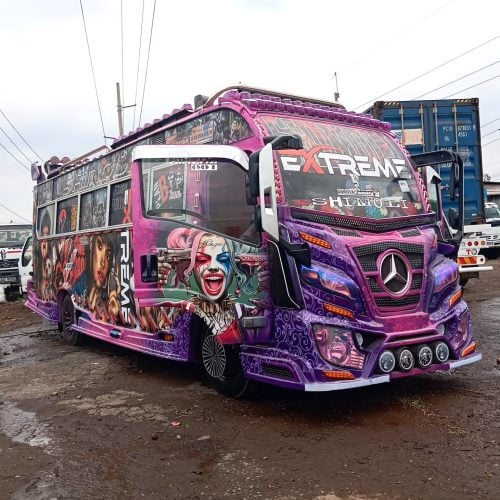
By Kiprono Keileb, July 28, 2025In Nairobi, matatus aren’t just a means of getting around; they’re part of everyday life. These colourful, music-blasting minibuses are bold, loud, and full of character. From their eye-catching graffiti to the booming sound systems, Nairobi’s matatus have built a culture that’s fast-paced, stylish, and truly street-smart.
Every day, thousands of Nairobians jump into matatus headed to different corners of the city, Kayole, Rongai, Githurai, Umoja, South B, and more. And each route has its flavour. Whether it’s the smooth Gengetone beats playing in a Rongai Nganya or the flashy lights of a Kawangware ride, there’s always something to catch your eye and ear.
This is Nairobi’s matatu culture: loud, flashy, fast, and unmistakably urban. It’s more than just a mode of transport. It’s a lifestyle, an identity, and for many, a rite of passage.
From the Nganya that rule the Thika Road route to the graffiti-laced rides in South B, Nairobi’s matatus aren’t just vehicles; they are mobile expressions of art, rebellion, hustle, and pride. Every flashing LED light, every booming speaker, every mural of Tupac or Burna Boy is a bold statement: We’re here. We move the city.
Music, lights, and street fame
Inside some of these matatus, it feels like stepping into a nightclub. Neon lights flash, subwoofers thump, and music videos play on flat screens mounted above your head. Conductors (called makangas) wear streetwear and drop heavy Sheng’ slang like DJs on the mic.
They’re not just cars, they’re local celebrities. People know which matatu to wait for, which ones are faster, cleaner, cooler, or just louder.
The goal? Attract passengers and stand out. The better the matatu looks and sounds, the fuller it stays.
The Globe Flyover traffic hack
Now, here’s something many don’t know: Matatus in Nairobi have a traffic intelligence system, and it involves a group of street-smart young men who hang out at the top of the Globe Flyover.
During rush hour, these spotters climb to the highest point of the flyover and monitor traffic moving into town. Their job? To check if Tom Mboya Street is moving or if it’s better to use the roundabout.
When a matatu leaves Ngara or Parklands and is heading to the CBD, the makanga calls the spotter. “Vipi hapo town?” they ask.
The boy checks and gives a report, “Chukua Tom Mboya” or “Osha flyover.” Just like that, decisions are made. The boys are paid for this. It’s their daily hustle, helping drivers save time and avoid Nairobi’s notorious traffic.
It’s raw, real, and deeply Nairobi.
A culture born of the streets
Nairobi’s matatu culture dates back to the 1970s, when the government began loosening its control over public transportation. What came as a functional means of moving people soon evolved into a street art movement on wheels.
Today, the culture is deeply embedded in routes like Route 23 (Eastleigh), Route 11 (South B/C), Route 105 (Githurai), Route 58 (Buru Buru), and Route 46 (Kawangware), among others. Each route has its flavour, lingo, and hierarchy. A Nganya from Rongai is not the same as one from Kayole — and everyone knows it.
Step into a Mathare-bound matatu during rush hour, and it’s like entering a club on wheels. Neon lights bounce off the walls, trap music or gengetone blasts from massive speakers, and the conductor — or dendi — is dressed in streetwear, throwing slang faster than a Nairobi auctioneer. It’s chaotic, charismatic, and addictive.
Soundtracks and street fame
Music is the heartbeat of matatu culture. A matatu is only as good as its sound system. DJs and sound engineers are hired to fine-tune the speakers to nightclub standards. Popular matatus even have screens playing music videos, sometimes linked to TikTok trends.
The louder and more stylish the matatu, the more passengers it attracts. In Nairobi, a matatu’s reputation spreads fast, sometimes faster than the car itself. They even have names — “Bora Uhai”, “Rihanna”, “Mbukinya”, “Black Panther” and cult followings on social media.
Some matatus double as street-level influencers. A new song dropped? A matatu playlist makes it viral. A political slogan on its side panel? Thousands will see it before sunset
A double-edged culture
But matatu culture isn’t all glitz. Over the years, concerns have been raised on recklessness, speeding, tout harassment, and disregard for traffic rules. Several operations to regulate the sector have been launched and failed. Still, the culture survives, adapting to new policies, reinventing itself.
Matatu owners argue that the culture gives Nairobi its unique character, that if you strip away the art, music, and swagger, the city loses something.
In 2022, Nairobi Governor Johnson Sakaja’s plan to kick out matatus from the CBD sparked protests. Artists, youth, and even musicians joined in to defend the culture, proving that matatus are not just for transport but also Nairobi’s heartbeat.
Moving the city, one beat at a time
From the graffiti-covered doors to the unfiltered conversations inside, matatus mirror the lives of Nairobians, full of noise, motion, ambition, and chaos. They’re the pulse of the city, the bridge between estates and downtown, between generations and dreams.
As long as Nairobi breathes, matatus will roar.