Linda Mwananchi storm: How new political movement attracts leaders across divide amid party formation hints
By Ndiritu Wanjiru, July 27, 2026Kenya’s political landscape is witnessing the emergence of a new force that is challenging traditional party boundaries and regional political alignments.
The Linda Mwananchi movement has increasingly attracted prominent leaders from different political backgrounds, regions and generations, turning it into one of the most closely watched political formations ahead of the 2027 general election.
The movement’s growing influence has been reflected in the calibre of leaders appearing on its platforms and publicly associating themselves with its agenda.
From serving senators and MPs to former governors, lawyers, activists and political strategists, Linda Mwananchi has positioned itself as a broad coalition bringing together voices that previously operated in different political spaces.
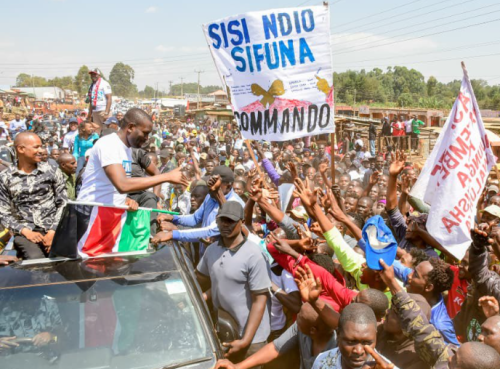
At the centre of the movement are key figures including Nairobi Senator Edwin Sifuna, Siaya Governor James Orengo, Embakasi East MP Babu Owino,Trans Nzoia Governor George Natembeya, Vihiga Senator Godfrey Osotsi and lawmaker Caroli Omondi. Their nationwide engagements have helped expand the movement’s reach beyond its original support base.
Coalition cutting across party lines
One of Linda Mwananchi’s most notable features is the diversity of political backgrounds represented among its supporters and associates.
The movement has attracted leaders with links to ODM, UDA, Jubilee, UPM, independent political formations and civil society. This cross-party appeal has given it a different character from traditional Kenyan political alliances, which have often been organised around established party structures and regional voting blocs.
Among the most significant figures recently associated with the movement is Kakamega Senator Boni Khalwale. Khalwale was elected Senator in 2022 on a United Democratic Alliance (UDA) ticket, but later moved away from UDA politics and became aligned with the United Progressive Movement (UPM). His appearance with Linda Mwananchi leaders during the Western Kenya tour represented a major political statement because of his long-standing influence in the region.
Former impeached Meru Governor Kawira Mwangaza has also emerged as one of the movement’s notable figures. Her entry has expanded Linda Mwananchi’s presence into the Mt Kenya East region and added another prominent former county chief to its ranks.
Former Bungoma Governor Wafula Wangamati has strengthened the movement’s presence in Western Kenya, while nominated Senator Crystal Asige has added parliamentary and youth-focused representation.
Parliamentary figures add momentum
The movement has also attracted attention through its growing association with sitting legislators.
Westlands MP Tim Wanyonyi, elected on an ODM ticket and who is vying for Bungoma County Governor’s position, has been linked with Linda Mwananchi, further strengthening the movement’s national presence.
Embakasi East MP Babu Owino, an aspirant for the Nairobi Governor’s seat, is one of Kenya’s most recognisable youthful politicians and has become one of the movement’s most visible voices.
Former Nandi Hills MP Alfred Keter has also been associated with the movement, bringing experience from the Rift Valley political landscape.
Beyond elective politics
Linda Mwananchi’s appeal has not been limited to politicians.
Faith Odhiambo, a prominent lawyer and former Law Society of Kenya president now eyeing to venture into politics, has been associated with the movement, bringing a strong governance and constitutional rights perspective. Her involvement represents an effort by Linda Mwananchi to appeal beyond traditional electoral politics and attract professionals and civil society voices.
Former Jubilee Deputy Organising Secretary Pauline Njoroge is another notable figure who recently ditched her former party, joining the Linda Mwananchi faction and has since been appointed to serve as a communication strategist within the movement.
Regional expansion
The movement’s growing national profile is reflected in the geographical diversity of its supporters.
In Nyanza, figures such as Siaya Governor James Orengo have strengthened its political base.
In Western Kenya, leaders including George Natembeya, Boni Khalwale, Godfrey Osotsi and Wafula Wangamati have increased its visibility.
In Mt Kenya, Kawira Mwangaza and Pauline Njoroge have expanded their appeal.
Murang’a governor Irungu Kang’ata, who recently joined the Democracy for the Citizens Party (DCP)is also a key political player who has mentioned his affiliation with the fast-growing movement.
In Nairobi, Tim Wanyonyi and Babu Owino have helped connect the movement with the urban voters.
In Rift Valley, Alfred Keter has provided political experience and regional representation.
New test for Kenya’s political order
The rise of Linda Mwananchi demonstrates a growing appetite among sections of the electorate for political platforms that do not strictly follow traditional party lines.
Its ability to bring together leaders who have previously belonged to competing political camps suggests that the movement is attempting to build a wider national coalition based on shared political objectives rather than a single regional identity.
However, the real test will be whether the movement can transform its growing public visibility into a structured political organisation capable of competing nationally.
As Kenya moves closer to the 2027 elections, Linda Mwananchi’s expanding list of political allies and supporters shows that it has become a significant player in the country’s evolving political landscape.
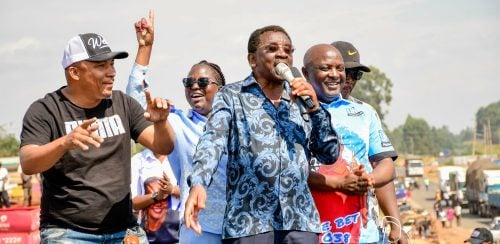
In their recent visit to the Western region, which was viewed as a homecoming ceremony for Nairobi’s Senator Edwin Sifuna, the leaders of the movement have signalled on forming a new political outfit, dismissing the Orange Democratic Movement (ODM), which they say has been compromised by aligning itself with the Government side supporting the reelection of William Ruto in 2027.
Led by Edwin Sifuna, the leaders have dismissed the party, signalling that the movement is planning to form a new political vehicle ahead of the 2027 general elections.