Advertisement
Lessons from Utumishi Girls fire: Why school safety audits matter
Thursday 28th May, 2026 03:03 PM|

In the early hours of Thursday, May 28, 2026, a devastating fire ripped through a dormitory at Utumishi Girls Academy Senior School, claiming the lives of at least 16 students, with 132 students affected by the inferno.
The blaze, which broke out around 1 a.m. on the first floor of one of the dormitories, exposed once again the fragile state of fire safety in Kenya’s boarding schools.
By 3 am., emergency responders from the Kenya Defence Forces, National Police Service, Nakuru County Fire Brigade, and Red Cross had contained the fire.
Shortly after, the Education Cabinet Secretary Julius Ogamba confirmed the closure of the school indefinitely as investigations continue.
Systematic failures on fire incidents
You Might Also Like
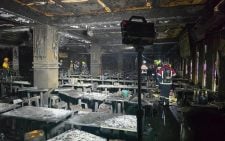

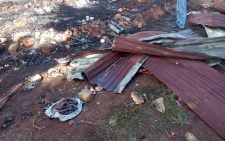
This tragedy is not an isolated incident; the Country has a painful history of school dormitory fires, many resulting in loss of young lives.
Past events, such as the 2024 Hillside Endarasha Academy fire that killed 21 boys, have repeatedly highlighted systemic failures.
The failures have included overcrowding, inadequate exits, missing or non-functional firefighting equipment, grilled windows that trap occupants, and doors that open inward rather than outward.
Meanwhile, systematic failures have been highlighted in past tragedies, recurring warnings ignored, and government audits and reports have long flagged these risks.
A performance audit of fire safety preparedness in secondary schools by the Auditor-General, released in September 2020, found widespread non-compliance with safety standards.
Many institutions lacked basic requirements such as serviced fire extinguishers, alarms, emergency exits, and regular drills. Half of public schools had never conducted proper fire safety assessments.
“The Ministry of Education prepared and issued the Safety Standards Manual for Schools in Kenya (2008), which caters for fire safety among other safety issues in schools. This is to ensure that schools are well prepared to handle fire incidents. The Ministry is also supposed to carry out monitoring and evaluation to ensure that schools implement measures put in place for fire safety preparedness,” the audit reads in part.
The audit revealed that implementation of fire safety measures put in place by the Ministry of Education has faced many challenges such as; inadequate infrastructure, limited training on fire safety preparedness, insufficient guidance and counselling in the schools.
Consequently, the audit revealed that in all 42 schools visited, there was inadequate fire safety preparedness.
Takeaway by the govt
Despite recommendations including spacious dormitories with multiple outward-opening doors, ungrilled windows, and trained safety committees, implementation remains weak.
Arson, often linked to student unrest, faulty electrical wiring, or unauthorised appliances, frequently emerges as a cause or contributing factor, but preventable structural and procedural lapses turn minor sparks into disasters.
Following the recent tragedy, parents and stakeholders at Utumishi echoed familiar frustrations, questioning whether fire drills were conducted, if extinguishers were available and functional, and why response times appeared delayed.
One parent noted receiving a call about the fire around 3 a.m., highlighting communication gaps.
Experts and survivors from previous tragedies have called for stricter enforcement, including licensing schools only after verified safety compliance and allocating dedicated funding for upgrades in public institutions.
Author
Latest News








Advertisement
More on Insights