Inside Kenya’s bid to repair debt, boost credit ratings, and stabilize public finances
By Kenneth Mwenda, October 9, 2025Kenya is racing to stabilise its finances and repair its image in international markets as pressure mounts from rising public debt, delayed payments to suppliers, and calls by the World Bank to raise consumption taxes.
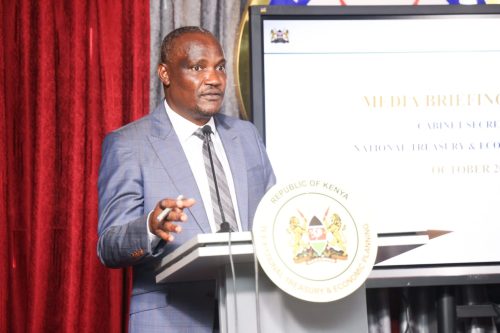
Treasury Cabinet Secretary John Mbadi says the government’s focus is on restoring confidence in how Kenya borrows, spends, and repays its debts. The plan, he insists, is to strengthen debt management and improve the country’s credit ratings to secure cheaper loans and attract investors.
Speaking during the Credit Rating Workshop in Mombasa on October 6, 2025, Mbadi described credit ratings as more than numbers.
“They define a nation’s financial reputation, influence its cost of borrowing, and shape investor confidence,” he said.
A better rating, he explained, would help Kenya borrow more affordably, reduce repayment risks, and free up funds for health, education, and infrastructure.
Also watch: David Maraga says public debt has gone out of control since 2013.
The debt challenge
Kenya’s public debt stood at Ksh11.81 trillion, or 67.8 per cent of GDP, by June 2025, according to figures released by the Treasury on October 7. Out of this, Ksh6.33 trillion is domestic debt, while Ksh5.48 trillion is owed to foreign lenders such as the World Bank, China, and Eurobond investors.
During the 2024/25 financial year, the government spent Ksh1.72 trillion on debt servicing, exceeding the allocation for key development projects. Of that amount, Ksh1.14 trillion went to domestic lenders and Ksh579 billion to foreign creditors.
Mbadi admitted that while the debt remains sustainable, Kenya faces a heightened risk of distress if borrowing is not managed prudently.
To ease pressure, the Treasury has started refinancing expensive loans, extending repayment periods, and shifting towards concessional financing, cheaper loans with longer repayment terms. The aim is to improve debt sustainability and create room for growth spending.
Also watch: CS Mbadi’s take on public debt.
Paying old debt with new debt
Earlier this year, the government raised Ksh193.8 billion (about USD1.5 billion) through new bonds to partly repay the 2028 Eurobond ahead of schedule. The bond was split into seven- and twelve-year tranches at an interest rate of 8.7 per cent, which Mbadi said was one percentage point lower than what Kenya would have paid earlier in the year.
The move helped Kenya avoid a single, massive payment when the Eurobond matures, but did not come cheaply. Essentially, the country borrowed new money to pay an old debt, a strategy that maintains market confidence but adds to overall repayment costs.
“It is easier than waiting to pay one billion US dollars at once, which puts a strain on the economy,” Mbadi said during a TV interview.
While the move helps protect the shilling and Kenya’s reputation, it also locks the country into longer, more expensive repayment cycles.
World Bank’s push for more taxes
Even as Kenya focuses on improving its credit profile, the World Bank is pushing for tougher fiscal measures to address pending bills owed to suppliers.
The lender wants the government to consider new or higher consumption taxes, such as excise duty and value added tax (VAT), to clear arrears that hit Ksh526 billion in June, up from Ksh421.6 billion in March.
The World Bank argues that higher consumption taxes could help the government pay its debts to contractors and businesses, but such a move risks angering Kenyans who are already burdened by a high cost of living.
“To clear pending bills, finance their payment with higher consumption taxes,” the World Bank said in its sub-Saharan Africa economic outlook report.
VAT is currently 16 per cent on goods like fuel, electricity, and cooking gas, while basic foods such as maize flour and bread are exempt. Excise duty applies to fuel, alcohol, cigarettes, airtime, and betting. Raising or expanding these taxes could increase prices across the economy.
The proposal comes at a time when real wages have fallen, and public frustration with taxation remains high. The average worker’s real monthly pay dropped from Ksh62,256 in 2020 to Ksh55,450 in 2024, showing a loss of purchasing power amid rising costs.
The Treasury has avoided introducing new taxes this financial year after protests last year left more than 50 people dead. Instead, Mbadi says the focus is on widening the tax base and cracking down on evasion rather than raising rates.
Also watch: Jimi Wanjigi says that every shilling spent on debt repayment deprives Kenya of its future.
Clearing supplier arrears
The government is also tackling unpaid bills through securitisation, where pending payments are converted into tradeable bonds. The Kenya Roads Board (KRB) has begun paying verified arrears using short-term loans from local banks, backed by collections from the road maintenance levy.
Two larger bonds, worth Ksh175 billion and Ksh125 billion, will soon be issued to cover more arrears in the roads sector.
Despite these efforts, supplier arrears continue to rise. National government pending bills increased by Ksh104 billion in the second quarter of 2025, while counties owed Ksh172.5 billion as of March.
Kenya’s credit ratings currently stand at B (S&P), B- (Fitch), and Caa1 with a negative outlook (Moody’s). These ratings make borrowing more expensive, as lenders see Kenya as a higher-risk borrower.
To improve its image, Mbadi announced the formation of a Credit Rating Committee to handle direct engagement with rating agencies. The team will ensure Kenya’s ratings reflect real economic progress and not external perceptions.