Explainer: What the Senate’s NTSA decision means for every Kenyan motorist
By Aloys Michael, July 22, 2026Thousands of Kenyan motorists, matatu operators, school transport providers and commercial vehicle owners have received immediate relief after the Senate annulled three controversial National Transport and Safety Authority (NTSA) regulations, preventing their implementation.
If you own a private car, operate a matatu, run a school bus or manage a commercial vehicle fleet, the decision means several proposed compliance requirements, including annual vehicle inspections for many private vehicles, will no longer take effect for now.
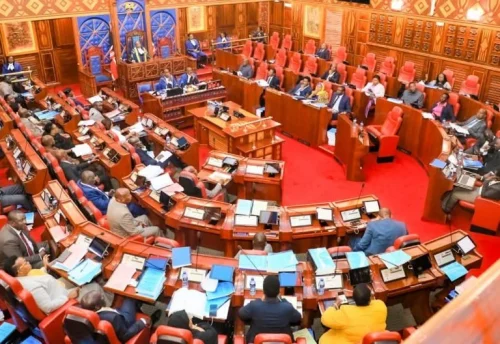
The Senate adopted a report by its Select Committee on Delegated Legislation recommending the annulment of the Traffic (School Transport) Rules, 2026, the Traffic (Motor Vehicle Inspection) Rules, 2026, and the National Transport and Safety Authority (Operation of Commercial Vehicles) Regulations, 2026.
The committee concluded that the statutory instruments should not remain in force under the Statutory Instruments Act, effectively blocking NTSA from enforcing the new regulations in their current form.
The decision has answered one of the biggest questions motorists have been asking since the regulations were published: What changes now? The most significant change is that annual vehicle inspections for private cars older than four years will not be introduced under the cancelled regulations.
NTSA had proposed mandatory annual motor vehicle inspections for private vehicles exceeding four years from the date of first registration, with inspection fees ranging between Ksh1,000 and Ksh2,000. The authority argued that regular inspections would improve road safety by ensuring only roadworthy vehicles remained on Kenyan roads.
What motorists should know
Following the Senate’s decision, motorists are not required to undergo annual vehicle inspections solely because of the annulled 2026 Motor Vehicle Inspection Rules.
The cancellation also means the proposed inspection fees linked to those regulations will not be introduced. Many motorists and transport industry stakeholders had argued that the new inspection regime would increase the cost of owning and operating vehicles at a time when households and businesses are already grappling with high fuel, insurance and maintenance expenses.
Commercial vehicle owners have also avoided a fresh set of operational requirements that were contained in the cancelled regulations. Truck operators, logistics companies and other commercial transport businesses had expressed concerns that the proposed standards would increase compliance costs and disrupt operations.

The Senate’s decision similarly affects public service vehicles, meaning matatu operators and other PSV owners will not be required to comply with the additional operational obligations contained in the annulled regulations.
Schools and school transport providers have also received temporary relief. The cancelled School Transport Rules sought to introduce stricter requirements governing school transport operations. Those rules cannot now be enforced unless the government revises them and Parliament approves a new legal framework.
For parents, schools and transport providers, the existing school transport regulations remain in force until any replacement rules are lawfully introduced.
A practical example illustrates the impact of the Senate’s decision. If you own a five-year-old private vehicle and are expected to begin annual NTSA vehicle inspections under the new regulations, that requirement no longer applies because the regulations have been annulled.
Current traffic laws
Although the Senate cancelled the three NTSA regulations, Kenya’s existing traffic laws remain fully in force.
Motorists must still carry a valid driving licence, maintain valid motor vehicle insurance, observe speed limits, ensure their vehicles are roadworthy, wear seat belts where required and comply with all other provisions of the Traffic Act and existing transport regulations.
The Senate’s decision only affects the three specific NTSA regulations that were annulled. It does not suspend or weaken existing road safety laws or the powers of traffic police to enforce them.
This means motorists should not assume that all vehicle inspections or enforcement activities have been abolished. Instead, only the new requirements contained in the cancelled regulations have been stopped.

The government still has the option of revising the proposed regulations, addressing concerns raised during parliamentary scrutiny and public participation, and reintroducing them through the legally required approval process.
The Motorists Association of Kenya (MAK) welcomed the Senate’s decision, describing it as a major victory for motorists across the country.
According to the association, the annulled regulations would have imposed significant additional obligations on private motorists, commercial vehicle owners and school transport operators without sufficient justification.
MAK said the Senate’s action sends a clear message that future road safety policies should be based on credible data, sound engineering principles and constitutional safeguards rather than imposing unnecessary burdens on motorists.
For now, motorists searching for answers can be assured of one key point: the proposed annual private vehicle inspection programme, new commercial vehicle operating standards and revised school transport rules contained in the annulled 2026 NTSA regulations cannot be enforced.
However, all existing traffic laws remain in effect, and drivers should continue complying with them while monitoring any revised NTSA regulations that may be introduced in the future.