Africa Forward Summit: France’s colonial extension or Africa’s quest for partnership?
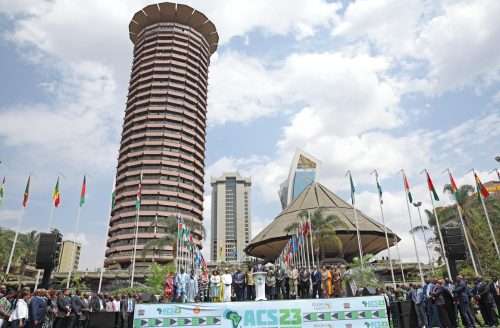
By Aloys Michael, May 11, 2026The ongoing Africa Forward Summit in Nairobi arrives wrapped in the language of partnership, innovation and mutual respect.
Officially, the gathering seeks to redefine Africa-France relations through cooperation in investment, technology, energy, and trade.
Yet beneath the polished speeches and billion-dollar promises lies a more uncomfortable question: is France genuinely seeking an equal partnership with Africa, or merely redesigning its old influence under a modern label?
To understand the significance of this summit, one must begin in the Sahel.
Over the past four years, France has suffered one of the greatest geopolitical humiliations in its post-colonial African history. Chad, Mali, Burkina Faso and Niger, once considered pillars of French influence in West Africa, have expelled French troops, terminated military cooperation agreements, and openly denounced what many citizens describe as Françafrique, the long shadow of French political and economic control over its former colonies.
Guinea too has increasingly distanced itself from Paris, signalling a broader erosion of French authority in regions once firmly within its orbit.
The military juntas that emerged in these countries transformed anti-French sentiment into state policy. Streets once shaped by French cultural and political influence are now filled with nationalist rhetoric, Russian flags and renewed calls for sovereignty.
The formation of the Alliance of Sahel States by Mali, Niger and Burkina Faso has become symbolic of a region determined to chart a future independent of Western dominance.
Whether these governments will ultimately succeed is another debate entirely, but their message to France has been unmistakable: the era of unquestioned French influence is over.
Capturing EAC?
It is against this backdrop that President Emmanuel Macron has turned toward East Africa, hosting the first Africa-France summit ever held in an Anglophone African country. That choice is not accidental.
France understands that its traditional Francophone sphere is shrinking politically, economically and emotionally. Nairobi, therefore, represents more than diplomacy; it represents strategic repositioning.
France now speaks the language Africa has long demanded to hear: co-creation, innovation, youth partnerships, climate financing and private-sector growth. Discussions at the summit revolve around artificial intelligence, renewable energy, infrastructure financing and digital transformation rather than military intervention or counterterrorism operations.

Paris is carefully attempting to present itself less as Africa’s security guardian and more as an investment and development partner.
To some extent, this shift reflects a changing reality rather than mere public relations.
Africa itself has changed dramatically over the last two decades. The continent is no longer diplomatically dependent on Europe. China finances railways, highways and ports. Gulf states are investing heavily in agriculture and logistics.
India continues expanding technological and pharmaceutical partnerships across the continent. Russia, meanwhile, has successfully exploited anti-Western resentment in parts of the Sahel. Africa today has options, and France understands this uncomfortable truth better than most.
Revitalising economies?
Countries such as Kenya, Rwanda and Tanzania now offer France an opportunity to rebuild influence in regions where anti-French hostility is less entrenched. East Africa’s growing economies, strategic Indian Ocean access and expanding middle class make the region increasingly attractive.
In many ways, the Africa Forward Summit is France’s attempt to adapt to a new continental reality in which influence can no longer be sustained through historical ties alone.
Yet scepticism remains justified.
Many African observers argue that France’s new approach still preserves the logic of old strategic interests. Behind the language of partnership lies the enduring pursuit of geopolitical relevance, economic access and security cooperation.

Critics fear that colonial influence is not disappearing but merely evolving into softer forms, through corporate partnerships, financial leverage and military agreements packaged as mutually beneficial cooperation.
The deeper issue, however, is trust.
Africa does not simply want investment; it wants dignity. It wants partnerships that respect sovereignty, create equitable economic opportunities and recognise African agency in global decision-making.
Increasingly, African leaders are demanding reforms in international finance, trade and diplomacy, arguing that the continent has long been treated as a perpetual risk rather than a rising force in global affairs.
This is where the Africa Forward Summit will either succeed or fail.
If France approaches Africa merely as a replacement market after losing the Sahel, then the summit will become another chapter in strategic opportunism disguised as partnership.
But if Paris genuinely accepts that Africa is no longer a junior partner, that the continent seeks equality rather than patronage, then this moment could represent a meaningful turning point in Africa-Europe relations.
Africa is not begging for recognition anymore. It is demanding relevance on its own terms. And France, perhaps for the first time in decades, appears to understand that the old playbook no longer works.