Advertisement
A historian’s candid take on decline of mammoth ODM’s party fortunes
Saturday 26th July, 2025 08:00 AM|
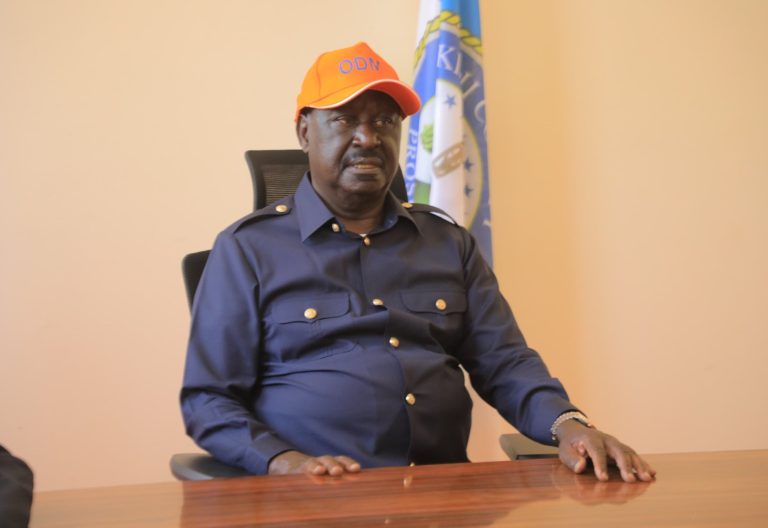
In a remarkable shift within Kenya’s political landscape, the once formidable opposition force—the Orange Democratic Movement (ODM)—seems to be drifting toward political obscurity.
Its once-boisterous grassroots machinery is weakening, internal leadership appears disoriented, and the party’s traditional anti-establishment posture is increasingly blurred by growing affinities with the very government
it once fiercely resisted. Recent candid admissions by senior party officials paint a troubling picture of a movement caught between the prospects of reinvention and the looming reality of political extinction.
I write not as a detached observer, but as a politically conscious Kenyan who has walked alongside this country’s democratic journey.
You Might Also Like

My engagement with politics began long before I could vote. As a minor during the 2002 general elections, I followed the unfolding events with a curious and critical mind.
In 2005, I cast my first vote during the constitutional referendum, aligning with the “NO” side—a stand rooted in resistance to unchecked executive authority and a belief in meaningful reform.
Today, as a trained historian and engaged political commentator, I pose a question shaped by experience and historical insight: has the time come for the ODM to prepare its political will?
ODM has been an indispensable player in Kenya’s post-2002 political evolution. Born from the ashes of the 2005 referendum, the Orange Movement was baptised by fire, moulded in rebellion, and sustained by a populist resistance to authoritarianism.
It galvanised the dreams of millions yearning for constitutional reforms, justice, and inclusive governance. It was more than a party—it was a cause.
But as I analyse today’s ODM, I see not the firebrand movement of old but a factionalised, hesitant, and ideologically lost entity clutching onto nostalgia while courting political irrelevance.
Nothing exposes the decay of a revolutionary party like its quiet alignment with the very establishment it once opposed.
ODM’s tacit endorsement of the so-called “broad-based government” being assembled by President William Ruto signals a shocking ideological U-turn.
The man who was once deemed a dictator by ODM stalwarts is now receiving their cooperation—even if informally and incrementally.
It all started with Raila Odinga’s candidature for the AU Commission Chairmanship. In it, the ODM leader seemed more concerned with continental ambitions more than the crisis facing his own party back home.
In an interview during the AUC campaigns, he artfully dodged pressing questions about internal fractures, simply brushing them off as normal party wrangles.
He exuded a statesman-like calm, but it came off less as strategic poise and more as detachment from grassroots discontent.
For a man once lionised for standing up to regime overreach, his lukewarm criticism of Ruto’s administration is jarring.
Why is the once-fiery Odinga now so restrained? What happened to the people’s general? More damning events followed.
ODM leadership’s silence—or worse, complicity—as Ruto administration co-opted key opposition figures into his government, termed as “experts”.
The rhetoric of “broad-based governance” is nothing more than a euphemism for weakening the opposition through political patronage.
ODM’s current posture feels like passive consent to being folded into the very regime it claimed to oppose.
ODM Secretary General (ODM-SG) Edwin Sifuna, in an interview that was as revealing as it was sobering, laid bare the rot within.
His candid admission that “for the first time, no one is scrambling for ODM tickets in upcoming by-elections” is not just a throwaway line, but it’s a political obituary in progress.
Anyone knows that in Kenya’s political arena, party nominations are usually a battleground.
The absence of interest in ODM’s ticket is indicative of waning confidence, a sign that the party’s brand has lost its lustre.
The ODM-SG also admitted that ODM is suffering from both internal disorganisation and waning grassroots support.
He acknowledged, albeit reluctantly, that certain party structures have become dormant and that leadership confusion, especially at the branch level, leaves ODM vulnerable to both internal rebellion and external predation.
In essence, Sifuna’s interview did not reassure ODM supporters; it confirmed their worst fears: that the party is rudderless.
ODM’s current flirtation with state power reminds me of what befell other liberation movements-turned-political-parties in African history. Think of Zimbabwe’s ZANU-PF or South Africa’s ANC.
They began as radical, grassroots movements but gradually ossified into vehicles for elite consolidation and political convenience. ODM appears to be following that script, with alarming speed.
In the early 2000s, ODM gave Kenya a lifeline. It provided ideological direction at a time when KANU had imploded, and NARC was being consumed by infighting.
In 2007, it became the face of electoral justice. In 2013 and 2017, it remained the bastion of democratic opposition.
But 2022 introduced a cruel twist: with Azimio’s loss and the post-election handshake fatigue, ODM is now neither in government nor in clear opposition.
It is drifting. This drifting is not benign. A political party without a clear position is politically dead, though it just doesn’t know it yet.
That’s where ODM stands today.
Perhaps nothing signifies ODM’s decay more than the emergence of Generation Z as an autonomous political force.
The recent youth-led protests over the Finance Bill 2024 were not mobilised by ODM, nor did they require the blessing of Raila Odinga or any traditional political figure.
In fact, many Gen Z protesters openly rejected ODM’s attempts to hijack their movement.
Something profound is, the party that once commanded youth energy no longer inspires or leads it. The people who once formed its foot soldiers now see ODM as part of the problem.
This generational shift should alarm any serious ODM strategist, if any are still listening.
The biggest tragedy is that ODM no longer stands for anything concrete; it was once associated with things like constitutional reform, devolution, and good governance.
Today, what does it stand for? Is it the party of the poor? Of the marginalised? Of democracy? Or is it simply a party waiting for Raila Odinga’s next move?
Political parties die not when they lose elections, but when they lose their soul. ODM’s silence in the face of human rights abuses, economic hardship, and executive overreach is not strategic, but it’s cowardly.
Its failure to hold the government accountable, even as the current administration is left unchecked. This shows how far the party has strayed from its founding principles.
The hard truth is this: The current trajectory is unsustainable unless ODM undergoes radical surgery by seeking new leadership, fresh ideology, and a return to grassroots organising.
It may well be time to write its will. The party is losing relevance, credibility, and purpose.
This is not an obituary written in bitterness but in clarity. As a historian, I understand that all political movements have lifecycles.
ODM may yet survive, but not in its current form. It must choose: either be reborn or be buried. Let history judge this moment as a turning point—not the final chapter.
Dr. Chebii Z.K. is a Lecturer, Historian, Political Commentator and UASU Chapter Trustee at Alupe University, Kenya
Author
Latest News



Advertisement
More on Insights