Advertisement
Xi Jinping cautions US over Taiwan as Trump visits Beijing
Friday 15th May, 2026 01:52 AM|
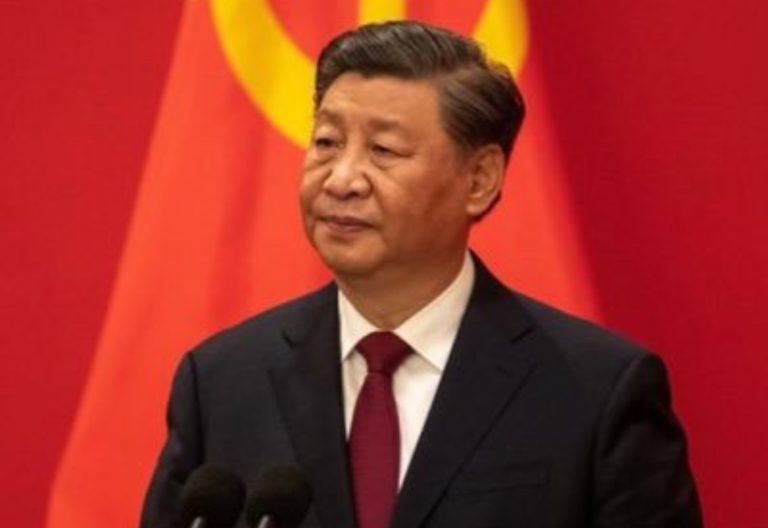
China’s president, Xi Jinping, has warned of “clashes and even conflicts” with the US over Taiwan after meeting Donald Trump in Beijing.
Xi’s remarks, published by China’s foreign ministry after his two-hour meeting with Trump on Thursday, May 14, 2026, said Taiwan was “the most important issue in China-US relations”.
China is keen to put Taiwan at the top of an agenda that risks being overshadowed by the war in Iran and disagreements over trade.
Beijing wants the US to reduce its levels of support for the self-governing island, which China claims as part of its territory. Xi has made “unification” with Taiwan a core priority for his legacy and has not ruled out the use of force to achieve that aim.
You Might Also Like
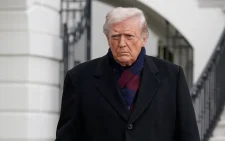
Trump later said Xi had pledged not to send weapons to Iran, despite recent reports that Chinese arms manufacturers had discussed deals to supply weapons to Tehran.
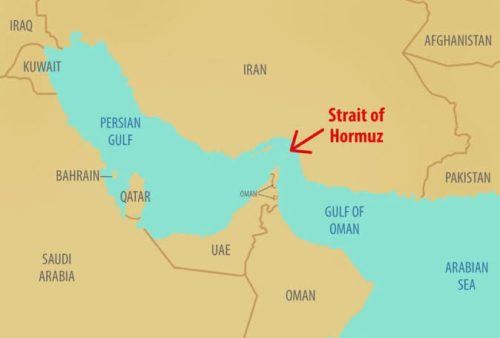
“He said he’s not going to give military equipment, that’s a big statement,” Trump said, adding that Xi had said it “strongly”. “But at the same time, he said you know they buy a lot of their oil there and they’d like to keep doing that. He’d like to see Hormuz strait opened.”
China has considered sending shoulder-fired surface-to-air missiles called Manpads to Iran via third countries in order to mask their origin, US intelligence officials have said. China has denied the reports.
Iran, trade and global conflicts on agenda
The Chinese government also said the two leaders discussed the Ukraine conflict and issues on the Korean peninsula.
The White House’s readout of the meeting said the two sides also discussed market access for US firms in China, and fentanyl controls, but these two issues were absent from the Chinese readout. The White House said the two countries had “agreed that the strait of Hormuz must remain open to support the free flow of energy” and that Xi had indicated China could buy more oil from the US to lessen dependence on Iran.
Marco Rubio, the US secretary of state, later said the US position on Taiwan was unchanged. He told NBC News: “They always raise it on their side. We always make clear our position, and we move on to the other topics.”
Discussions are not expected to focus, as they have with previous US administrations, on human rights and US-China cooperation on tackling the climate crisis. The US and China together account for nearly half of global emissions.
Summit unfolds in Beijing
Trump arrived at the Great Hall of the People, an imposing Mao-era building that borders the western edge of Tiananmen Square, on Thursday morning for an opening ceremony followed by face-to-face talks with Xi.
Rows of uniformed officers flanked the red carpet laid out in front of the Great Hall as Xi and Trump walked side by side to a lectern to listen to a welcome salute before being cheered by rows of children waving US and Chinese flags. The children received a double thumbs up from Trump and a wave from Xi.
The ceremony concluded with a tightly choreographed performance from the Chinese military’s marching band before Trump and Xi walked up the stairs into China’s national legislature for their first round of bilateral talks.
In opening remarks, Xi noted that 2026 marked 250 years of US independence and said stability in the US-China relationship was necessary for the world.
Trump said he and Xi had “known each other for a long time” and Xi was a “great leader”. Trump told Xi: “I say to everybody you’re a great leader. Sometimes people don’t like me saying it, but I say it anyway, because it’s true.”
Questions over future US-China relations
Trump’s decision to launch strikes against Iran in February, assassinating the leadership of a country with close ties to China and imperilling global energy supplies, has cast a shadow over talks that were supposed to focus on trade between the world’s two biggest economies.
Rubio said on Air Force One as the Trump team travelled to Beijing that the US would be pushing Beijing for help on the Iran crisis. “We hope to convince them to play a more active role in getting Iran to walk away from what they’re doing now and trying to do now in the Persian Gulf,” he told Fox News.
Beijing hoped to use the meeting to recalibrate US-China ties and set a foundation for a stable trade relationship going forward.
It is not clear what concrete outcomes will be achieved at this week’s talks. The Trump administration has talked of establishing a “board of trade” with China to address commercial differences between the countries. Beijing wants to push Trump to soften US support for Taiwan through a shift in rhetoric or reducing arms sales to the self-governing island, although many in Beijing concede that this is unlikely.
Author
Latest News






Advertisement
More on Inside Politics