Willis Otieno: Ruto cannot escape responsibility for Kenya’s Ksh13T debt crisis
By Aloys Michael, July 9, 2026Safina Deputy Party Leader Willis Otieno has accused President William Ruto of attempting to distance himself from Kenya’s debt crisis, arguing that the Head of State was a key architect of the borrowing policies that helped push Kenya’s public debt to nearly Ksh13 trillion.
The remarks come as new figures from the National Treasury show Kenya’s total public debt stood at Ksh12.86 trillion at the end of April 2026, equivalent to 69.4 per cent of Gross Domestic Product (GDP), reigniting debate over government borrowing, fiscal sustainability and economic management.
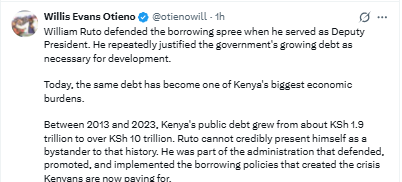
“William Ruto defended the borrowing spree when he served as Deputy President. He repeatedly justified the government’s growing debt as necessary for development,” Otieno wrote on X on Thursday, July 9, 2026.
“Today, the same debt has become one of Kenya’s biggest economic burdens.”
According to the Treasury’s April 2026 Public Debt Bulletin, domestic debt stood at Ksh7.19 trillion, accounting for 55.9 per cent of total public debt, while external debt was Ksh5.67 trillion, representing 44.1 per cent.
The figures highlight the government’s growing reliance on domestic borrowing as it seeks to finance operations while reducing exposure to foreign currency-denominated loans.
Otieno argued that President Ruto cannot separate himself from the debt accumulation that occurred during the Jubilee administration, when he served as Deputy President under former President Uhuru Kenyatta.
“Between 2013 and 2023, Kenya’s public debt grew from about Ksh1.9 trillion to over Ksh10 trillion. Ruto cannot credibly present himself as a bystander to that history,” he said.
“He was part of the administration that defended, promoted, and implemented the borrowing policies that created the crisis Kenyans are now paying for.”
Ruto’s debt pledges under spotlight
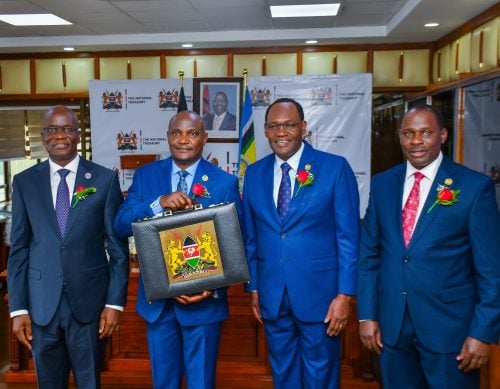
The criticism comes as Treasury Cabinet Secretary John Mbadi seeks to implement a Ksh4.82 trillion budget for the 2026/27 financial year.
The budget projects revenues of Ksh3.63 trillion, leaving a deficit of Ksh1.146 trillion. To bridge the gap, the government plans to borrow Ksh1.03 trillion from domestic sources, including commercial banks, pension funds and insurance companies, while only Ksh116 billion will come from external lenders.
The borrowing plan has renewed scrutiny of statements President Ruto made shortly after assuming office in September 2022.
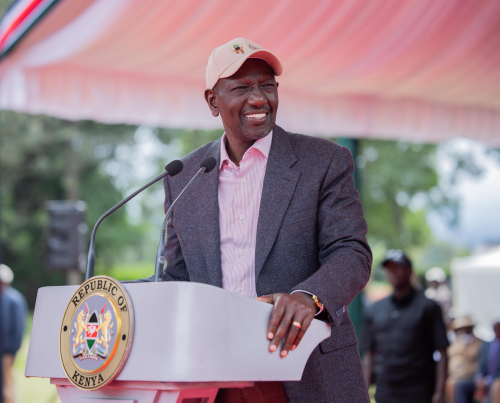
“The government should never borrow to finance recurrent expenditure and pledged to restore fiscal discipline. We must bring ourselves back to sanity,” the President said.
A month later, he reiterated his concerns about excessive debt accumulation.
“It is not possible for us to borrow beyond 10 per cent. That is unacceptable.”
However, official data shows borrowing has remained a central component of government financing. By December 2024, just 27 months into Ruto’s presidency, the administration had borrowed at least Ksh1.4 trillion domestically.
Why is Kenya borrowing more locally
Treasury maintain that the shift toward domestic borrowing is part of a deliberate debt management strategy aimed at reducing foreign exchange risks and improving debt sustainability.
The April Public Debt Bulletin shows domestic debt increased by Ksh36.05 billion between March and April 2026, rising from Ksh7.15 trillion to Ksh7.19 trillion. Over the same period, external debt declined by Ksh12.59 billion due to repayments and favourable exchange rate movements.
“The total external debt stock decreased on account of repayments and exchange rate movements,” the Treasury said in the report.
The government has also increasingly relied on Treasury bonds rather than short-term Treasury bills. Treasury bond stock rose by Ksh81.3 billion in April, reflecting efforts to secure longer-term financing and reduce refinancing risks.
Investor appetite for government securities remained strong. During April, the Treasury advertised Ksh156 billion worth of Treasury bills and bonds but received bids worth Ksh182.55 billion, eventually accepting Ksh149.48 billion.
Economists note that borrowing locally shields the government from currency volatility, which can significantly increase the cost of servicing foreign-denominated debt when the Kenya shilling weakens.

Debt burden and economic concerns
Despite those advantages, concerns remain about the broader economic implications of Kenya’s rising domestic debt.
Global advisory firm KPMG has warned that Kenya’s debt burden remains elevated and that continued reliance on domestic borrowing could crowd out private sector credit and push up financing costs.
KPMG argue that heavy government borrowing from local financial institutions may reduce the availability of affordable credit for businesses, potentially affecting investment, expansion and job creation.
Meanwhile, debt servicing continues to consume a growing share of public resources. The government is expected to spend approximately Ksh1.5 trillion on debt repayments and pensions in the next financial year, limiting funds available for healthcare, education, infrastructure and other development priorities.
For Otieno, the latest debt figures raise questions about accountability and consistency in economic policy.
As Kenya’s public debt edges closer to the Ksh13 trillion mark, the debate over borrowing, fiscal discipline and President Ruto’s role in the country’s debt trajectory is expected to remain at the centre of Kenya’s political and economic discourse heading into the next election cycle.